

- A Million-Mile Storm Raging for Centuries – 6 Violent Weather Wonders in Our System - November 14, 2026
- Animals Flee Hours Before the Tremor – 7 Natural Warnings Before Disasters Strike - November 14, 2026
- Lightning Splitting Trunks That Refuse to Die – 5 Old-Growth Trees Living on Decay - November 14, 2026
A neutron star is what’s left after a massive star collapses. It packs more mass than the Sun into a ball roughly the size of a city. Some of these remnants spin faster than a kitchen blender, and they do it for billions of years.
Astronomers call the fastest ones millisecond pulsars. Each one sweeps a beam of radio waves or X-rays past Earth with astonishing regularity, and that regularity makes them useful for testing gravity and matter at extreme density. Here are six that have pushed the limits of what theory expected.
PSR J1748-2446ad, the Fastest Confirmed Spinner

This pulsar sits in the globular cluster Terzan 5, and a team led by Jason Hessels announced it in 2006. It rotates about 716 times every second. It still holds the record for the fastest spinning pulsar confirmed through repeated, well-measured pulses.
The speed matters because it limits how large a neutron star can be. At that rate, a star that was too big would be torn apart at its equator. The result helps narrow the range of sizes allowed for the ultra-dense matter inside.
PSR J0952-0607, the Heaviest Known Neutron Star
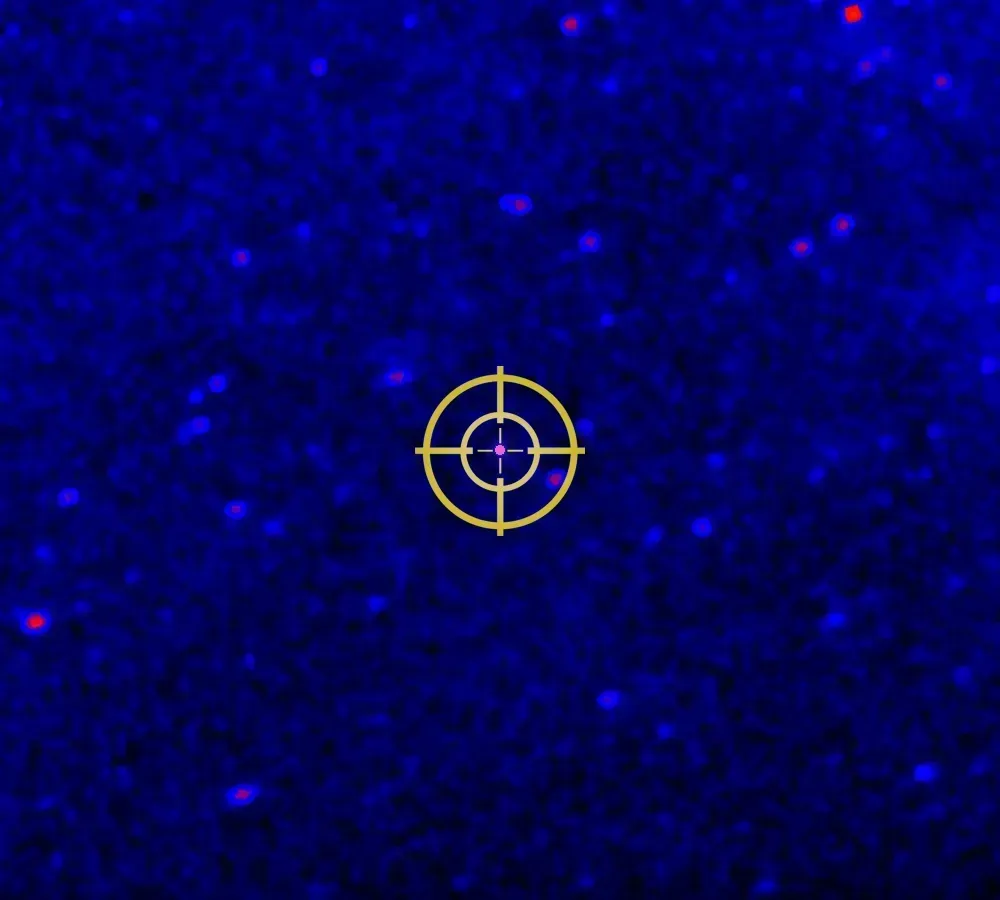
Astronomers found this pulsar in 2017 with the LOFAR radio telescope array. It spins about 707 times a second. It belongs to a class called black widows, because the pulsar’s radiation slowly strips and evaporates its small companion star.
In 2022, researchers measured the pulsar’s mass using the Keck telescope in Hawaii. They put it near 2.35 times the mass of the Sun, with an uncertainty of about 0.17. That is the heaviest neutron star known, and it rules out some models of matter that would be too soft to hold up so much weight.
XTE J1739-285, a Tentative Record Holder
This object isn’t a classic radio pulsar. NASA’s NICER X-ray telescope saw a signal in bursts of X-rays from it, which suggested a spin of about 1,122 times per second. A study published in 2024 reported the result.
The claim comes with a caveat. The detection is only at roughly three sigma, a level scientists usually consider suggestive rather than settled. If more observations confirm it, this would be the fastest spinning neutron star ever found, and it would put new pressure on theories of how fast such stars can turn.
PSR B1937+21, the One That Started It All
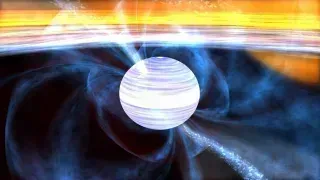
In 1982, Don Backer and colleagues discovered this pulsar using the Arecibo telescope. It was the first millisecond pulsar ever found. It rotates about 641 times per second, with a period near 1.56 milliseconds.
Nobody had expected a neutron star could spin that fast. For about 24 years it kept the speed record, until the Terzan 5 pulsar overtook it. It also showed that old pulsars could be spun up by pulling in material from a companion star, which is now the accepted explanation for the whole millisecond population.
PSR J0740+6620, a Heavyweight Squeezed by NICER
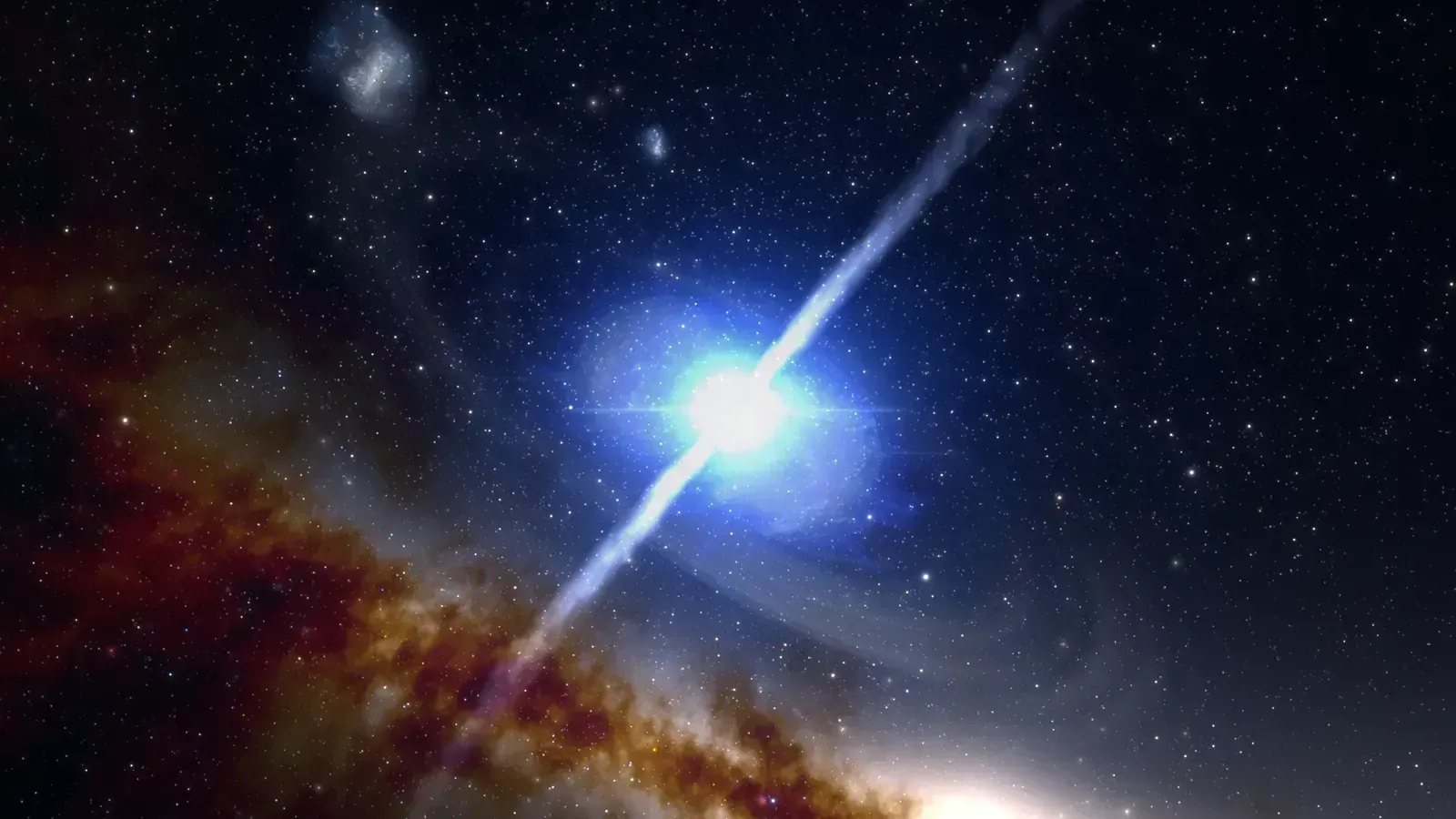
This pulsar spins more slowly than the others here, at about 346 times per second. What makes it notable is its mass. In 2021, radio timing by Emmanuel Fonseca and colleagues put it at roughly 2.08 times the Sun’s mass, which made it one of the most massive neutron stars known at the time.
NICER observations then gave its size as well. Two independent analyses in 2021 found a radius of around 12 to 13 kilometers. Having mass and radius for such a heavy star gave researchers a firm test for models of dense matter.
PSR J0437-4715, the Nearby Pulsar With a Precise Portrait
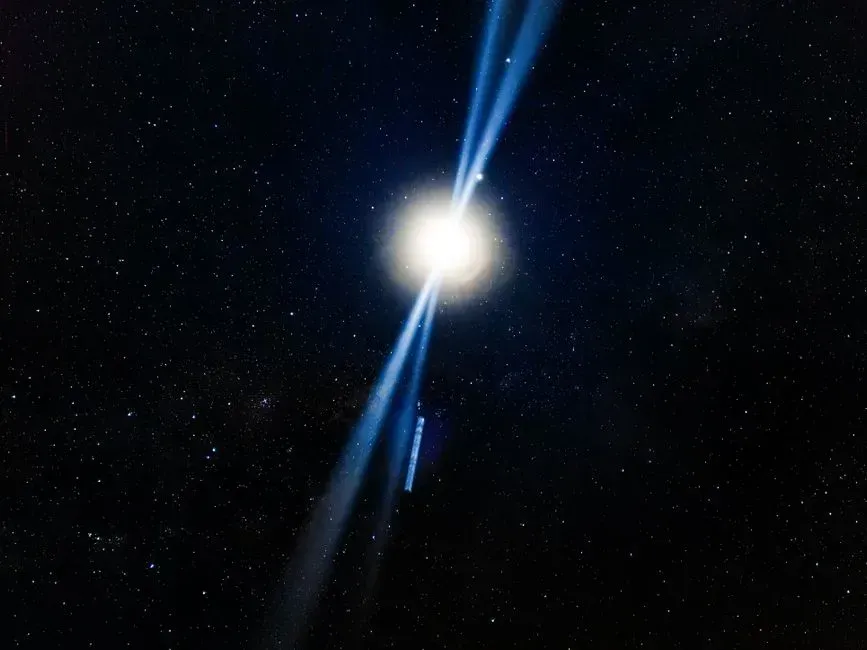
This is the closest millisecond pulsar to Earth, at about 510 light years away. It spins about 174 times per second and is bright enough to study in great detail. Radio astronomers have timed it for decades.
In 2024, a NICER team led by Devarshi Choudhury reported its mass at about 1.42 times the Sun’s. They found a radius near 11.4 kilometers, which makes it one of the most precisely measured neutron stars so far. That result suggests ordinary neutron stars are a bit more compact than the heaviest ones, and that fits what the other pulsars on this list have been showing.
