

- Oceans Trapped Under 20 Miles of Ice – 5 Moons More Likely to Host Life Than Mars - November 12, 2026
- Record planetary extremes loom as the world’s largest climate summit begins - November 12, 2026
- Will travel insurance cover weather-related flight delays and cancellations? - November 11, 2026
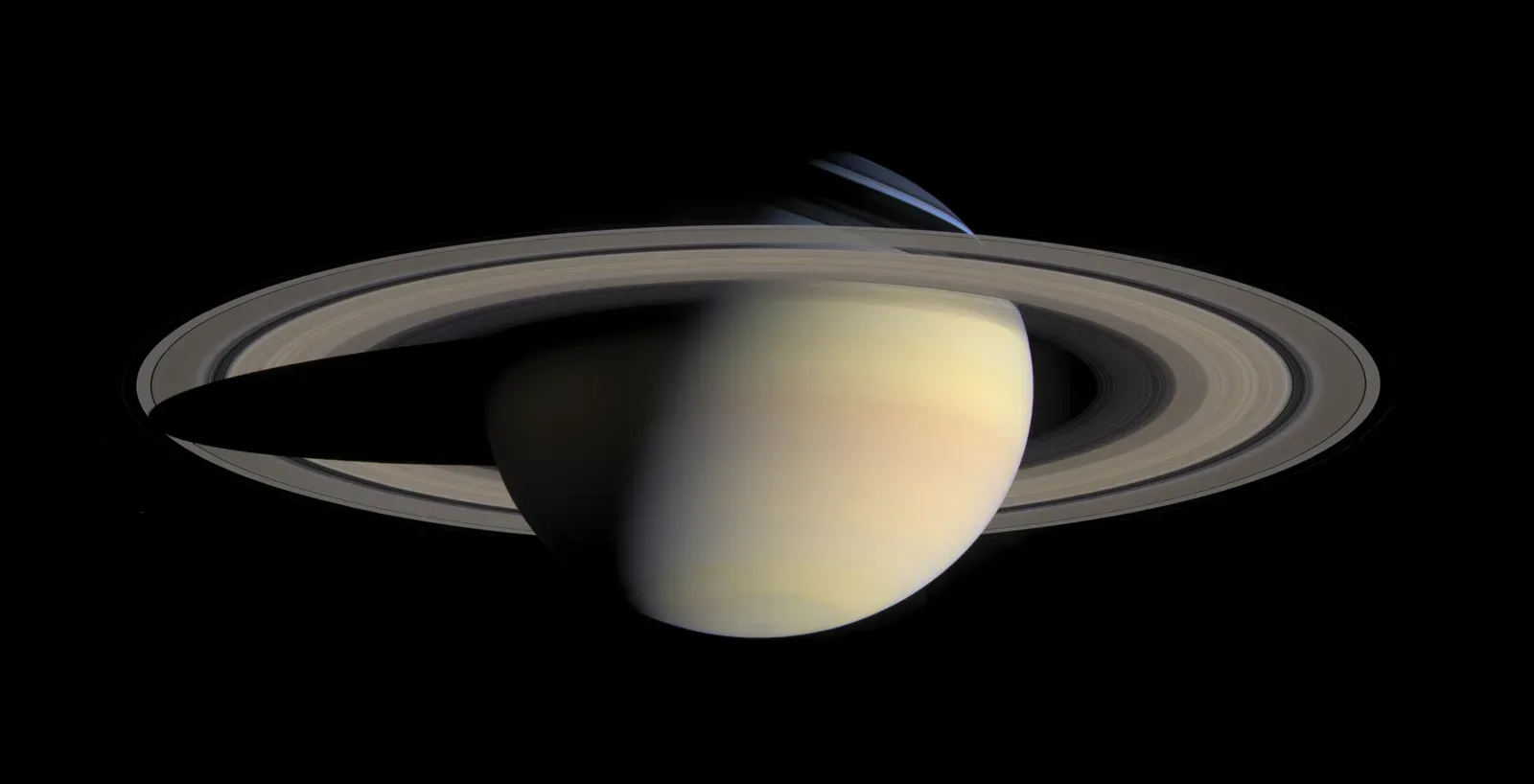
Saturn’s rings look permanent in every photograph. Though we often think of Saturn as the “ringed planet,” it is one of four planets in our solar system with rings. Yet the most famous set of rings is slowly losing material.
The process has a name, ring rain, and it has been studied for decades. Spacecraft data, ground telescopes and the James Webb Space Telescope have each added pieces to the picture. Here is what researchers have established so far, and where the evidence is still thin.
What Ring Rain Actually Is
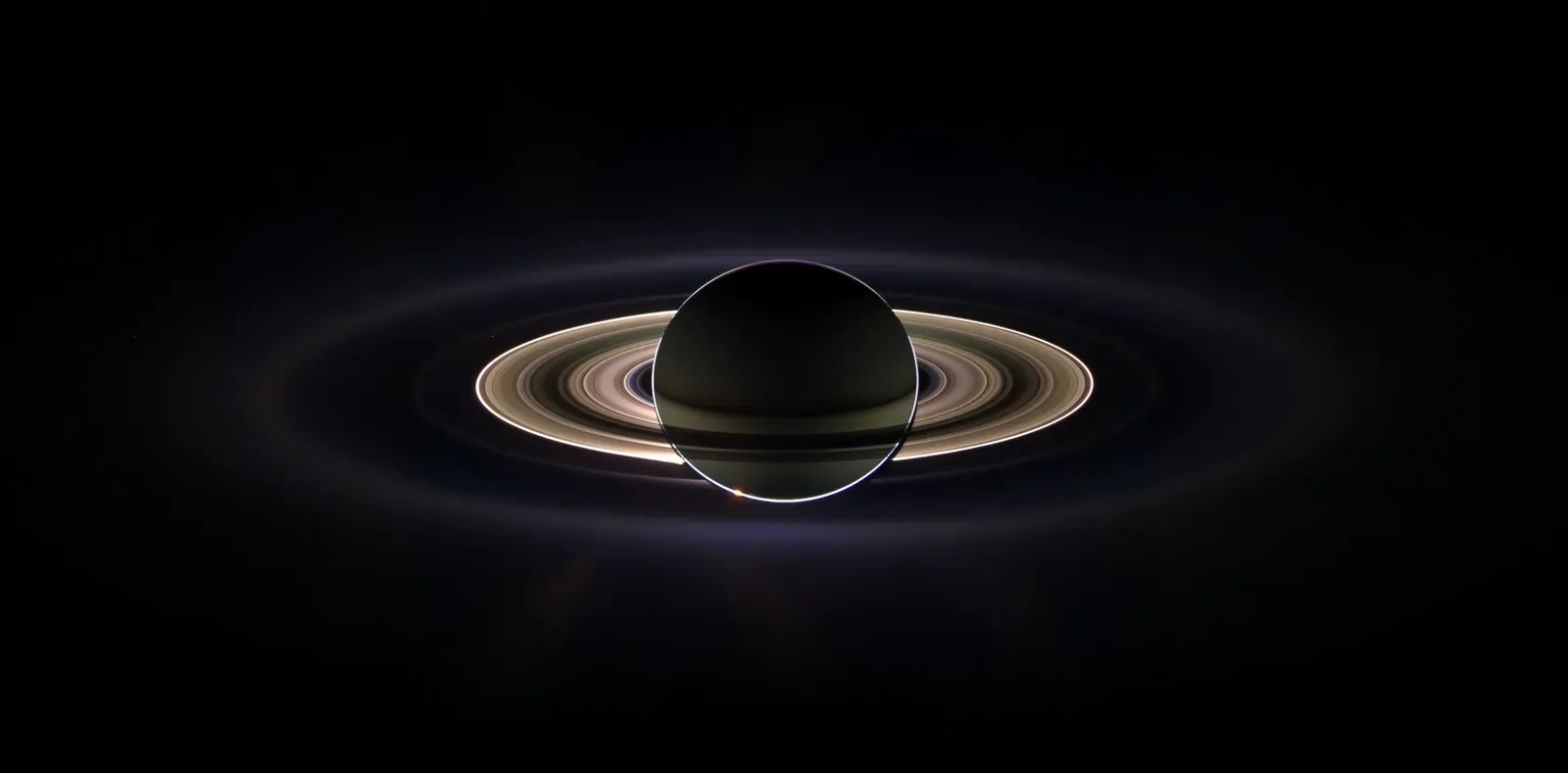
The name suggests storms, but nothing liquid is falling. The “rain” isn’t liquid water. It arrives as water ions, particles in the form of H3O+ and similar species. These are electrically charged fragments of the icy ring particles.
Once they hit Saturn’s atmosphere, they break apart into hydrogen ions and other components, altering the ionosphere. So the loss is real, but it happens at the molecular level, high above the clouds.
How Charged Ice Finds Its Way Down
Ultraviolet radiation from the Sun and high energy particles from Saturn’s magnetosphere ionize water molecules in the rings, giving them an electric charge. Once charged, the molecules no longer move freely.
Those charged molecules follow magnetic field lines down into Saturn’s upper atmosphere. That is why the effect shows up at particular latitudes rather than evenly across the planet.
Clues From Pioneer and Voyager
The first hints came long before anyone could measure the rain directly. Pioneer and Voyager measured electron densities in the ionosphere and found fewer electrons than models predicted. It was an odd gap, and it needed an explanation.
Adding charge exchange reactions with water as a sink for hydrogen ions reconciled theory and data, which led to the identification of ring rain in 1984. The idea was sound, but it took a later mission to put numbers on it.
What Cassini Measured at the End
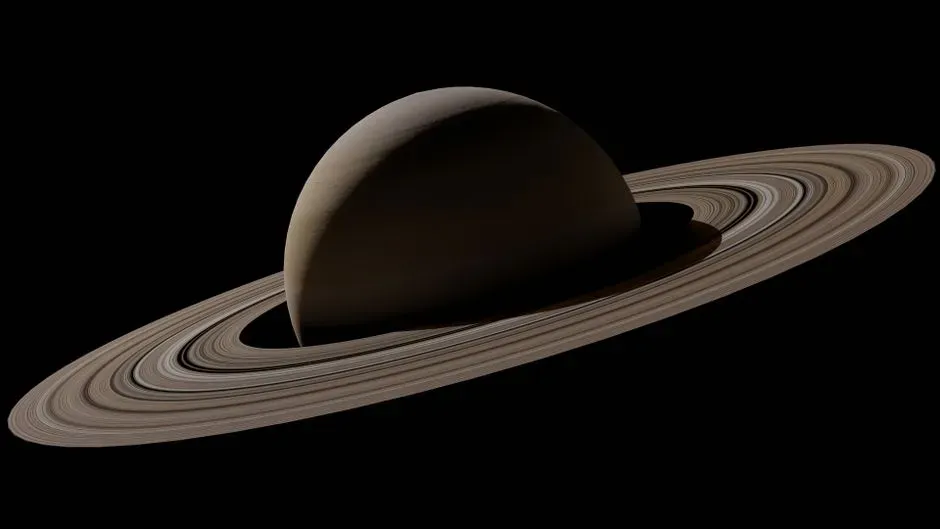
Cassini’s final act gave researchers their best look. Its last assignment was to thread the gap between Saturn and its rings, not once but 22 times. In September 2017, with its fuel nearly exhausted, Cassini plunged into Saturn’s atmosphere and burned up, transmitting data until the very end.
Those Grand Finale orbits offered a unique chance to directly measure the mass flux and composition of ring rain particles. That direct sampling is why current estimates rest on more than modeling alone.
How Much Material Is Being Lost
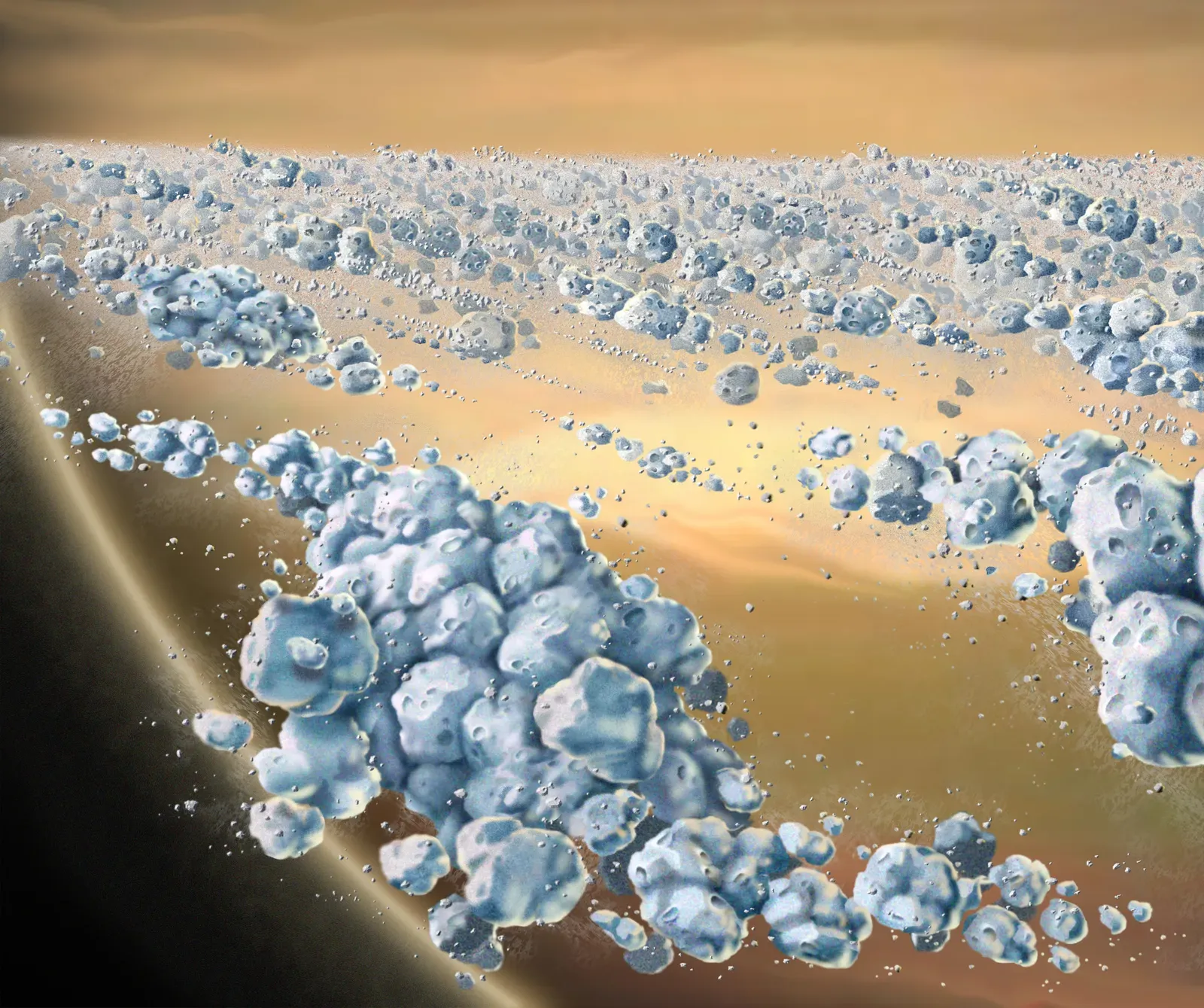
The figures vary, and it helps to separate them. The 2018 estimate by James O’Donoghue and colleagues in Icarus put ring rain alone at roughly 432 to 2,870 kilograms per second. NASA’s combined estimate, counting all loss mechanisms, reaches around 10,000 kilograms per second.
For a sense of scale, researchers calculated that the rings lose enough water to fill an Olympic size swimming pool every 30 minutes. That sounds dramatic, though the rings hold an enormous amount of ice.
Micrometeoroids Add to the Loss
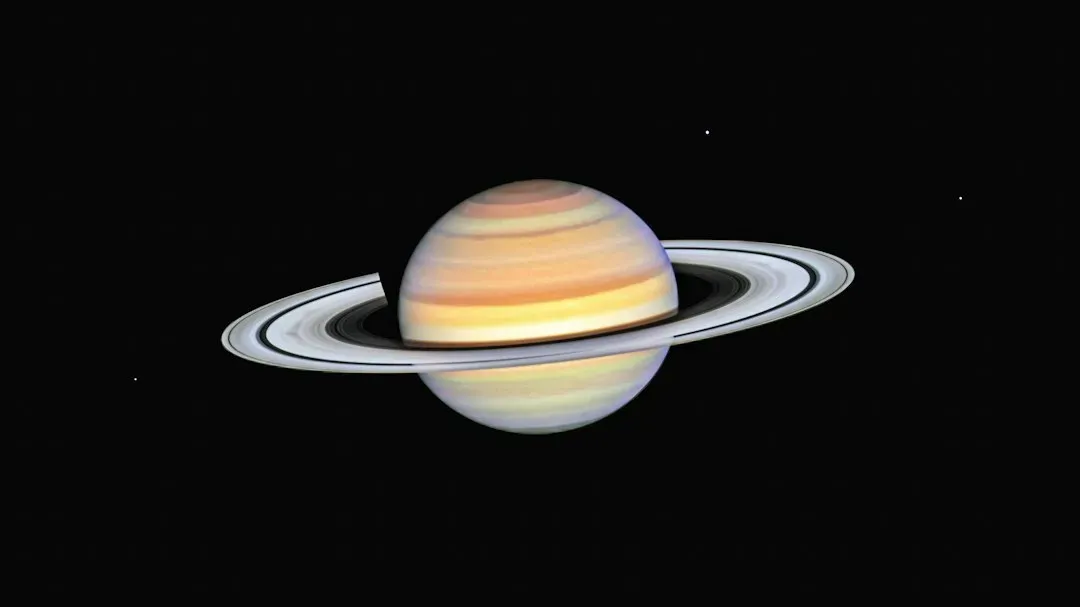
Sunlight and magnetism are not the only forces at work. Additional material is knocked loose by micrometeoroids striking the ring particles and by plasma waves moving through the ring system. Tiny impacts matter because they chip off material that can then become charged.
Researchers have suggested that meteoroids bombard the objects orbiting Saturn and eventually send them down into the planet, where gravity captures them. Cassini’s measurements also pointed to a small fraction of high speed ejecta from micrometeoroid impacts that can be charged and travel along magnetic field lines.
How Long the Rings Might Last
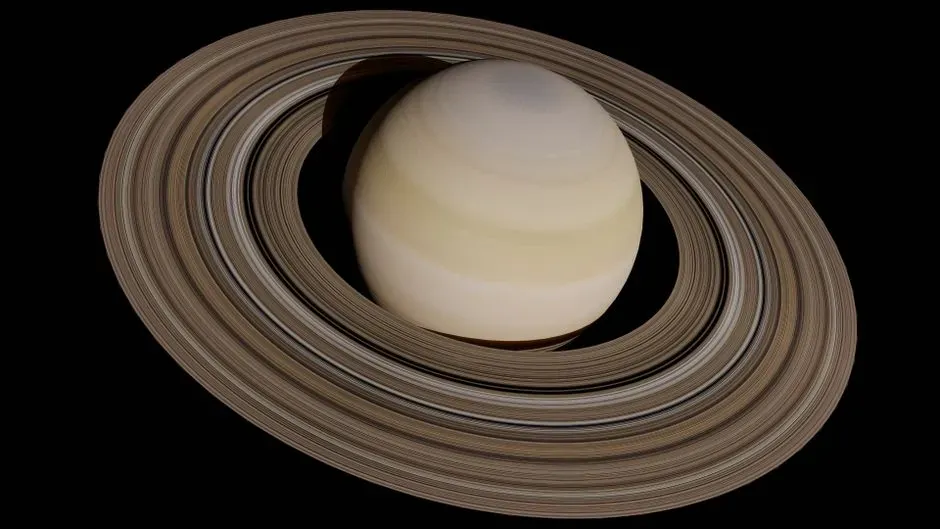
Lifespan estimates depend on the loss rate you assume. At the combined rate, the rings could be gone within 100 to 300 million years. Some summaries give a tighter range, and even conservative estimates from astronomers put the remaining lifespan at under 100 million years.
Context helps here. Compared to the 4.5 billion year history of Saturn, the rings are quite new. They are temporary on planetary timescales, but nothing a person alive today will see change.
The 2025 Disappearance Was a Different Thing
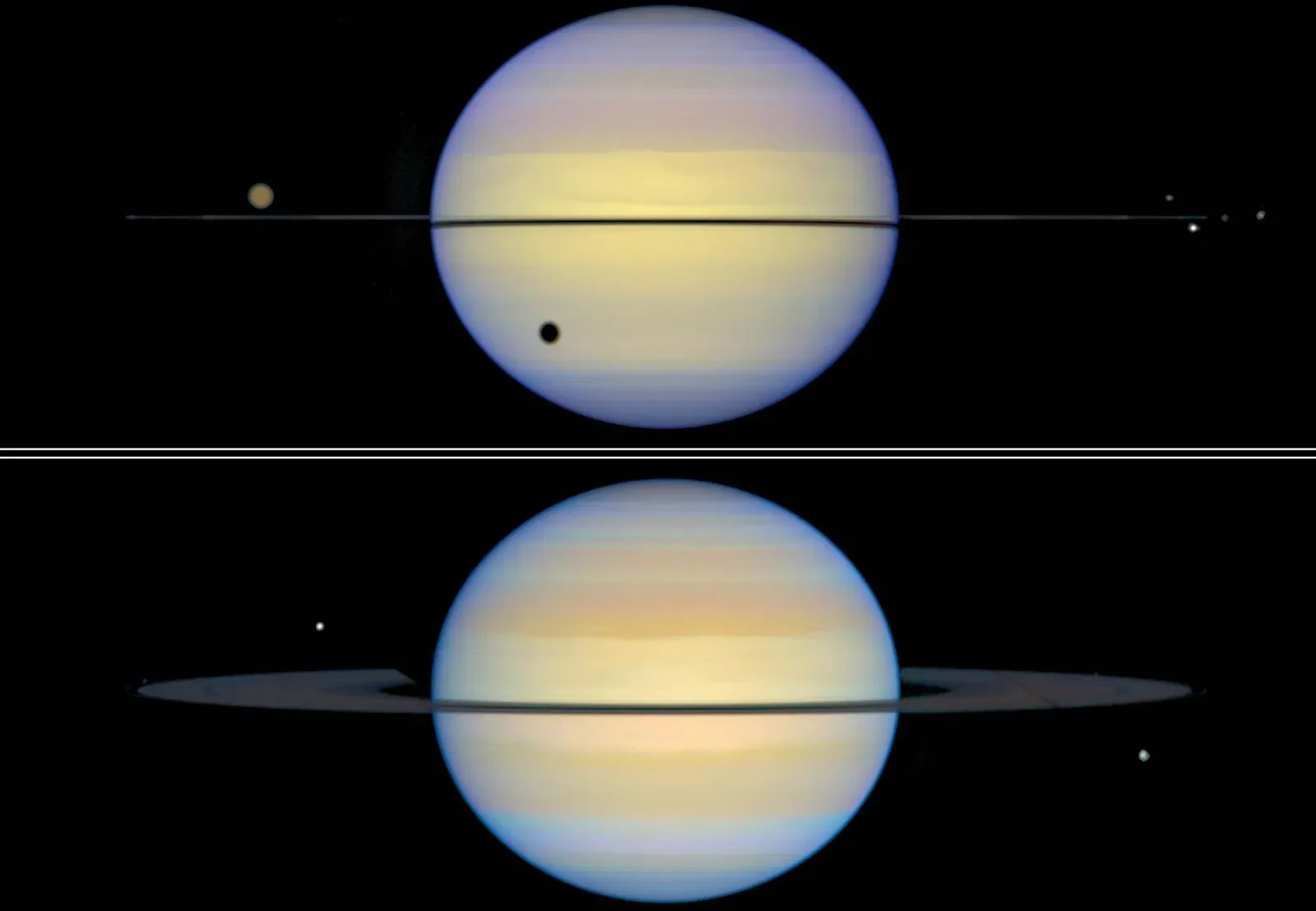
Many headlines in 2025 mixed up two separate stories. On March 23, 2025, the rings briefly seemed to vanish as seen from Earth, because Earth crossed the plane of the rings and viewed them exactly edge on. That disappearance is a geometry trick, not erosion.
The rings are at most 10 meters thick in places, so edge on they nearly disappear. This happens roughly every 15 years, with the next one due in 2039. A fully ringless view arrives with the triple passage in 2038 and 2039.
What the James Webb Telescope Adds
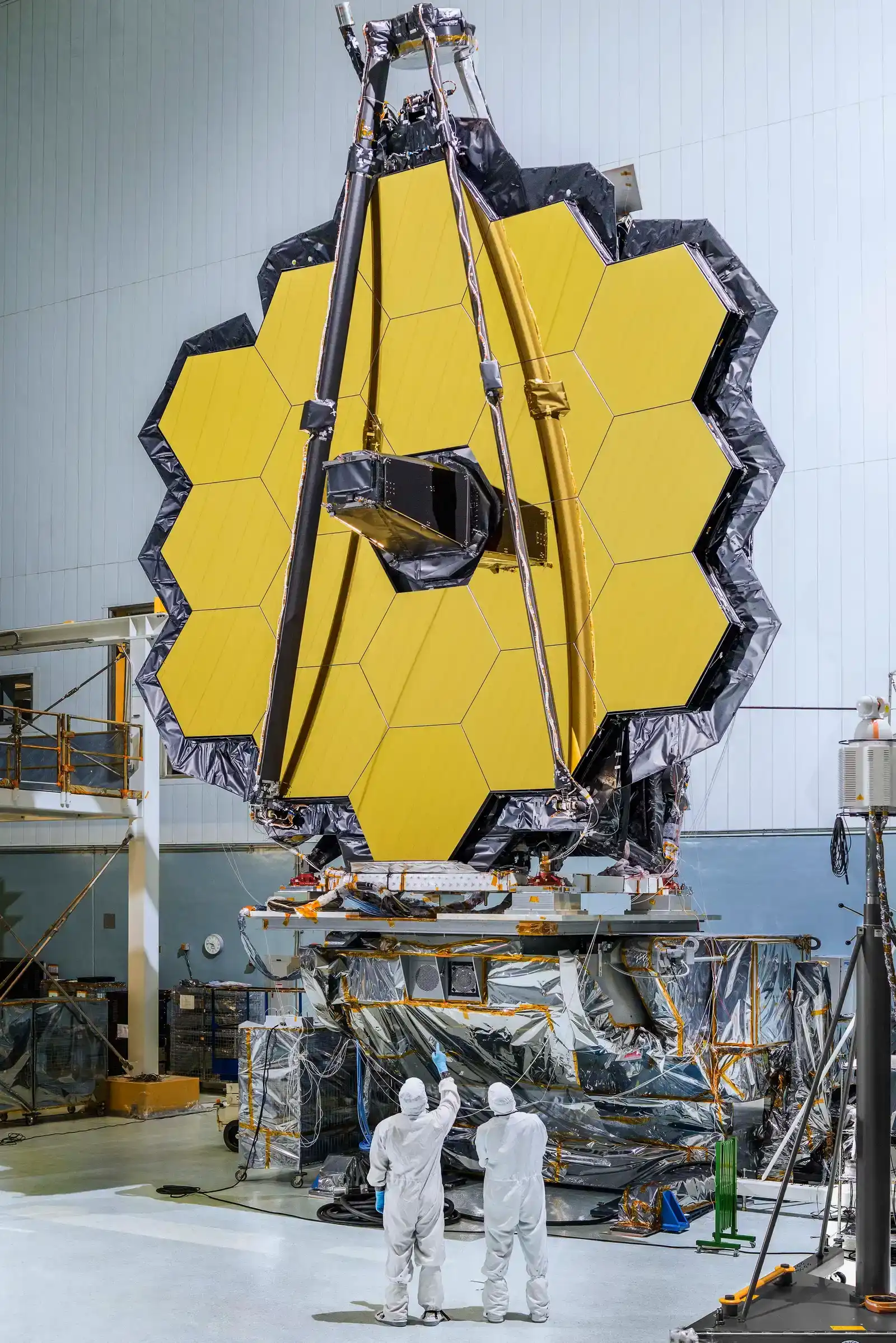
Webb is helping scientists look at the atmosphere that receives the rain. The first Webb NIRSpec observations of Saturn show structured, drifting “beads” of H3+ in the mid latitude ionosphere, likely shaped by thermospheric winds and currents rather than ring driven inputs. That finding complicates the simple picture of ring rain painting visible bands on the planet.
A recent review in Nature Communications notes a remaining gap. Vertical information at higher altitudes is still missing, and limb observations of H3+ could provide the first direct temperature and ion density profiles. Until then, some details of how ring rain affects the upper atmosphere remain open.
Saturn Is Not Alone
The same physics may explain other ring systems. Scientists have suggested that the rings of Jupiter, Uranus and Neptune, which are currently darker and less pronounced, may once have been as splendid as Saturn’s before ring rain wore them down. This remains a hypothesis rather than a settled result.
Saturn’s rings, then, may simply be the best preserved example of a common, fading feature. For now they remain bright, and ring rain continues to carry a steady trickle of their ice into the planet’s atmosphere.
