

- NASA invites students to design a moon base in $1 million challenge - November 11, 2026
- Why Some People Can Feel a Storm in Their Joints, According to Experts - November 11, 2026
- 7 Foods That Taste Better on a Rainy Day, According to Chefs - November 11, 2026
Catch a snowflake on a dark glove and the first thing you notice is the symmetry. Six arms, or six corners, or a flat hexagonal plate. It looks designed, though nothing is designing it.
The pattern starts far below anything a magnifying glass can show. It begins with how a few water molecules latch onto each other as vapor turns to ice, and the shape grows from there.
A Water Molecule Has a Lopsided Shape
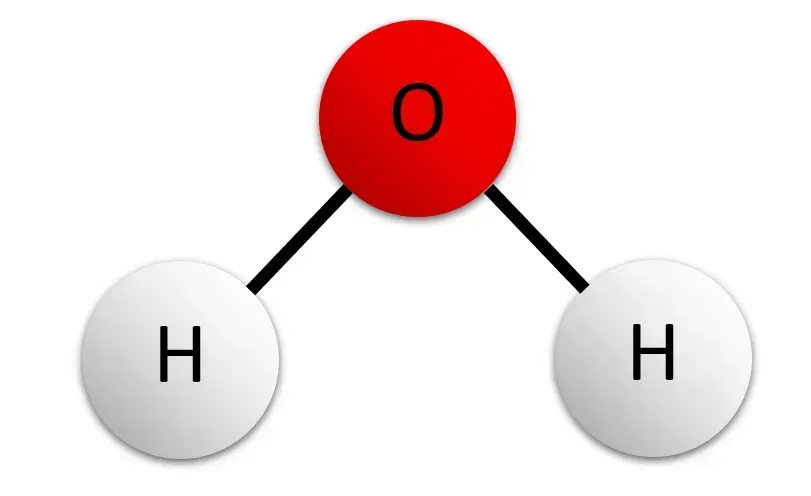
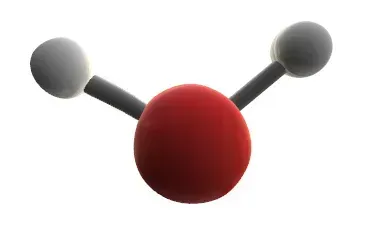
A water molecule is one oxygen atom bonded to two hydrogen atoms. The three atoms don’t sit in a straight line. They form a bent shape, with the hydrogens separated by an angle of roughly 104.5 degrees in liquid water or vapor.
Oxygen pulls electrons more strongly than hydrogen does. That leaves the oxygen side slightly negative and the hydrogen side slightly positive, which makes water a polar molecule. This small imbalance drives almost everything about how ice forms.
Hydrogen Bonds Link the Molecules Together
The slightly positive hydrogen of one molecule is attracted to the slightly negative oxygen of its neighbor. Chemists call this attraction a hydrogen bond. It’s much weaker than the bonds holding a single molecule together, yet it’s strong enough to organize water into a network.
Each water molecule can take part in four hydrogen bonds. It offers two through its hydrogens and accepts two at its oxygen. That count of four, pointing in particular directions, sets the stage for the crystal.
Four Bonds Point Toward a Tetrahedron
The four bonding directions around each oxygen spread out roughly like the corners of a tetrahedron, a pyramid with four triangular faces. The angles between them are close to 109.5 degrees. Real water’s bent shape is a little tighter, but ice settles near that ideal.
When molecules lock into this arrangement, they can’t pack as tightly as they do in liquid water. Each one keeps four neighbors at a fixed distance, and that fixes the geometry of the whole solid.
Rings of Six Build the Crystal Lattice
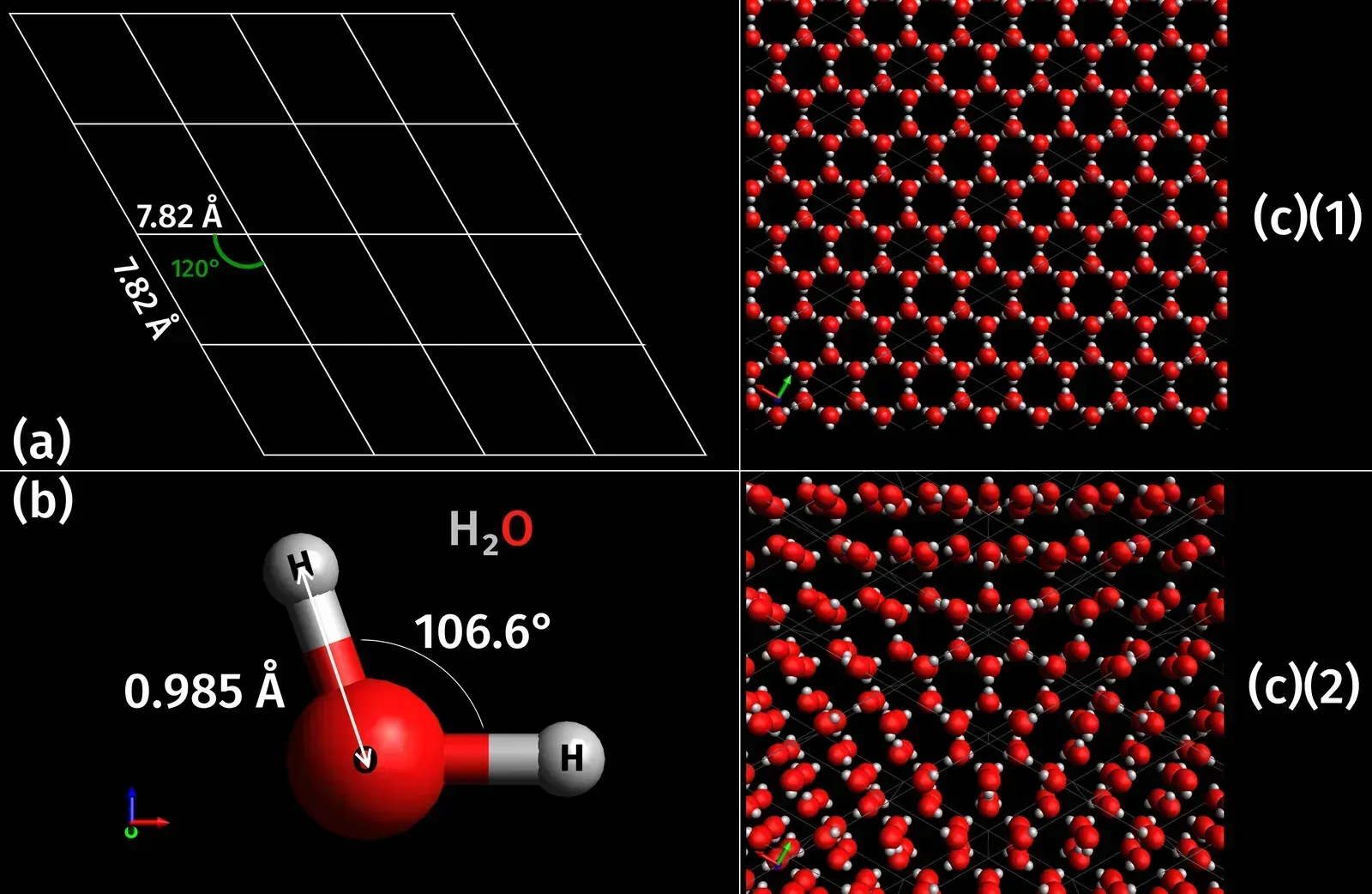
Link tetrahedral units together and a repeating pattern appears. Looking down one axis, the molecules form puckered rings made of six water molecules each. These rings stack in layers to create the hexagonal crystal structure called ice Ih.
That structure is the form of ice found in snow, frost, and nearly all natural ice at Earth’s surface. Other ice forms exist, but they need very different conditions such as extreme pressure or very low temperatures.
Why Ice Floats
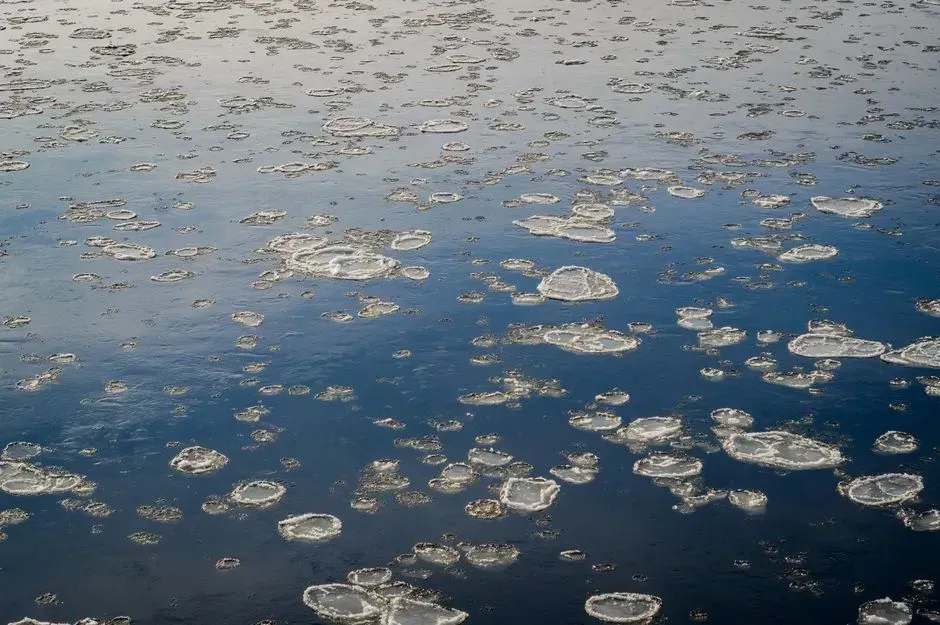
The open, ringed lattice has a side effect. Ice is less dense than liquid water, with a density about nine percent lower, so it floats. Most substances shrink when they freeze, and water is an unusual exception.
The empty space inside each hexagonal ring is where the extra volume comes from. In liquid water, molecules shuffle into some of those gaps, which is why the liquid is denser.
From Microscopic Crystal to Visible Flake
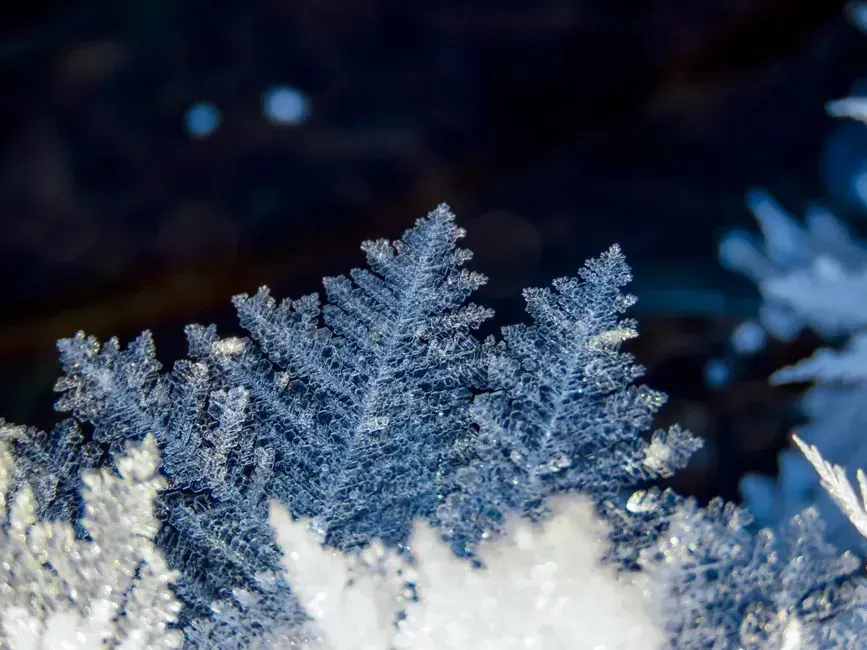
A snowflake usually starts when water vapor in a cloud freezes onto a tiny particle, often dust or another speck of material. The first ice crystal is minuscule. As more vapor settles on it, the lattice extends outward and the hexagonal symmetry carries over to the visible shape.
The six sides of a flat plate reflect the six sides of the molecular rings. Physicists studying crystal growth, including Kenneth Libbrecht at Caltech, have documented how this builds the familiar prisms and plates. His work remains a standard reference on the physics of snow crystals.
Why Branches Sprout From the Corners
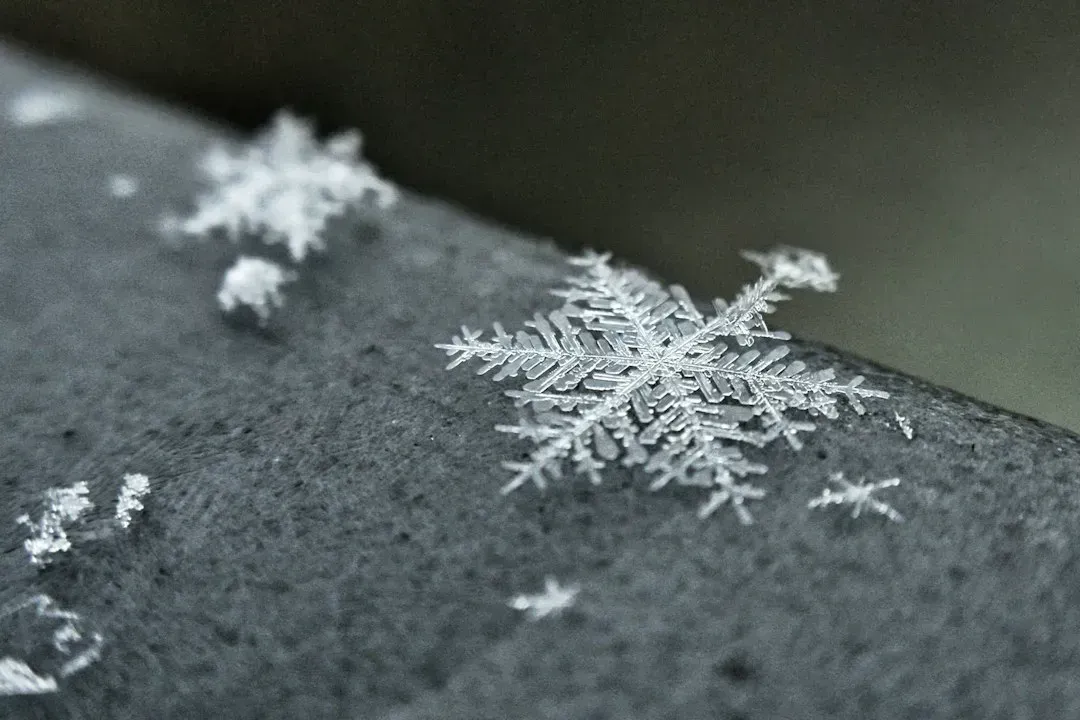
As a hexagonal crystal grows, its corners stick out slightly into the moist air. Water vapor reaches those corners more easily than the flat faces, so they collect molecules faster. Small bumps become arms, and arms grow side branches of their own.
This is why the classic star shape, called a dendrite, forms in certain conditions. Snow crystal researchers have mapped these conditions in lab experiments. Dendrites tend to appear at around minus fifteen degrees Celsius with plenty of moisture available.
Temperature and Humidity Choose the Style
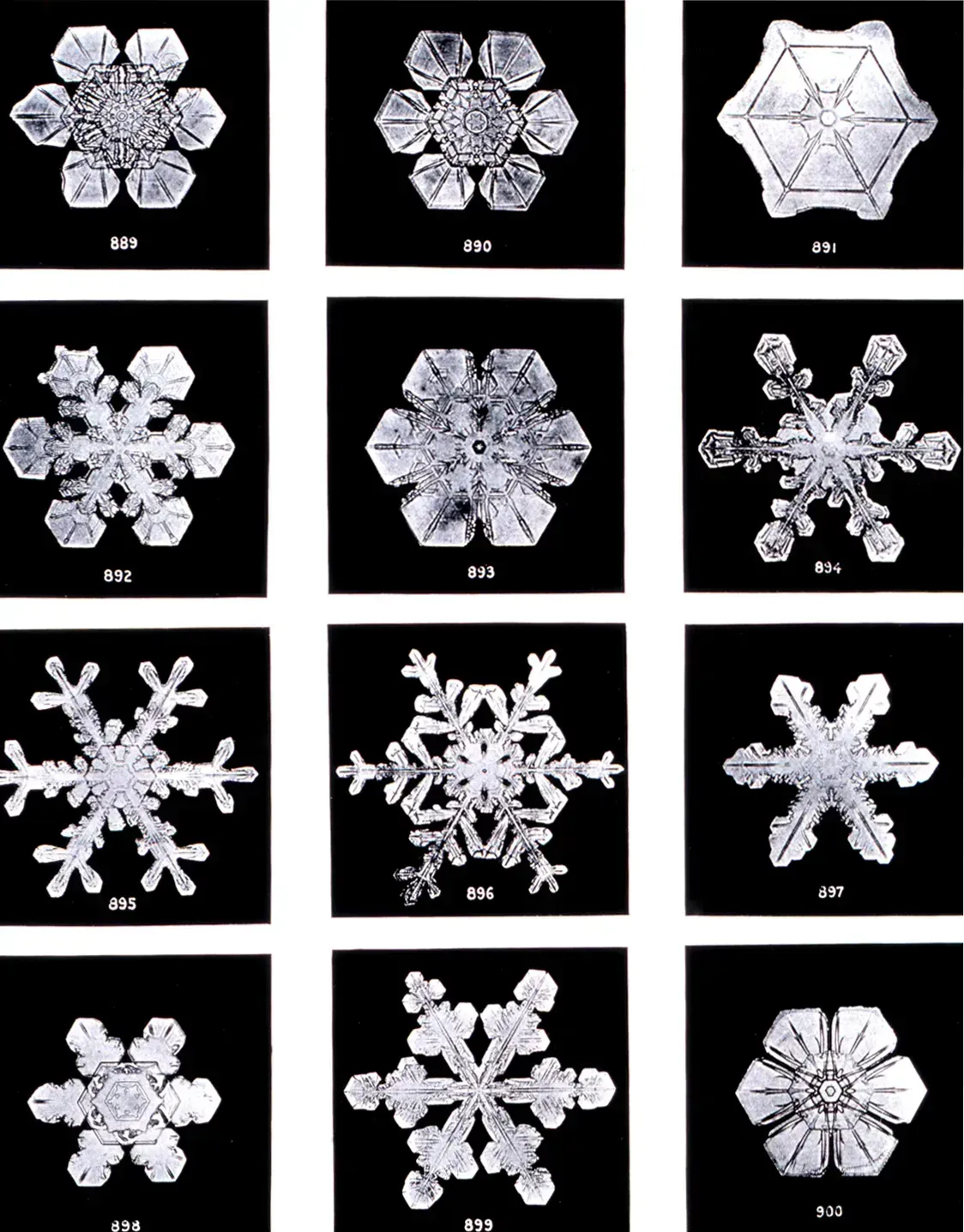
Not every snowflake is a star. Depending on temperature and humidity, crystals grow as thin plates, hollow columns, needles, or stars. Libbrecht’s published morphology diagram lays out which shape tends to form under which conditions.
All of these shapes are built on the same hexagonal lattice. Only the growth rates of different faces change, and those rates respond sensitively to the air around the crystal.
Why No Two Flakes Look Alike
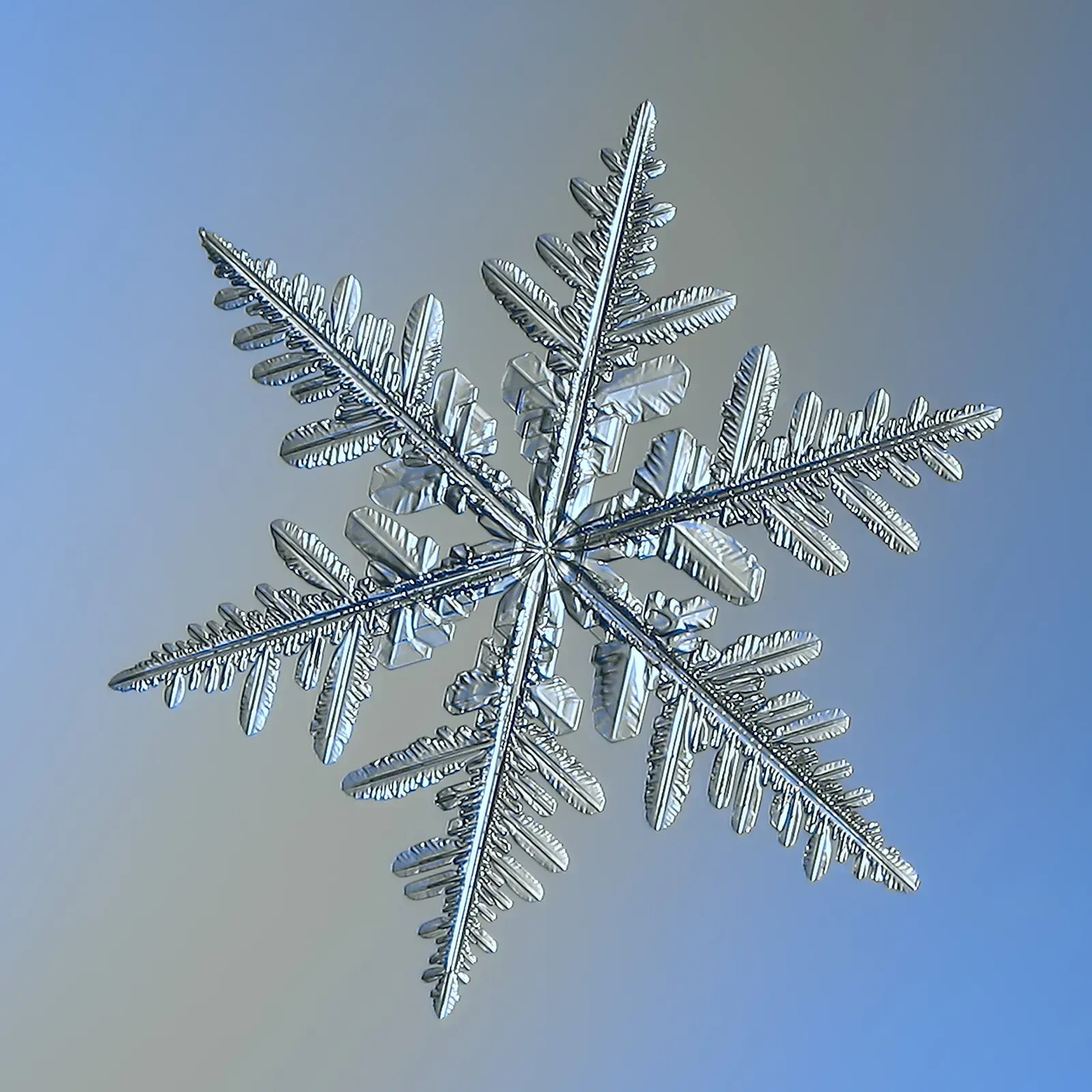
Each crystal drifts along its own path through the cloud. It meets slightly different temperatures and moisture levels along the way, and every arm records those changes. Because the six arms experience nearly the same conditions at the same moment, they often grow in matching ways.
That’s why a single flake looks symmetric while two flakes rarely match. Identical twins have been produced in a lab under tightly controlled conditions, but in the sky, the near infinite number of possible growth histories makes an exact match very unlikely. Not every real flake is perfectly symmetric either, since many are lopsided or broken.
Symmetry That Starts at the Smallest Scale
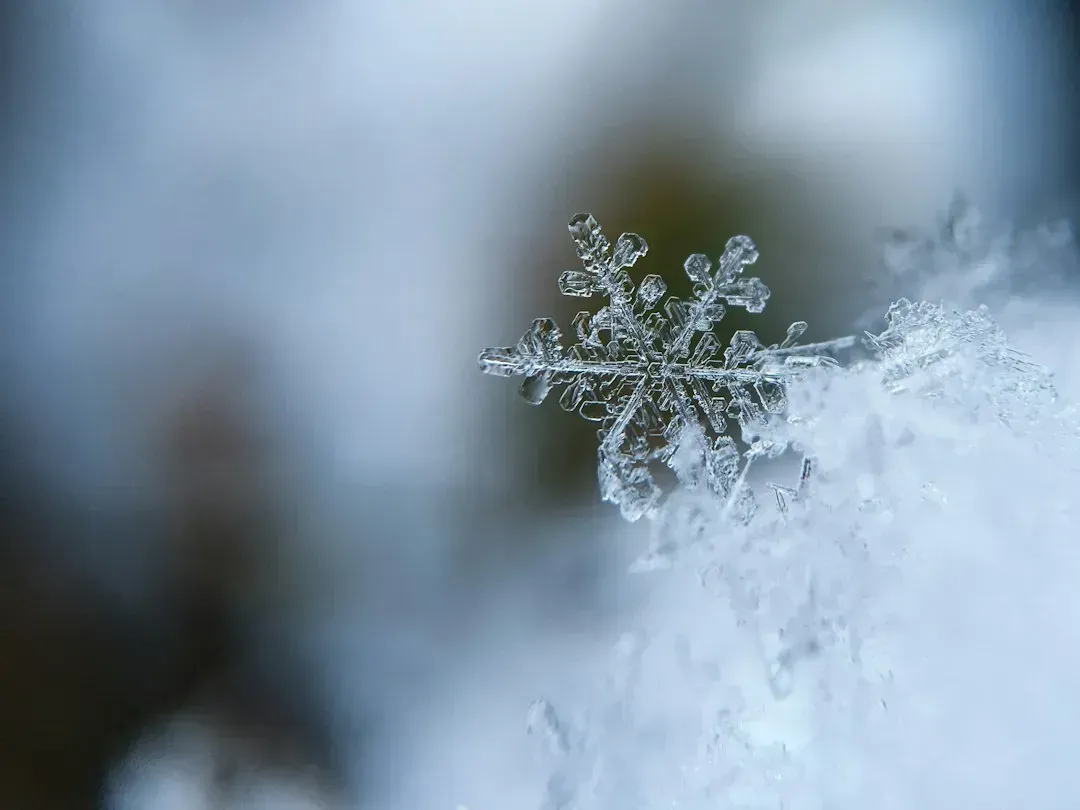
The six sided form of a snowflake is a direct result of water’s molecular geometry. Bent molecules, four hydrogen bonds each, and a lattice built from six membered rings all point to the same outcome.
Weather decides the details, from plates to stars. The hexagon itself is set before the first flake forms.
