


- Real Estate Analysts Just Changed Their Mind About the Safest Places to Buy – Here’s Why - November 12, 2026
- Black Holes Firing Beams at Near-Light Speed – 5 Cosmic Engines Warping Spacetime - November 12, 2026
- Silent Rogue Worlds Drifting in Total Dark – 6 Planets Ejected From Their Star Systems - November 12, 2026
“Red sky at night, sailors’ delight. Red sky in the morning, sailors take warning.” Most of us learned the rhyme as kids. Plenty of people still glance at a fiery sunset and take it as a sign that tomorrow will be fine.
Meteorologists generally agree there’s real physics behind the saying. They also warn that it’s a rule of thumb, not a forecast. This article looks at where the rhyme comes from, why it sometimes works, and where it breaks down.
An Old Saying With Ancient Roots

The rhyme is very old. The Gospel of Matthew (16:2-3) attributes to Jesus a version of it: fair weather when the evening sky is red, foul weather when the morning sky is red and lowering. That passage suggests people were already reading the sky this way long before modern forecasting.
The saying has also traveled and changed. It’s most often seen as advice for mariners, but some versions swap “sailors” for “shepherds.” Anyone who worked outdoors had good reason to want a quick read on the day ahead.
Why the Sky Turns Red in the First Place
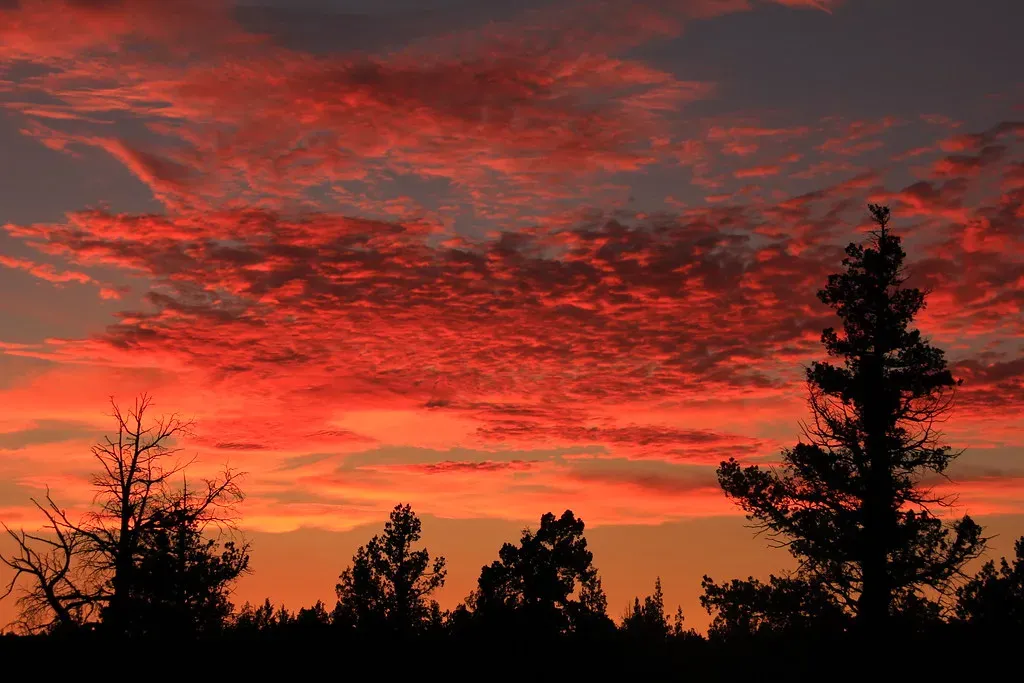
Color comes first, and the forecast comes second. At sunrise and sunset the sun is low, so its light passes through the thickest part of the atmosphere. By the time that light reaches you, most of the blue has been scattered away, and mainly red and orange remain.
This is the same Rayleigh scattering that makes the daytime sky blue. Shorter wavelengths such as blue and violet are scattered more effectively by air molecules than longer wavelengths such as red and orange. A red sky is therefore a normal consequence of the sun’s low angle. What changes from day to day is what’s in the air and the clouds that catch the light.
The West-to-East Logic Behind the Rhyme

The forecasting part depends on wind patterns. In the mid-latitudes, weather generally moves from west to east because of the prevailing westerlies. That means the western sky at sunset hints at the weather ahead, while the eastern sky shows what has already passed.
So a red sunset means the sun is lighting up the western horizon, where tomorrow’s weather is coming from. Forecasters explain this as stable air arriving from the west, so good weather tends to follow. A red sunrise reverses the picture. It can indicate a low pressure storm system moving in from the west.
What Aerosols and Pressure Add to the Picture
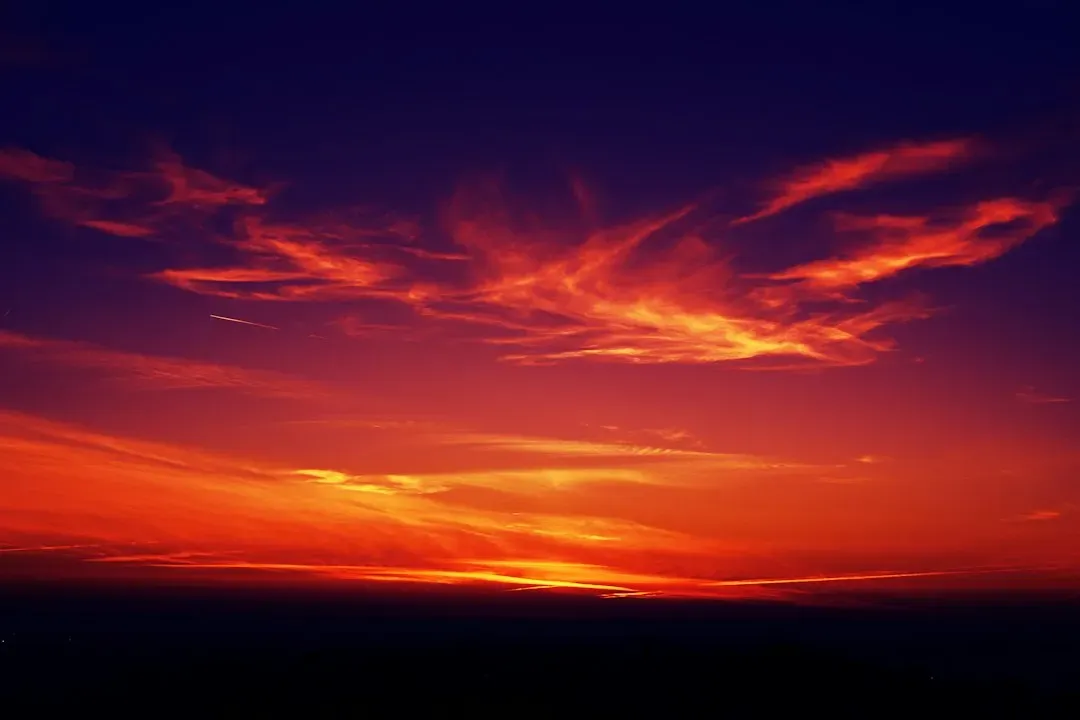
Some explanations go a step further and tie the color to air pressure. A vivid red sky needs dust, salt and other aerosols, which high pressure can trap by pushing air downward. Under that logic, a deeply colored sunset reflects dry, settled air.
The other half of the argument is about clouds. Low pressure brings lots of clouds and fewer aerosols, while high pressure brings fewer clouds and more aerosols. Treat this as a simplified model. The sky’s color depends on many things at once, so it’s a hint rather than a measurement.
What Meteorologists Say About the Proverb
Professional forecasters tend to be cautiously supportive. Joe Sienkiewicz of NOAA’s Ocean Prediction Center has said there is scientific validity to the adage. Broadcast meteorologists often call it mostly true, though they usually add caveats.
The caveats matter. One fact-check called the rhyme surprisingly accurate for part of the world. It noted that it doesn’t cover systems moving in other directions, or storms steered by mountains and water. That’s a fair summary of expert opinion: useful, but with limits.
The Accuracy Numbers You Should Be Careful With
You’ll find confident figures online. One site claims over 90 percent accuracy in the mid-latitudes, while another puts it at roughly 60 to 70 percent under specific conditions. The two numbers don’t agree, and neither is backed by a clearly cited peer-reviewed study.
The honest takeaway is that no authoritative, widely accepted accuracy rate exists for this saying. It’s better than random in places where weather reliably moves west to east. Beyond that, treat any precise percentage skeptically.
When a Red Sky Gets It Wrong

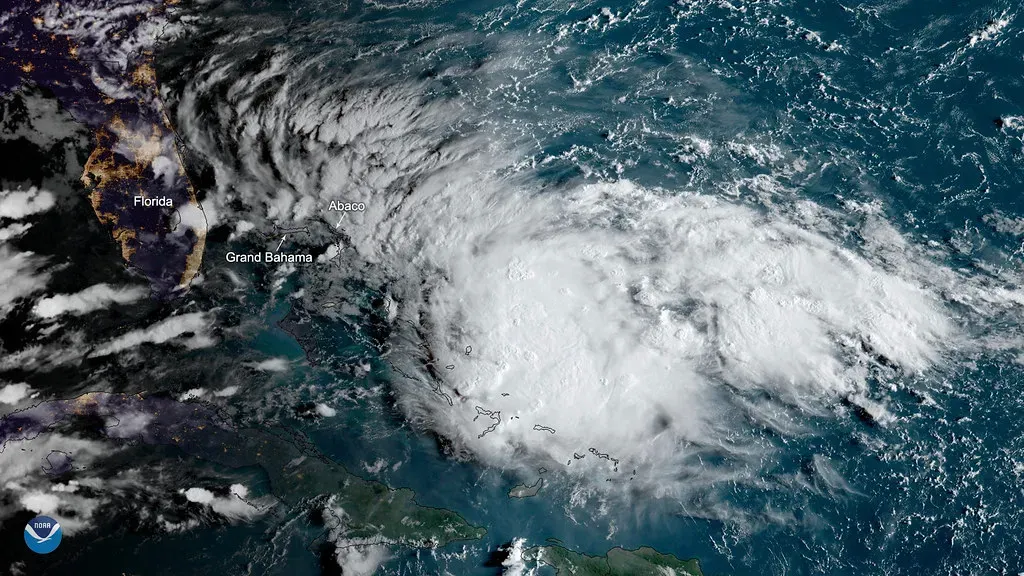
A recent example came in late September 2026. Boston-area residents saw a vibrant sunset on a Friday evening, just before a nor’easter arrived for the weekend. The rhyme implied fair weather, and a strong storm showed up instead.
The National Weather Service’s Frank Nocera pointed to a different factor. He said the speed of the storm matters more than the sky’s color when trying to predict the weather. He added that striking sunsets are most common when thin, wispy cirrus clouds sit on the western horizon. Cirrus can run ahead of an approaching system, which is exactly what a nor’easter looks like.
Where the Rule Doesn’t Apply

Geography is the biggest limit. Some sources say the rule fails in the tropics, where trade winds dominate. The whole logic rests on westerly flow, so it weakens wherever winds blow differently.
Local conditions can also muddy the colors. Particles such as dirt from fieldwork can alter the sky’s color. Smoke and dust from distant sources can do the same, so a red sky doesn’t always mean what the rhyme says.
Conclusion: A Handy Clue, Not a Forecast

Weather folklore like this one survives because it’s grounded in something real. Weather in the mid-latitudes does tend to move from west to east, and the light at sunrise and sunset does reveal what’s in the western or eastern sky. As a quick clue, the rhyme has merit.
Still, it can’t compete with satellites, radar and computer models. Use the red sky as a prompt to check the actual forecast, especially if you’re heading out on the water. The sky offers a hint, and the forecast gives you the answer.
