

Right now, in late October 2026, Halley’s Comet is somewhere you can’t see it. It’s a faint speck in the outer solar system, far beyond any backyard telescope.
Still, we know where it is, and we know roughly where it’s going. Here’s a look at the comet’s position, its schedule, and the odd way it keeps coming back to us.
Where the Comet Sits Today
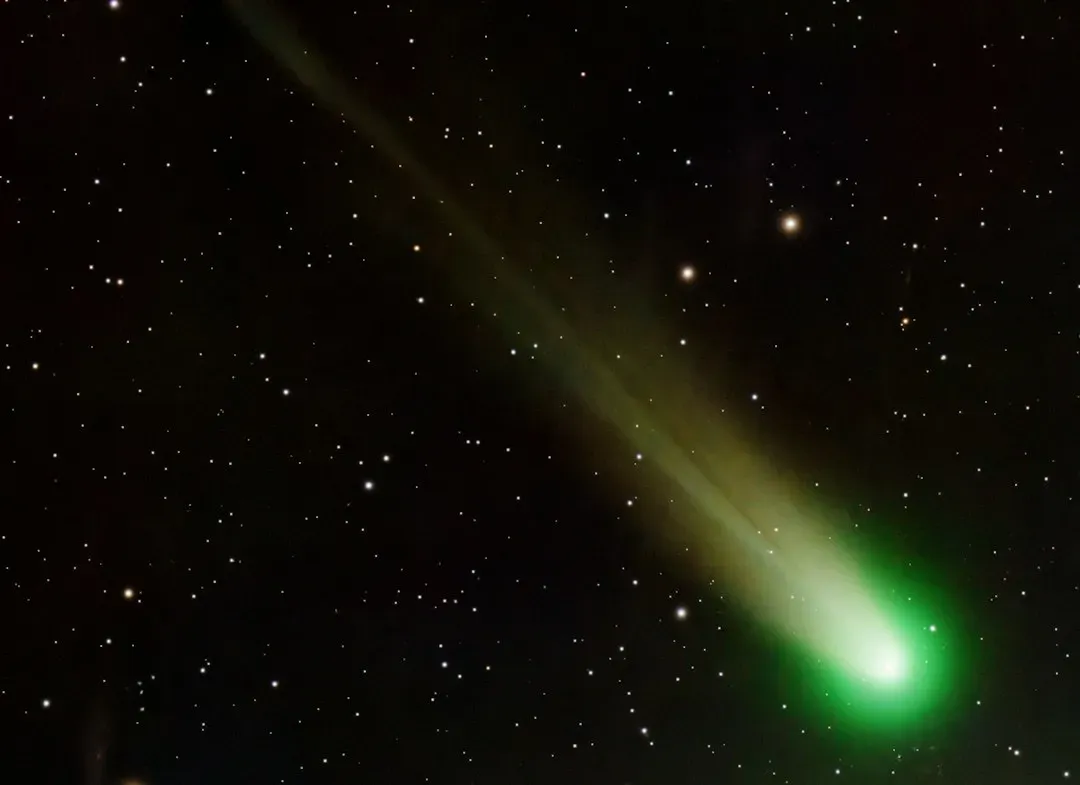
One live tracking site places Halley in the constellation Hydra. It lists the comet at a distance of about 5.24 billion kilometers from Earth. That’s a long way off, even by solar system standards.
The same source estimates the comet’s brightness at roughly magnitude 25.6, computed from JPL Horizons data. For comparison, the faintest stars the naked eye can pick out sit near magnitude 6, so Halley is millions of times too dim for us. Only the largest professional instruments could hope to catch it.
The Turning Point in December 2023
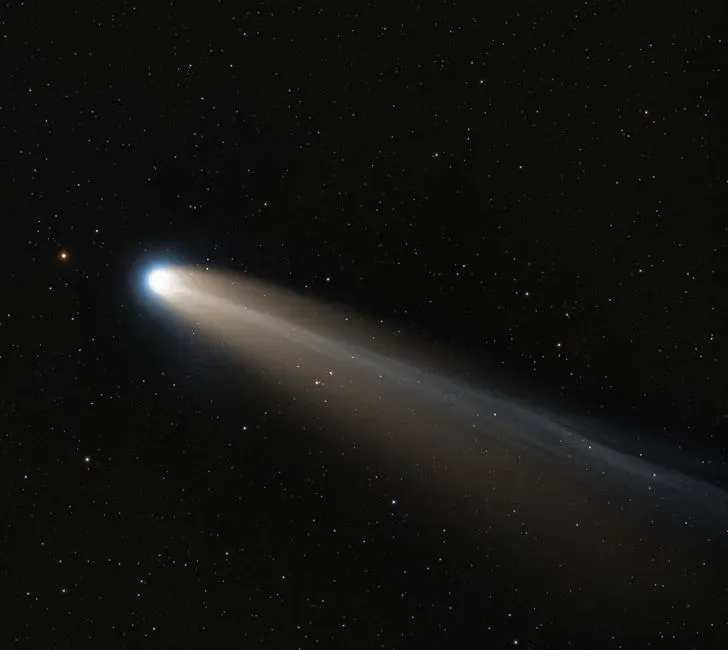
On December 9, 2023, the comet reached aphelion, its most distant point from the Sun. At that moment it was 35.14 AU away, almost 3.3 billion miles.
That date mattered because the comet had been drifting outward since its last visit. After aphelion, it started approaching the Sun again for the first time in nearly 38 years. Since then, Halley has been on the inbound leg of its orbit.
A Slow Start on the Way Home
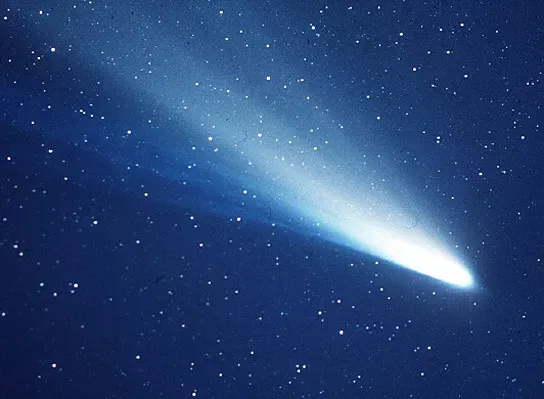
Comets don’t move at a steady pace. A celestial body moves fastest at perihelion and slowest at aphelion, in line with Kepler’s second law.
So Halley’s early inbound speed is very modest. Its orbital velocity increases only very slowly at first. In 2026, nearly three years past aphelion, it’s still crawling compared with how fast it will be moving in the 2060s.
Why 2061 Is the Date to Remember
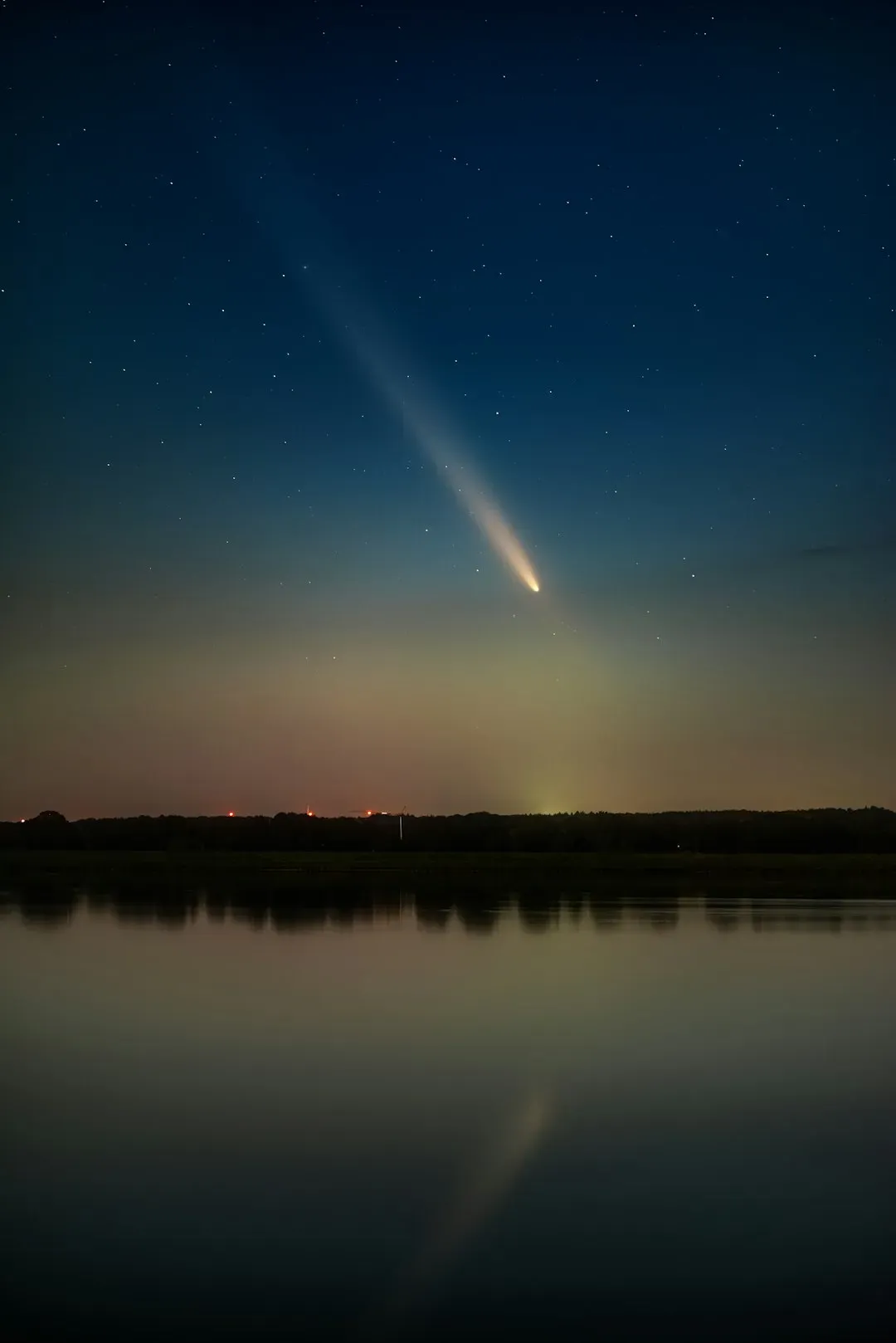
Perihelion is expected on July 28, 2061. Another data table lists the next perihelion transit as January 6, 2062, but that comes from a snapshot of orbital elements and not an updated forecast. Planetary gravity keeps nudging the schedule.
The summer 2061 date is the one commonly cited. The comet’s last visit was in 1986, and it’s expected back in 2061. That puts us about a third of the way into the long trip back in, give or take.
Why the Orbit Isn’t Perfectly 76 Years
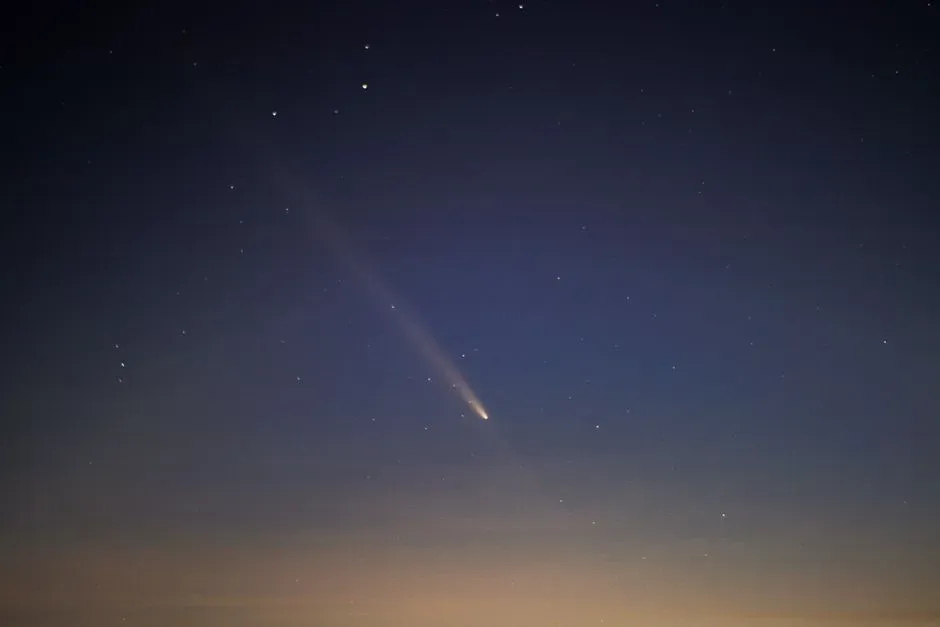
The famous number is an average. Planetary gravity can disturb the comet’s journey, making its period anywhere from 74 to 79 years.
The orbital elements tell a similar story. One table lists the period as about 75.9 years. That’s why you’ll see “75 years” in some sources and “76 years” in others, and both are fair.
The Shape of a Very Stretched Orbit
Halley’s path is a long, narrow ellipse. Its aphelion is about 35.1 AU, at the outer edge of the Kuiper Belt, and its perihelion is about 0.6 AU, just inside the orbit of Venus.
At perihelion it will be about 88 million kilometers from the Sun, roughly halfway between the orbits of Mercury and Venus. So the comet swings from beyond Neptune’s neighborhood to inside Venus’s orbit. Few famous objects cover that much ground.
Why It Never Hits a Planet
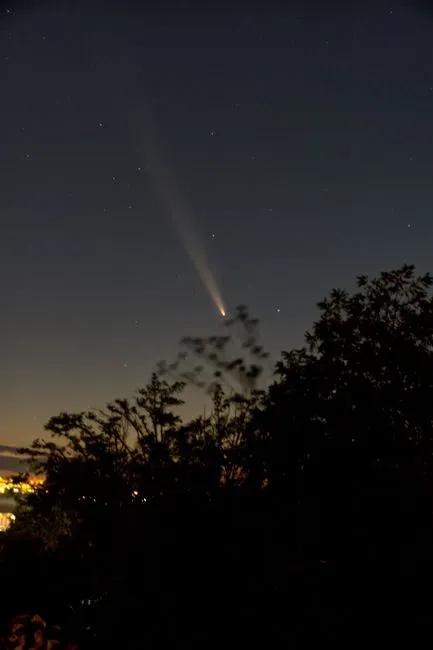
Crossing so many planetary orbits sounds risky. Yet the orbit is tilted about 18 degrees, so its trip doesn’t take it across the paths of any planets.
The planets circle the Sun on a roughly level plane. Halley spends most of its time away from that plane, which keeps close encounters off the table.
What the Comet Is Made Of
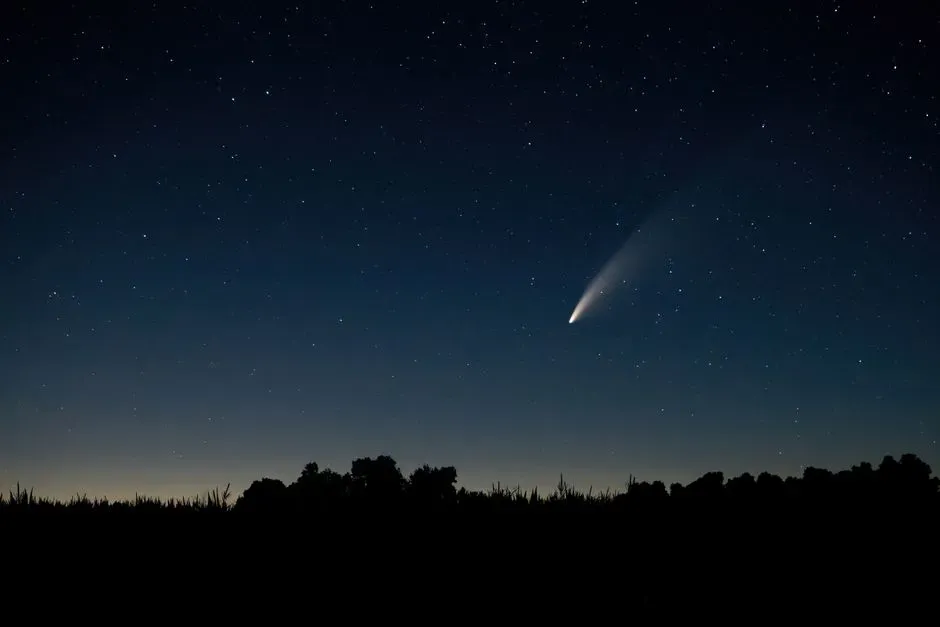
The nucleus measures about 15 by 8 kilometers. It’s composed of ice, dust, and small rocky particles.
Out where it is now, that nucleus is frozen and quiet. The nucleus itself is dark and hard to see until a spacecraft passes close. Its glowing coma and tail only appear when the Sun warms it, which won’t happen for decades.
Halley Still Shows Up Every October
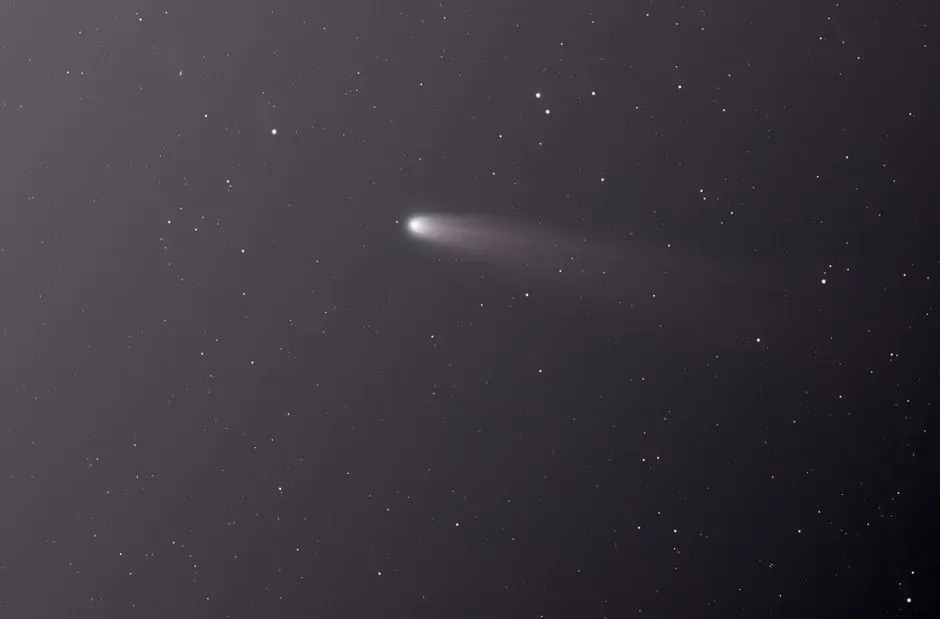
You don’t have to wait until 2061 to see something of Halley. The Orionid meteor shower each October is made of debris from the comet.
The Orionids are active around now, in late October 2026. The comet is far away, but pieces it shed on earlier trips are still burning up in our atmosphere.
What 2061 Should Look Like
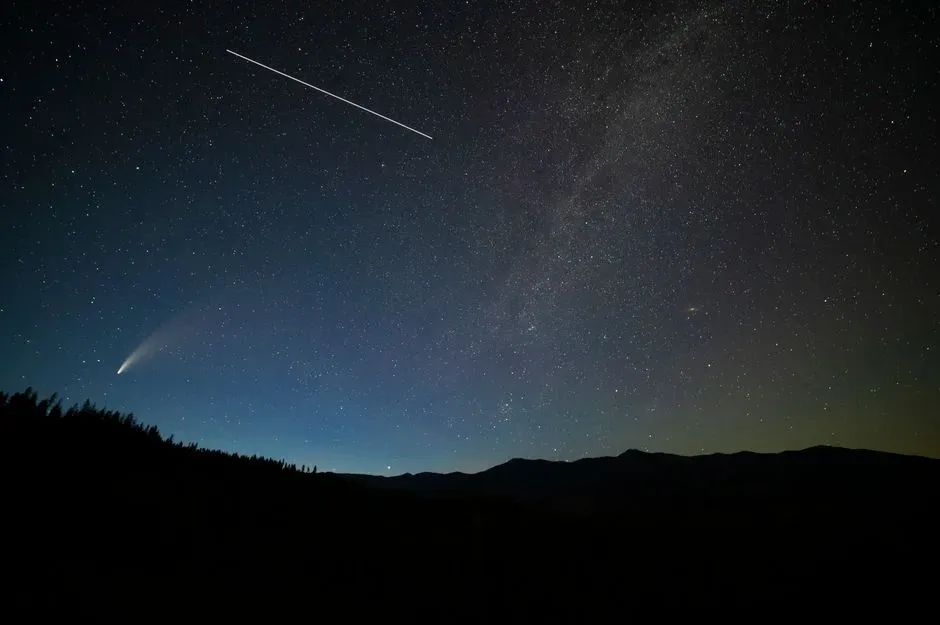
Predictions for the next visit are already on record. Halley is expected to appear about 21 degrees north of the Sun at perihelion, so from July 25 to July 28 it should be visible in twilight as a zero magnitude object.
That’s bright enough to spot, though not a spectacular showing. Many people who saw the 1986 visit were disappointed, and that gap between expectation and view is part of the comet’s story.

- Blue whales vanish from the Galápagos, and scientists suspect El Niño - November 11, 2026
- 8 Famous Battles That Were Decided by the Weather - November 11, 2026
- Black Sunday 1935: 9 Photos From the Worst Dust Storm of the Dust Bowl Era - November 11, 2026
