

- 10 Home Upgrades That Can Lower Summer Cooling Costs - November 10, 2026
- 10 Questions to Ask Before Buying a Home in a Flood Zone - November 10, 2026
- 9 Coffee-Growing Regions Reporting Lower Yields as Temperatures Rise - November 10, 2026
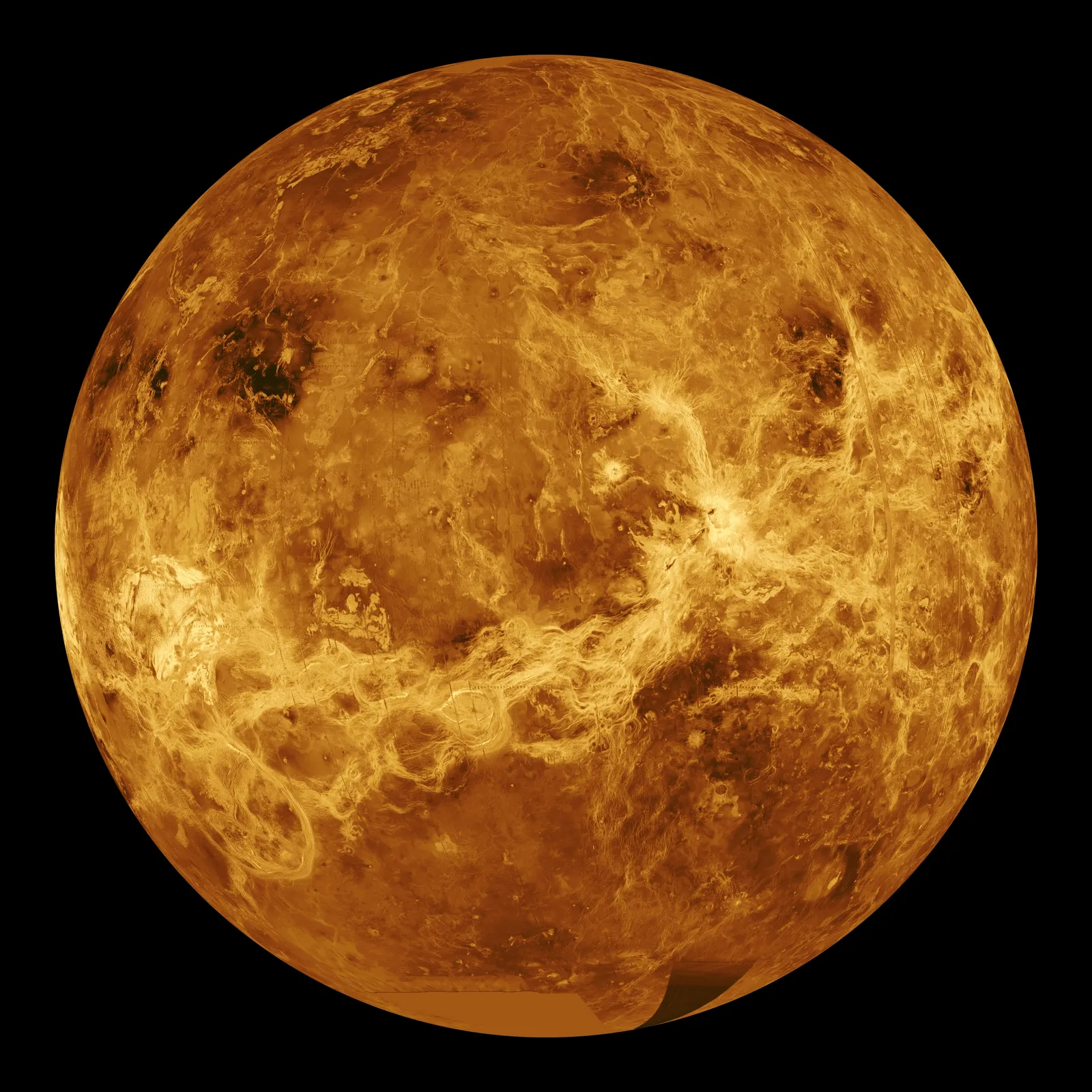
Look at a model of the solar system and almost everything seems to agree on direction. The planets circle the Sun the same way, and most of them spin the same way too. Venus quietly breaks the pattern.
Its backward spin has been known for decades, yet it still raises real scientific questions. The answers involve radar, thick clouds and some careful orbital physics.
What Retrograde Rotation Actually Means
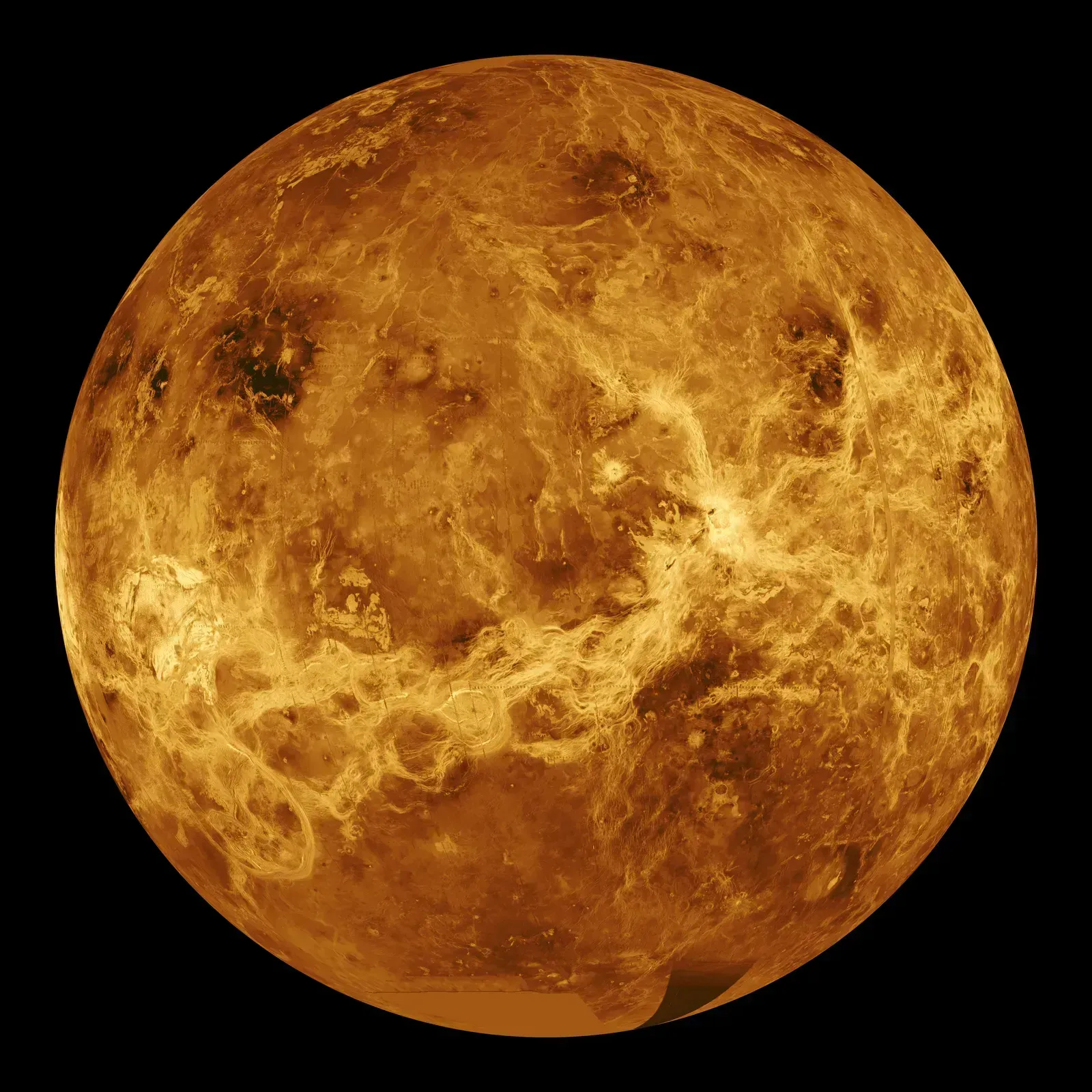
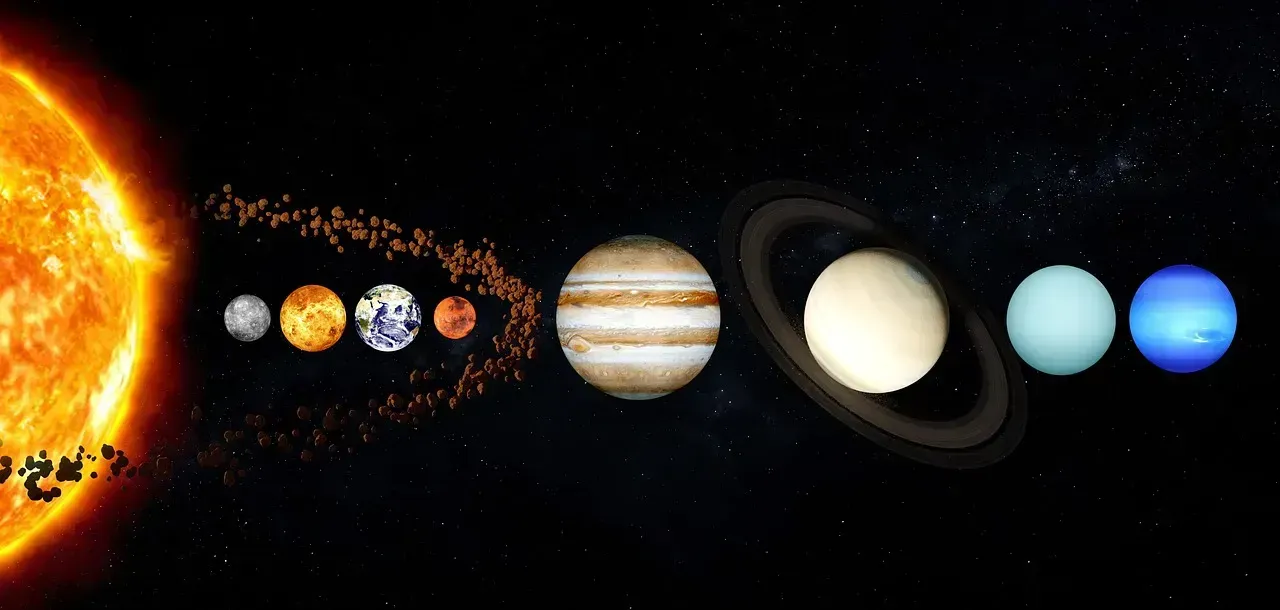
Seen from above the Sun’s north pole, the planets orbit counterclockwise. Earth, Mars, Jupiter and Saturn also rotate counterclockwise, which astronomers call prograde rotation. Venus turns clockwise instead, a motion known as retrograde rotation.
The practical result is easy to picture. On Venus, the Sun would rise in the west and set in the east. Nobody could see it happen from the surface, though, because the clouds never part.
An Extremely Slow Spin
Venus doesn’t just turn the wrong way. It turns very slowly, taking about 243 Earth days to complete one rotation relative to the stars. That is longer than the roughly 225 Earth days it needs to orbit the Sun.
So a Venus year is shorter than a Venus rotation. By comparison, Earth spins once in about 24 hours, so Venus is in a different category entirely.
Why a Day on Venus Is Shorter Than You’d Expect
The time from one sunrise to the next is a different measurement from the rotation period. Because Venus spins backward while orbiting forward, the two motions work together. A solar day there lasts about 117 Earth days.
If Venus rotated in the same direction as its orbit, the solar day would be far longer. The retrograde spin effectively shortens how often the Sun returns to the same spot in the sky.
A Planet Tipped Almost Upside Down
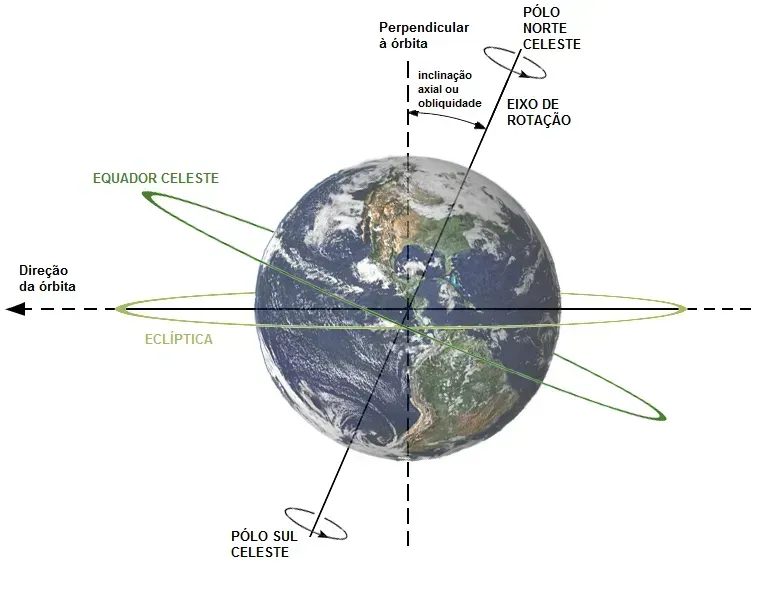
Another way to describe the situation is through axial tilt. Venus is tilted at about 177 degrees, which is nearly flipped over. Earth, by contrast, is tilted at roughly 23 degrees.
Scientists note that a planet spinning forward but turned upside down would look identical to one spinning backward. This is why researchers often discuss tilt and spin direction as parts of the same puzzle. Uranus, tilted at about 98 degrees, shows that unusual orientations aren’t unique to Venus.
Could a Giant Impact Have Flipped It?
One early idea is that a massive collision early in the solar system’s history knocked Venus over or reversed its spin. Violent impacts were common while the planets were forming, and they are the leading explanation for features such as Earth’s Moon. A similar event could, in principle, have changed Venus’s rotation.
There is no direct evidence for such an impact on Venus, however. Researchers treat it as a plausible possibility rather than a confirmed event.
The Role of Atmosphere and Tides
A second explanation relies on gradual forces rather than a single crash. Studies by astronomers Alexandre Correia and Jacques Laskar suggested that Venus could have started with a faster spin and slowly changed. Two effects would have competed: gravitational tides from the Sun, and atmospheric tides driven by the planet’s very thick atmosphere.
Friction between the planet’s core and mantle also plays a part in these models. Together, the forces could have slowed the spin, tilted the axis and settled Venus into its current state over a long time. This is a computational result, and it remains a hypothesis rather than a proven history.
How Astronomers Measured the Spin Through the Clouds
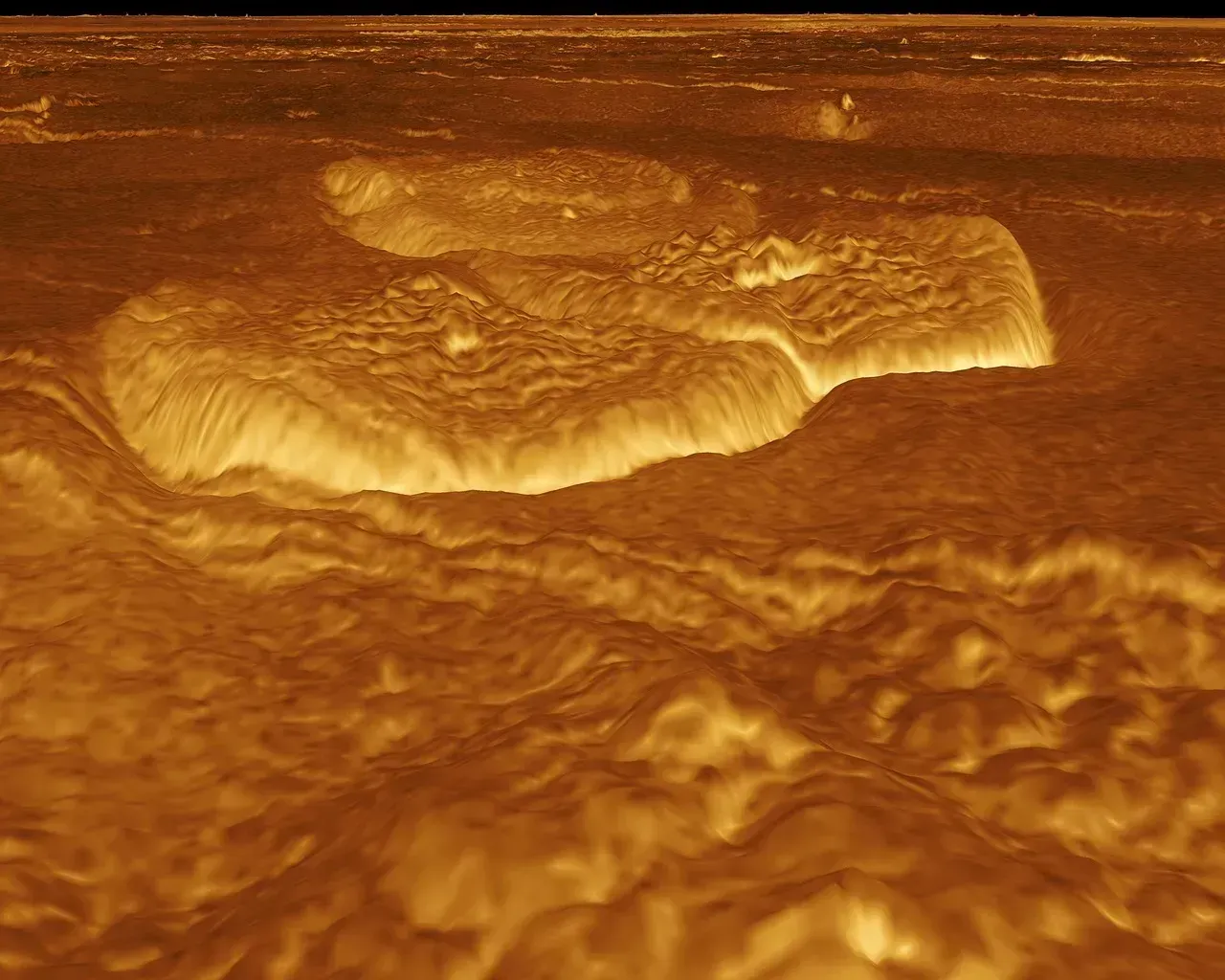
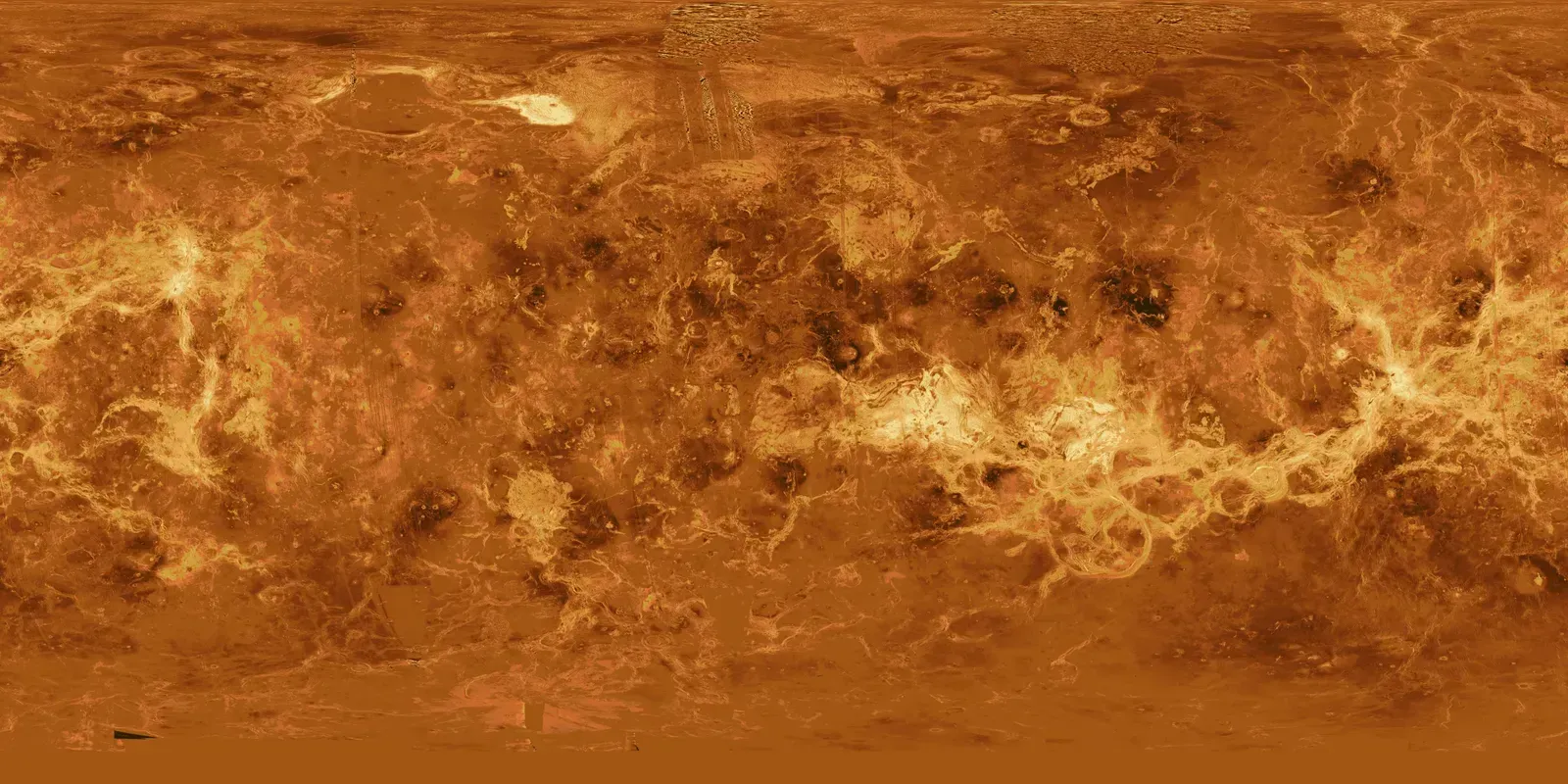
Venus is wrapped in dense clouds, so ordinary telescopes can’t track surface features. Radar solved the problem. Radio signals sent from Earth bounce off the surface, and the reflections reveal how fast and in which direction the planet turns. Radar observations in the early 1960s first showed the backward rotation, and NASA’s Magellan spacecraft mapped the surface by radar in the early 1990s.
A study published in Nature Astronomy in 2021 refined the numbers using years of radar data from the Goldstone antenna in California. It gave a rotation period of about 243 Earth days and a precise pole orientation. It also found that the length of a Venus day varies by a few minutes, which researchers linked to the interaction between the surface and the dense atmosphere.
Winds That Outrun the Planet
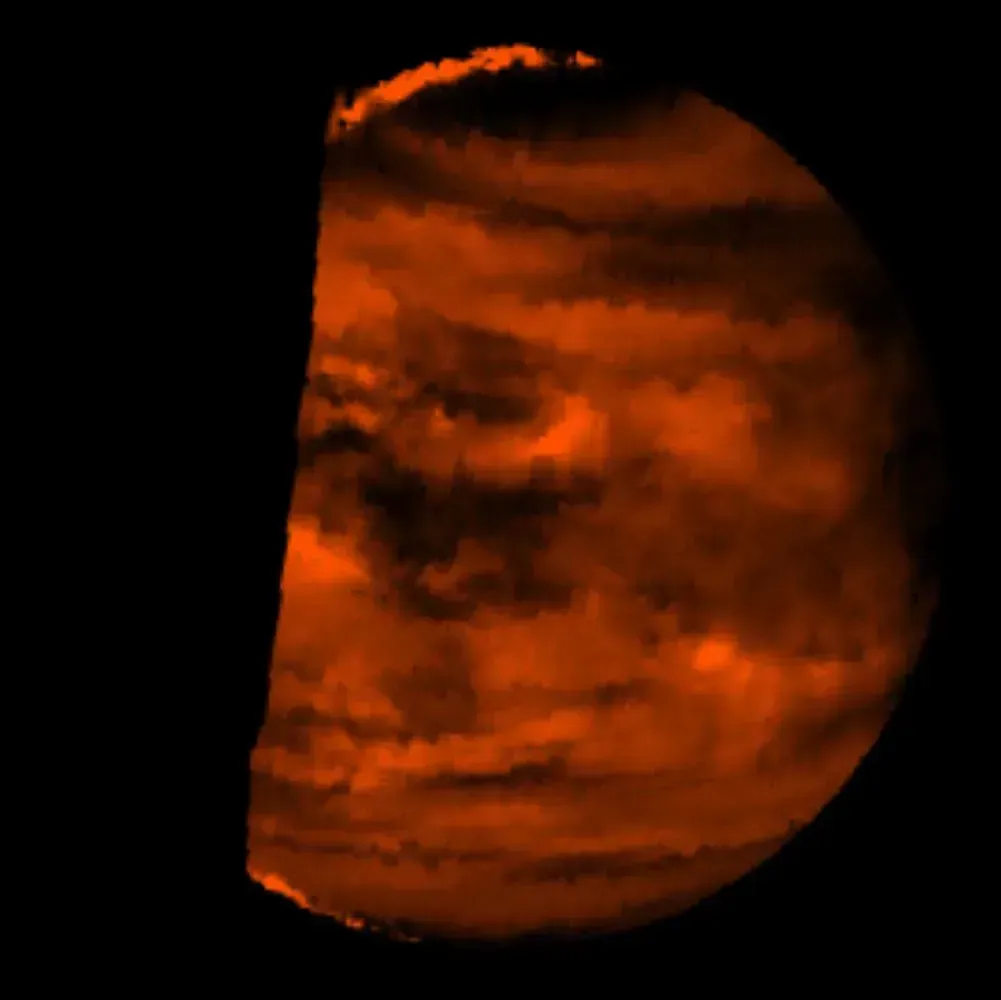
While the solid planet crawls, the atmosphere races. The upper clouds circle Venus in about four Earth days, a phenomenon called superrotation. Cloud top winds reach speeds around 100 meters per second, which is well beyond hurricane strength on Earth.
Japan’s Akatsuki orbiter, which has studied the planet’s weather since 2015, continues to track this motion. Scientists still debate exactly how the atmosphere maintains such fast winds above a nearly stationary surface. The question connects directly to the spin puzzle, because the atmosphere and surface exchange momentum.
Missions That May Shed More Light
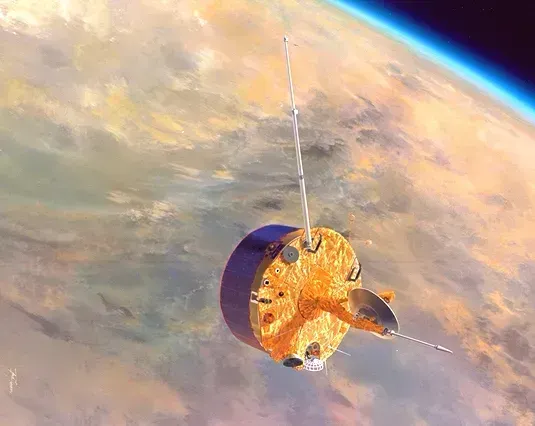
Venus is getting renewed attention. NASA has selected the VERITAS orbiter and the DAVINCI atmospheric probe, and the European Space Agency has adopted its EnVision orbiter. All three are aimed at launches in the early 2030s, though schedules can shift.
VERITAS and EnVision are designed to map the surface in detail with radar and study the planet’s geology and interior. Better measurements of Venus’s interior structure could help test the tidal and impact theories. Until then, the reason for the backward spin remains one of the planet’s open questions.
