


- Phantom Energy Sucking Power 24/7 – 7 Home Electronics Quietly Inflating Utility Bills - November 14, 2026
- A Million-Mile Storm Raging for Centuries – 6 Violent Weather Wonders in Our System - November 14, 2026
- Animals Flee Hours Before the Tremor – 7 Natural Warnings Before Disasters Strike - November 14, 2026
For most of the twentieth century, cosmologists assumed that once you nailed down the rate at which the universe expands, the rest of the picture would fall into place. That assumption has been quietly falling apart for the better part of a decade, and by 2026 the disagreement has hardened into something researchers no longer describe as a curiosity but as a genuine problem for the standard model of cosmology.
The debate centers on a single number, the Hubble constant, which tells us how fast galaxies are receding from us today. Two independent ways of measuring it keep giving different answers, and neither side has been able to explain away the gap despite years of increasingly precise data from space telescopes, ground based surveys, and entirely new instruments built specifically to settle the question.
What The Hubble Tension Actually Means
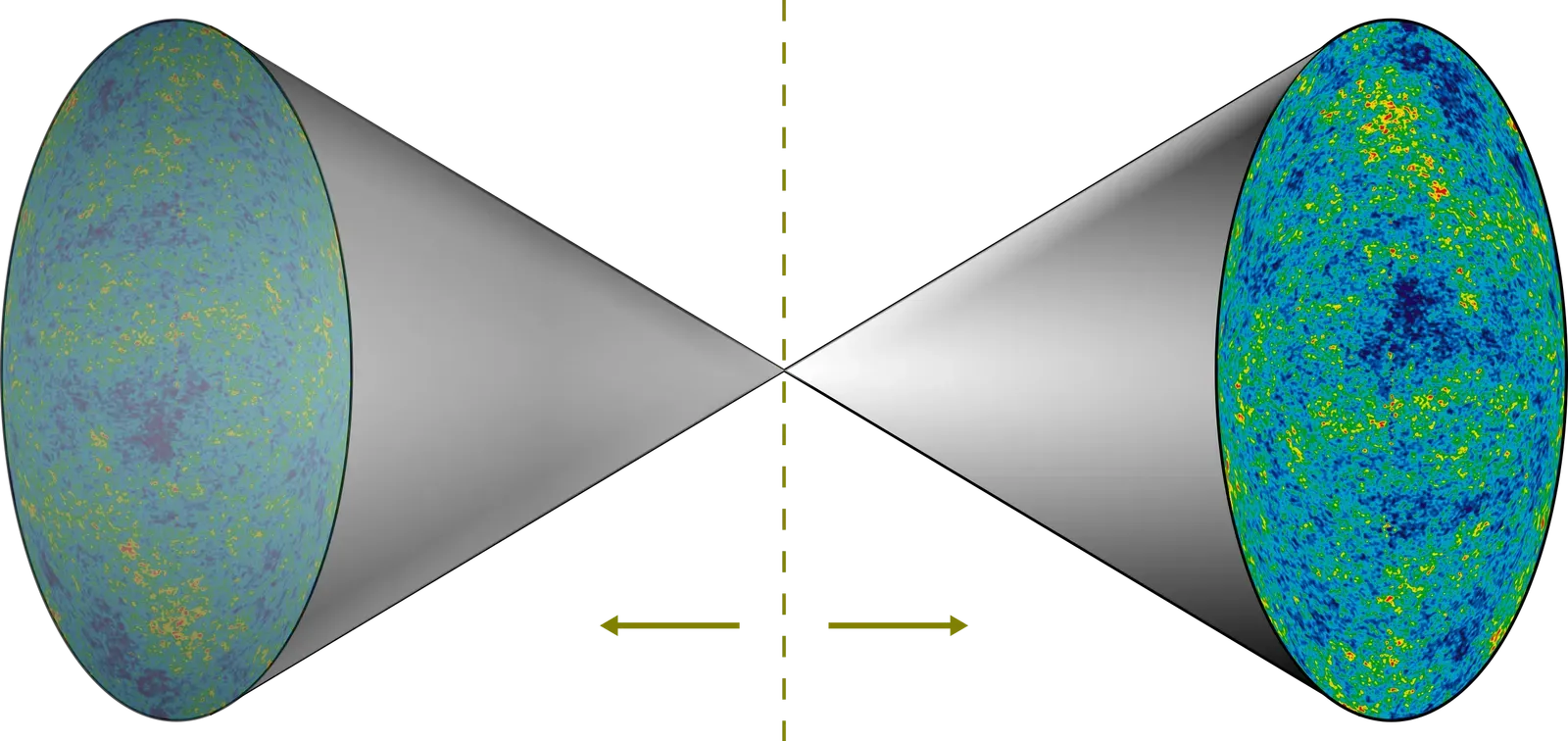
At its core, the Hubble tension is a mismatch between two ways of measuring the universe’s current expansion rate. It refers to the inconsistency between direct measurements of the current expansion rate of the universe made with a variety of probes in the late universe, and indirect measurements that rely on the standard cosmological model calibrated on early universe data. One method looks at nearby stars and supernovae, the other looks at the faint afterglow of the Big Bang itself.
When astronomers use the cosmic microwave background as their starting point, they get a lower number for how fast the universe is expanding. When they measure distances to galaxies directly using stars as mile markers, they get a noticeably higher number. That difference sounds small on paper, but in a field built on precision measurements, it has become impossible to ignore.
The Two Camps: Planck Versus SH0ES
On one side sits the Planck satellite’s reading of the cosmic microwave background, which infers a expansion rate assuming the standard Lambda CDM model is correct. This tension is predominantly driven by the Planck collaboration’s observation of the cosmic microwave background, which predicts a value in Lambda CDM of H0 equal to 67.27 plus or minus 0.60 kilometers per second per megaparsec. That number comes from analyzing patterns baked into radiation left over from roughly 13.8 billion years ago.
On the other side is the SH0ES team, led largely out of Johns Hopkins and the Space Telescope Science Institute, which builds a distance ladder using Cepheid variable stars and Type Ia supernovae in nearby galaxies. Their latest measurement yields H0 equal to 73.04 plus or minus 1.04 kilometers per second per megaparsec. Taken together, these two figures no longer overlap within their margins of error, which is exactly what makes this a tension rather than a rounding difference.
Just How Statistically Significant Is This Gap
Scientists rarely get excited about small discrepancies, because measurement noise usually explains them away. This one has not gone away. Taken at face value, these observations alone result in a 5 sigma tension, a threshold in physics normally reserved for calling something a genuine discovery rather than a fluke.
By 2025, the numbers had grown even more uncomfortable for anyone hoping the problem would quietly resolve itself. The 2025 edition of the Tensions in Cosmology conference came at a crucial time, as the Hubble constant discrepancy has now exceeded 6 sigma, with new high precision data from DESI, JWST, and other facilities making the tension more robust rather than less. That kind of statistical confidence leaves very little room for coincidence.
James Webb Was Supposed To Settle This
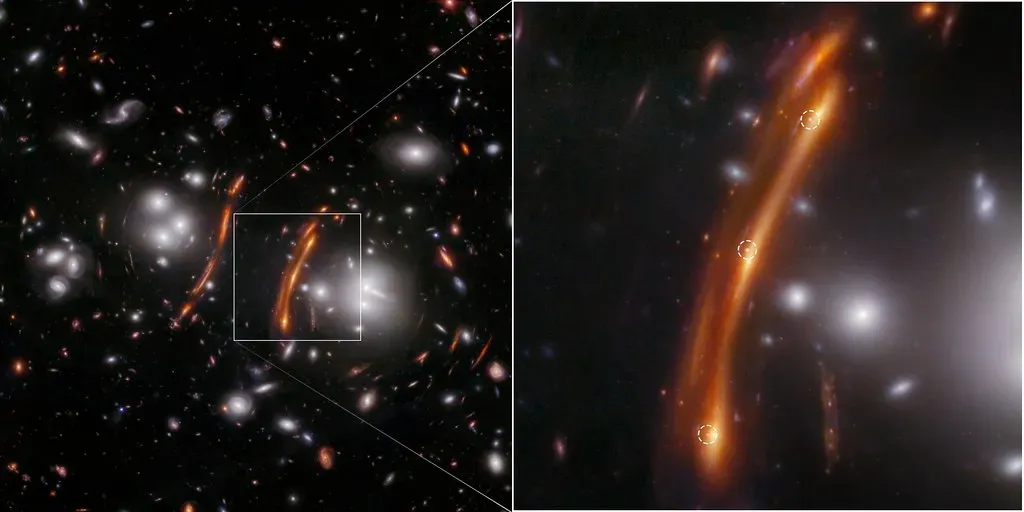
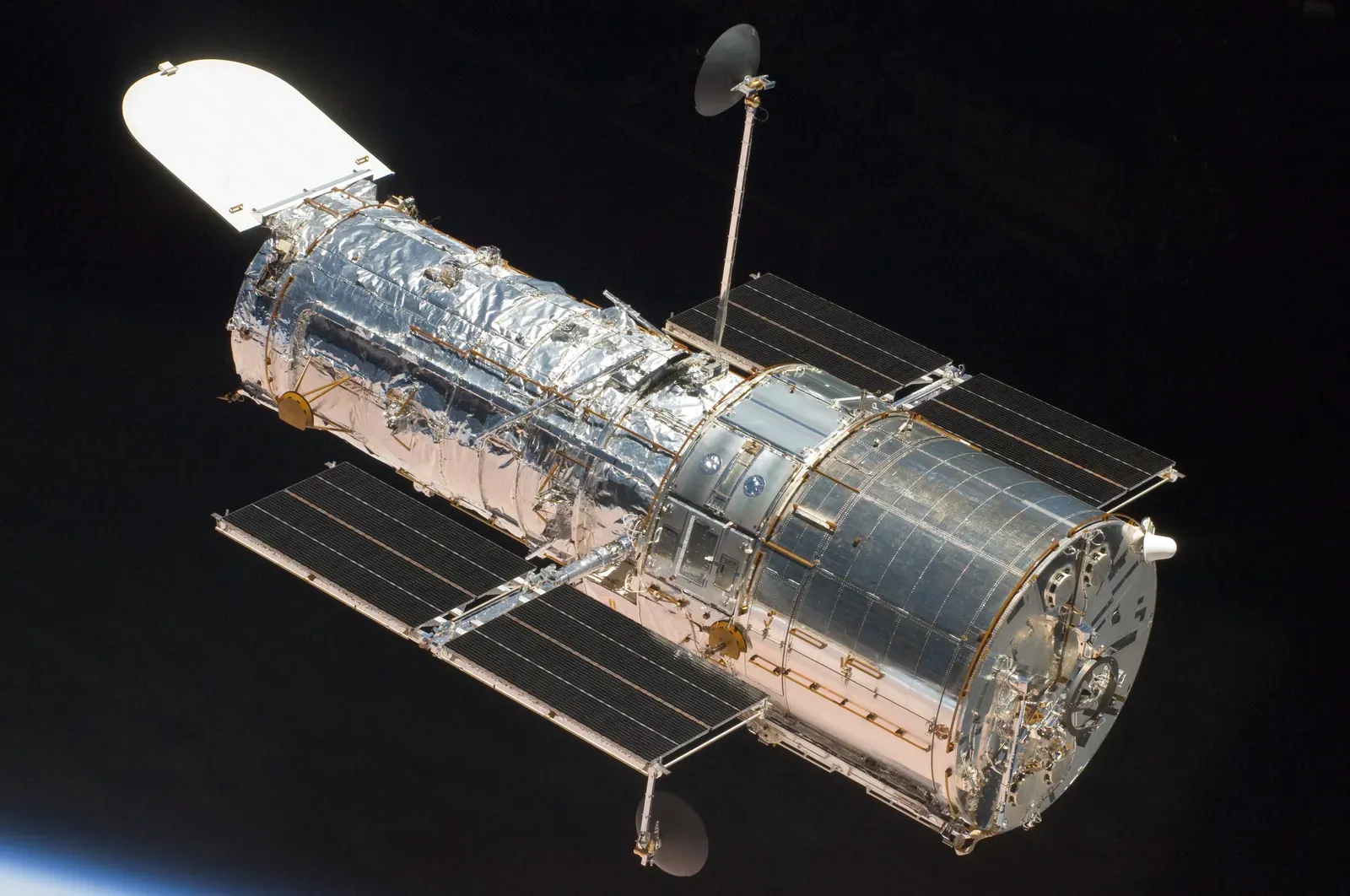
When the James Webb Space Telescope launched, many cosmologists hoped it would end the argument by simply taking sharper pictures of the same Cepheid stars Hubble had already measured. If Hubble’s optics had been introducing some subtle error through star crowding or dust contamination, JWST’s superior resolution should have exposed it. The James Webb Space Telescope was tasked with testing this hypothesis, and in 2024 and 2025 the SH0ES team utilized JWST’s superior resolution to observe the same Cepheids, with the JWST data matching the Hubble data, effectively ruling out crowding or dust as the source of the tension.
That result mattered enormously, because it removed one of the most plausible mundane explanations from the table. The local measurement of 73 kilometers per second per megaparsec is now considered robust. Instead of closing the case, JWST effectively confirmed there really is something to explain.
A Rival Method Muddies The Water Further
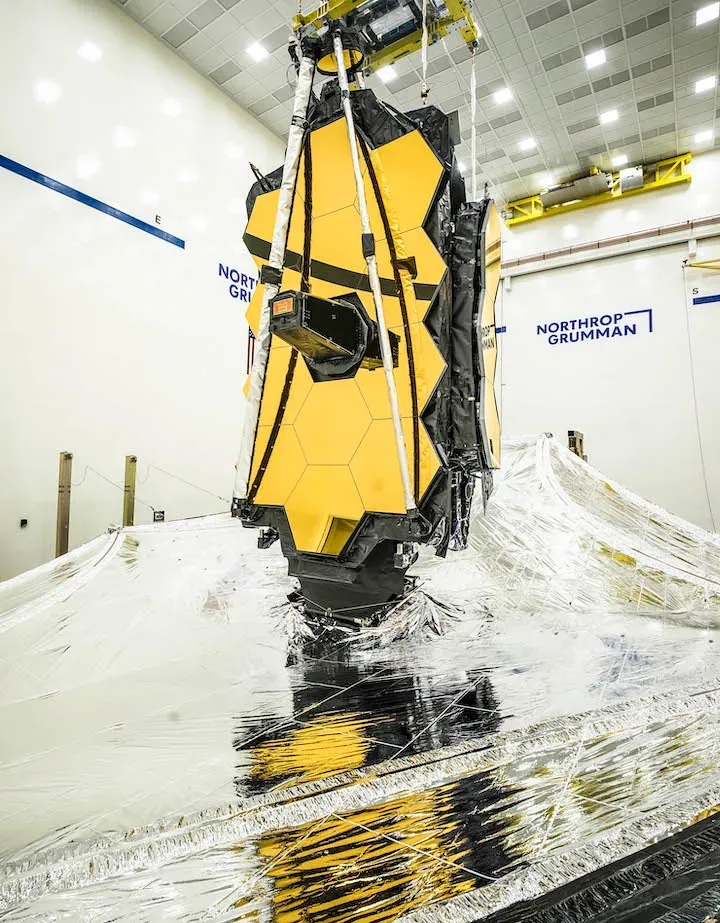
Not every JWST based approach agrees with SH0ES, which has added another layer of complexity rather than resolving anything. The Chicago Carnegie Hubble Program, led by astronomer Wendy Freedman, uses a different class of stars called the Tip of the Red Giant Branch to measure the same distances. CCHP’s latest paper uses the TRGB to arrive at a best value of 70.39 kilometers per second per megaparsec when combining measurements from JWST with Hubble Space Telescope data.
That number sits closer to the Planck value, which led the CCHP team to argue the tension might be overstated. Not everyone agrees. Their conclusion has met opposition, with Dan Scolnic, an astrophysicist at Duke University, noting that their result is sort of in the middle of the Hubble tension, so he is surprised they would say they rule it out. Scolnic went further at a major astronomy conference, describing the situation in unusually blunt terms for academic discourse. At a meeting of the American Astronomical Society in January 2025, Scolnic declared that the Hubble tension was now a crisis.
DESI Adds A New Wrinkle: Dark Energy Might Be Changing
While astronomers were arguing over Cepheids and red giants, an entirely separate survey was quietly stirring up its own controversy. The Dark Energy Spectroscopic Instrument, using baryon acoustic oscillations as cosmic rulers, released its second major data set in 2025 based on millions of galaxy and quasar redshifts. For DR2, 14 million measurements are used, enough to provide strong hints of dark energy’s equation of state changing with time.
This matters because the standard model assumes dark energy behaves like a constant, unchanging force pushing space apart. DESI’s results suggest otherwise. Comparing the evolving dark energy model to Lambda CDM, researchers found 3.1 sigma evidence in favor of dynamical dark energy from DESI plus CMB data alone, and when supernova datasets were added, the preference for evolving dark energy ranged between 2.8 and 4.2 sigma depending on which sample was used. If dark energy really is weakening over cosmic time rather than staying fixed, that alone could ripple outward and affect how we interpret the Hubble tension entirely.
Why Systematic Error Is Looking Less Likely
For years, the leading hope among skeptics was that some hidden calibration mistake, perhaps in how Cepheid brightness gets measured or how dust dims distant starlight, was quietly inflating one side of the equation. That explanation is running out of runway. With measurement errors appearing increasingly unlikely, theoretical physicists are exploring modifications to the standard cosmological model instead.
Multiple independent techniques now point toward the same rough neighborhood for the local expansion rate, including fast radio bursts, gravitational wave sirens, and Tully Fisher galaxy relations, none of which rely on the traditional Cepheid distance ladder. When several unrelated methods converge on similar numbers while disagreeing with the cosmic microwave background prediction, it becomes harder to blame a single instrument or technique. That convergence is precisely what has pushed so many researchers toward considering new physics rather than measurement error.
The Leading Theoretical Fix: Early Dark Energy
If the standard model itself needs revising, one of the most actively studied proposals involves something called Early Dark Energy. The idea is that a short lived, exotic form of energy existed in the very young universe, briefly speeding up its expansion before fading away almost entirely. Early Dark Energy proposes that a distinct form of dark energy existed briefly before the universe became transparent.
The appeal of this model is mathematical elegance mixed with a plausible physical mechanism. These models attempt to raise the CMB inferred Hubble constant by reducing the sound horizon while keeping the precisely measured angular acoustic scale approximately unchanged, with early dark energy realizing this mechanism by introducing a transient energy component that contributes a non-negligible fraction of the total density before or around recombination and then rapidly dilutes. It is an elegant patch, though far from a universally accepted one, since it requires physics beyond anything currently confirmed in particle experiments.
What Euclid And Future Surveys Could Add
The European Space Agency’s Euclid mission, already gathering data on the large scale structure of the cosmos, is expected to weigh in more decisively as its main results roll out. Euclid provides an independent map of the universe’s structure, offering a third perspective on the tension when its primary results are published in 2026. Because Euclid measures cosmic structure through an entirely different observational channel than either Cepheids or the cosmic microwave background, its findings could either reinforce the existing split or introduce yet another twist.
Meanwhile, the scientific community as a whole has organized around the problem in a way that reflects its seriousness. Over 500 researchers have come together in the CosmoVerse consortium to produce a new white paper delving into the various cosmological tensions between theory and observation. That kind of coordinated, large scale effort is usually reserved for problems the field considers foundational rather than incidental.
Where This Leaves Our Picture Of The Cosmos
As things stand in mid 2026, no consensus explanation has emerged, and the disagreement between early and late universe measurements remains one of the most stubborn open questions in physics. The persistence of this disagreement suggests that the standard model of the universe may be incomplete, and whether the resolution lies in a complex systematic error or a fundamental discovery of new physics remains to be seen. That uncertainty is not a failure of the field so much as an honest snapshot of where precision cosmology currently stands.
Whatever the eventual answer turns out to be, it will likely reshape how textbooks describe the universe’s history and future. A confirmed departure from the standard model would rank among the most significant findings in modern astrophysics, not because it upends everyday life, but because it would mean our basic map of the cosmos has been slightly wrong all along. For now, the honest answer is that astrophysicists know something is off. They just do not yet agree on what.
