


- Will travel insurance cover weather-related flight delays and cancellations? - November 11, 2026
- 8 Cities Where the Weather Changes So Fast Locals Carry Everything - November 11, 2026
- 10 Traditional Building Techniques From Hot Climates Architects Are Revisiting - November 10, 2026
A wind turbine looks calm from the road. The blades turn slowly, almost lazily, and nothing seems to be happening. Inside that slow rotation is a chain of mechanical and electrical steps that ends with power flowing into ordinary homes.
The scale of the machine is easy to miss from a distance. Taking the process one stage at a time shows why modern turbines are built the way they are, and why they have spread so widely in the last few years.
Wind Starts as Sunlight
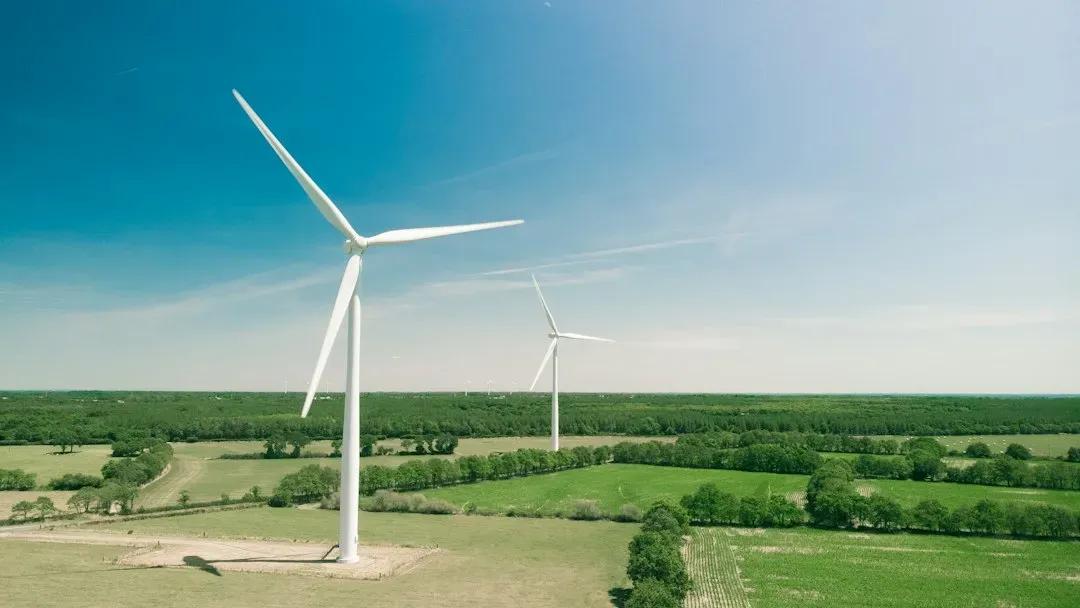
Wind is air in motion, and the sun is what drives it. Land and water absorb solar heat at different rates, so the air above them warms unevenly. Warm air rises, cooler air moves in to replace it, and that movement is what a turbine captures.
The energy in the wind depends heavily on its speed. Power in moving air rises with the cube of wind speed, so doubling the speed gives roughly eight times the power. That is why developers care so much about finding steady, fast winds before they build anything.
Blades Work Like Rotating Wings
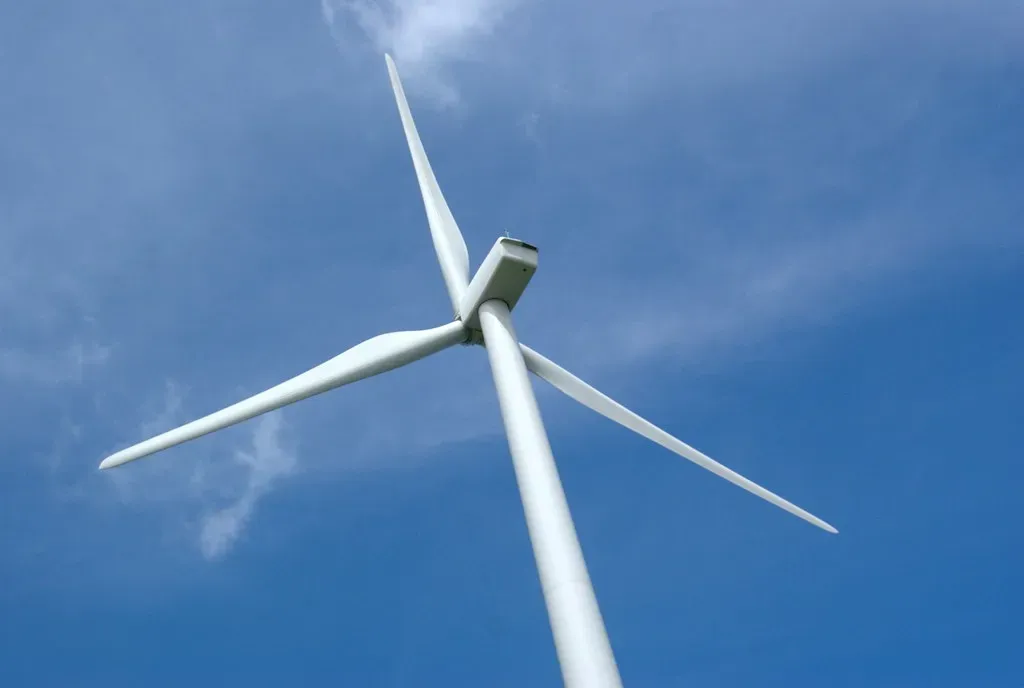
Turbine blades don’t get pushed around like a sail. They’re shaped like aircraft wings, with a curved profile that creates lift when air flows past. That lift pulls each blade around the hub and turns the rotor.
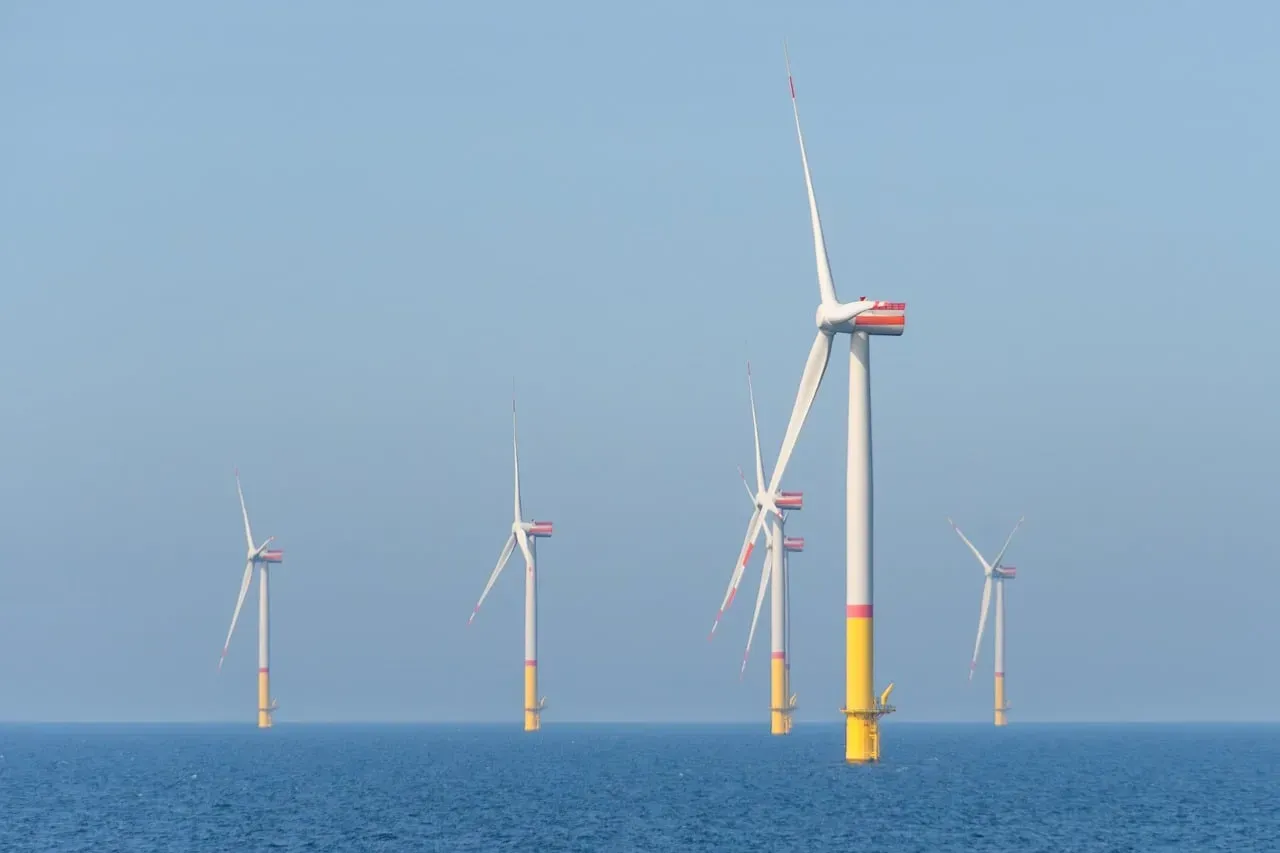
Blade length matters a great deal. The area swept by the rotor grows with the square of the blade length, so longer blades catch much more wind. Offshore, this has pushed turbine size up, and the average offshore turbine installed in 2025 was 10.3 MW, passing the 10 MW mark for the first time.
Pitch and Yaw Keep the Rotor Aligned
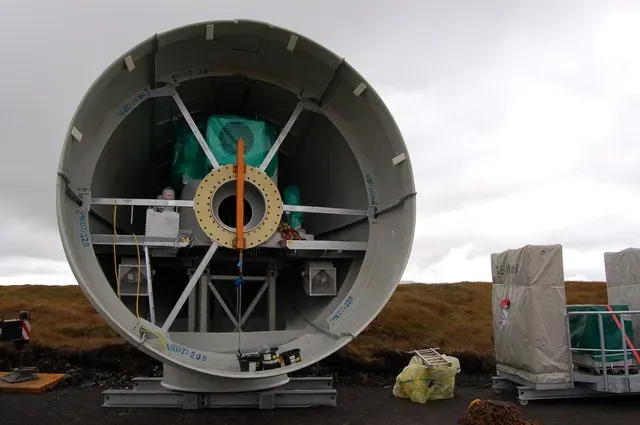
A turbine doesn’t just sit and spin. Sensors on the nacelle measure wind direction and speed, and a yaw system rotates the whole top section so the rotor faces the wind. Without this, the machine would lose output whenever the wind shifted.
Pitch control adjusts the angle of each blade. In light wind the blades are set to capture as much as possible. In strong wind they are turned partly out of the airflow to protect the machine, and in storm conditions they can be feathered so the rotor nearly stops.
The Low Speed Shaft and the Gearbox
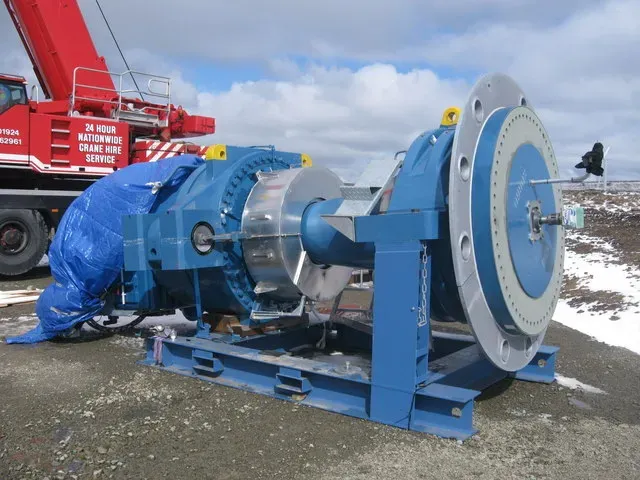
The rotor turns the main shaft, but slowly. Large turbines typically rotate at somewhere between about ten and twenty revolutions per minute. That’s far too slow for a standard generator, which needs much higher speeds to produce electricity efficiently.
A gearbox in most turbines bridges the gap, stepping the speed up to around fifteen hundred revolutions per minute or more. Some designs skip it entirely. These direct drive turbines use a larger generator that works at low speed, which removes a part that can wear out, though it adds weight and cost elsewhere.
Inside the Generator
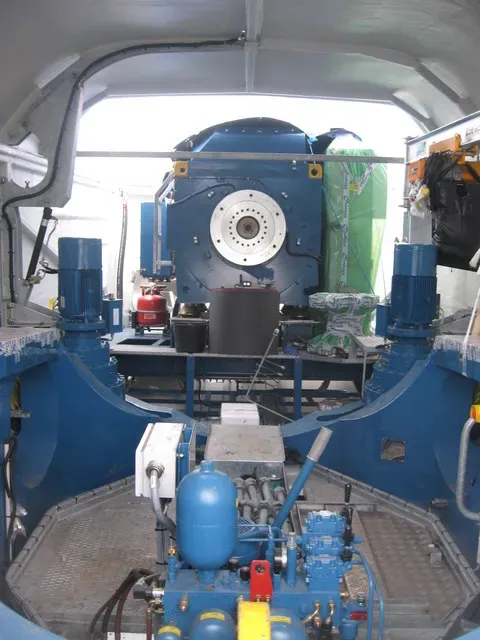
The generator is where motion becomes electricity. Magnets and copper windings move relative to each other, which induces an electric current through electromagnetic induction. It’s the same basic principle used in power stations that run on steam, only the spinning force comes from air.
Many modern turbines use permanent magnets or doubly fed induction designs. Each has trade-offs in cost, efficiency and the materials needed. The result is the same, though, an alternating current that varies as the rotor speed changes with the wind.
Power Electronics and the Transformer
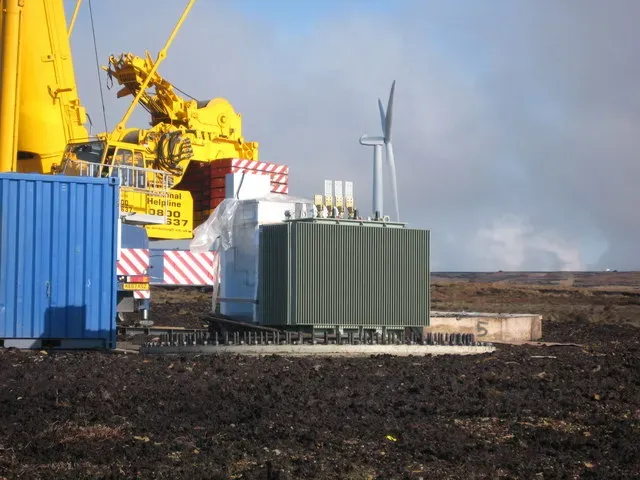
Raw output from a generator doesn’t match the grid. Its frequency and voltage fluctuate with the wind, so power electronics condition it first. Converters smooth the output and lock it to the grid frequency, which is fifty or sixty hertz depending on the country.
A transformer, often housed in the nacelle or at the tower base, then raises the voltage. Higher voltage means lower losses when power travels through cables. From there it moves along collection lines to a substation that steps it up again for long distance transmission.
Wind Speeds That Matter
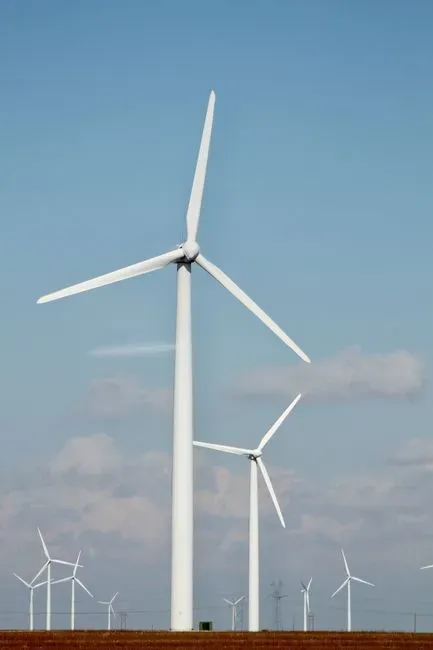
Turbines operate within a defined range. They typically start generating at a light breeze of around three to four metres per second, and reach full rated output at roughly twelve to fifteen. If winds climb past about twenty five metres per second, the control system shuts the turbine down to avoid damage.
There’s also a physical ceiling on how much energy a rotor can extract. The Betz limit says no turbine can capture more than about fifty nine percent of the kinetic energy in the wind passing through it. Good modern machines get a large share of that theoretical maximum, which is why further gains now come more from size and siting than from blade tweaks.
Onshore and Offshore Turbines
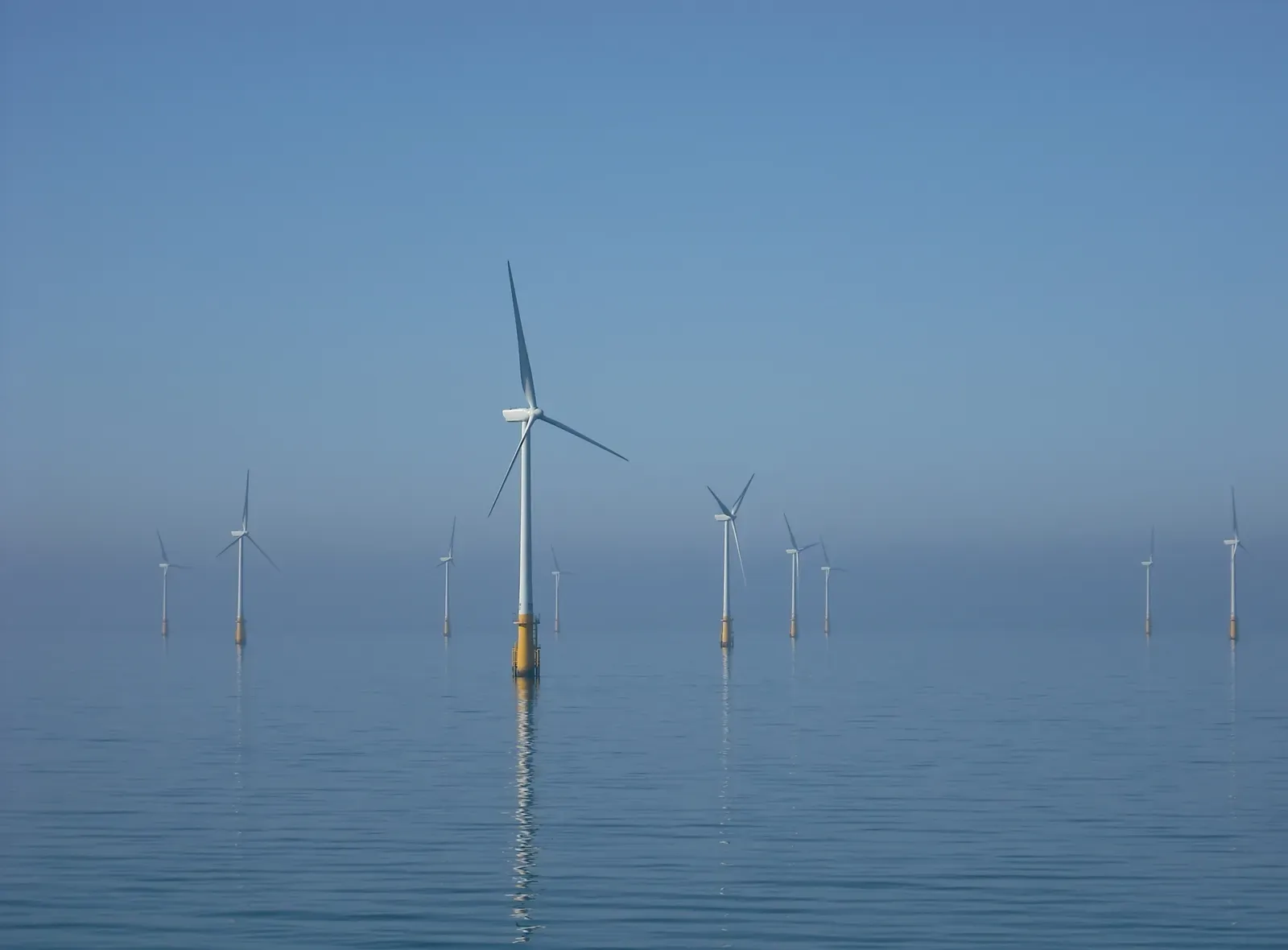
Onshore turbines are cheaper to build and easier to maintain. Offshore turbines face stronger and steadier winds, but they need foundations in the seabed or floating platforms, plus subsea cables. Offshore capacity reached 92.5 GW at the end of 2025, about seven percent of total global wind capacity.
Growth there has been steady. About 9.3 GW of new offshore capacity was connected worldwide in 2025, and China led installations for the eighth year in a row with 6.6 GW. GWEC calculates that the installed offshore fleet could supply the equivalent of 102 million homes.
How Much Wind Power Exists Today
The numbers have grown quickly. Global wind capacity reached 1,299 GW by the end of 2025, with 138 countries using wind power. For comparison, capacity stood at 1,136 GW at the end of 2024.
Last year was a record. A record 165 GW of new capacity was added, up forty percent, and 28,395 turbines were installed across 57 countries. Asia accounted for about eighty percent of the new capacity, led by China and India, while Europe’s total installed wind capacity passed 300 GW. Looking ahead, GWEC projects roughly 969 GW of new capacity between 2026 and 2030.
