


- The Planet Where It Rains Liquid Glass – 7 Alien Worlds Defying Known Physics - November 14, 2026
- Stars Consuming Entire Worlds – 6 Planetary Systems Swallowing Their Own Worlds - November 14, 2026
- The Ground Liquefies Like Water – 6 Silent Fault Lines Geologists Watch Closely - November 14, 2026
Few landscapes show climate change as clearly as a glacier photographed from the same spot decades apart. The ice that filled a valley in one frame is a gravel basin or a pale lake in the next. Photographers, satellites, and park rangers have kept these records for years, so the changes can be checked.
The seven glaciers below each have a well documented photo trail, from NASA Earth Observatory satellite pairs to the USGS repeat photography archives. Think of this as a gallery in words, with a note on where each comparison can be found.
Columbia Glacier, Alaska
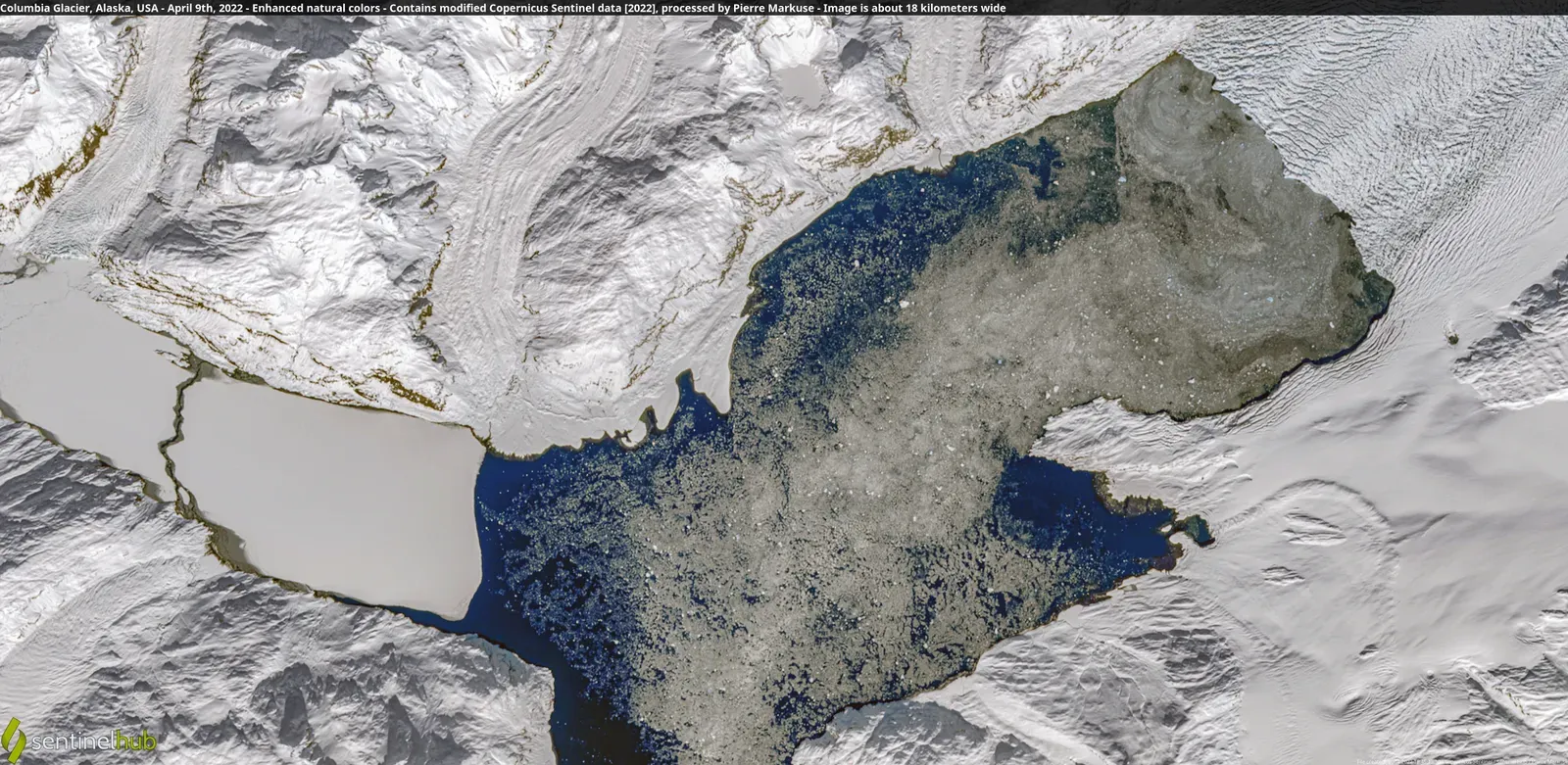
Columbia Glacier flows into Prince William Sound, and it’s one of the fastest retreating tidewater glaciers on Earth. It began a rapid retreat in the early 1980s, after years of relative stability. Since then its terminus has pulled back roughly twenty kilometers, according to USGS and NASA monitoring.
The best before and after material is the NASA Earth Observatory satellite series, which shows the ice front sliding up the fjord. Early frames show a broad ice face near Heather Island. Recent frames show open water where that ice used to be, and the glacier split into separate branches.
Pasterze Glacier, Austria
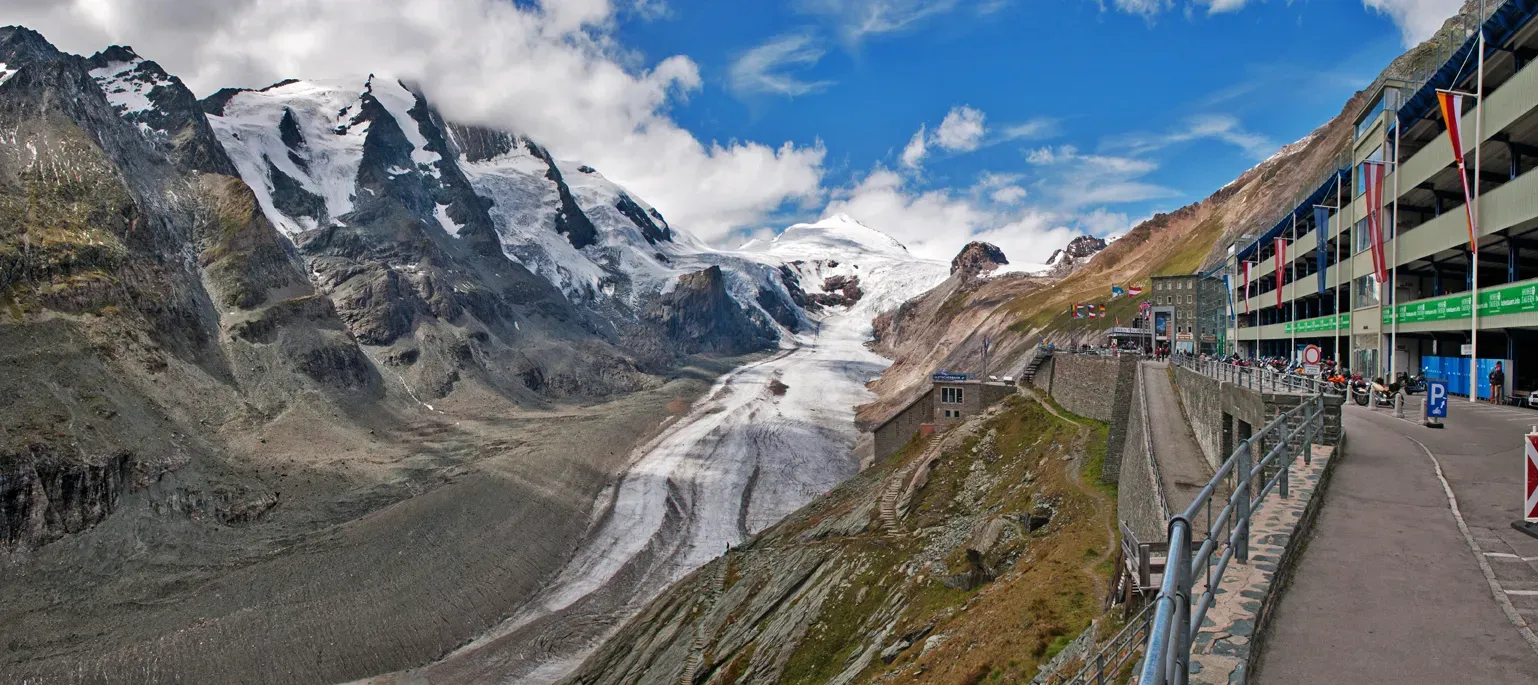
The Pasterze is Austria’s longest glacier, found beneath the Grossglockner, the country’s highest peak. Its tongue has been measured every year for well over a century, and the record is a steady slide backward. In recent decades the surface has dropped so much that the ice has thinned dramatically and a meltwater lake has formed at its front.
Visitors to the Kaiser-Franz-Josefs-Höhe viewpoint can compare old postcards with the present view. The old cards show ice reaching far up the valley walls. Today a pale band of bare rock marks the glacier’s former height.
Rhône Glacier, Switzerland
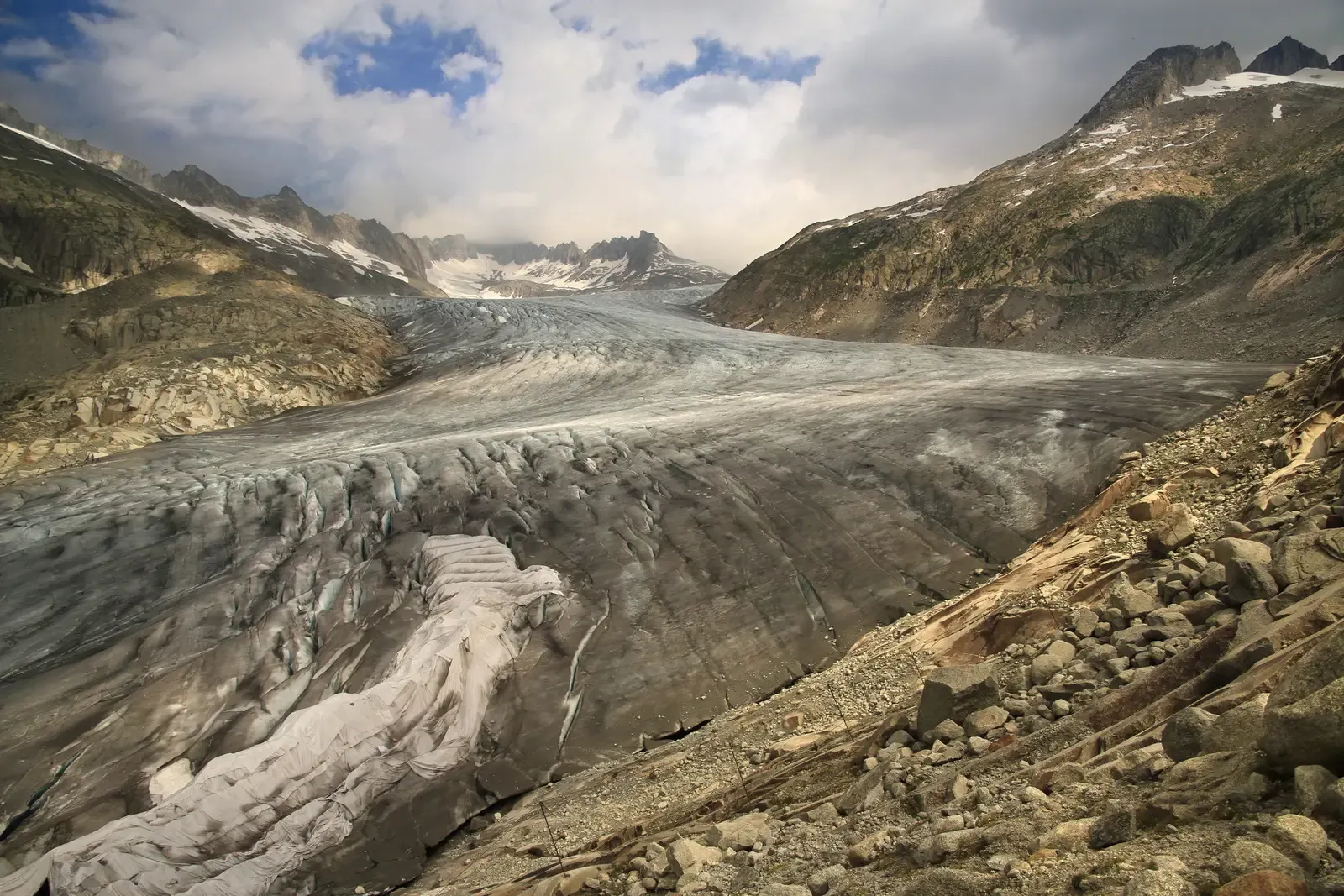
The Rhône Glacier feeds the river of the same name and sits above the Furka Pass. It has been a tourist stop since the nineteenth century, so photographs of it are everywhere. Swiss glacier monitoring reported that the country’s glaciers lost about ten percent of their total volume across 2022 and 2023, one of the sharpest two year drops on record.
Look closely at recent photos and you’ll see white blankets spread over parts of the ice. Operators of the nearby ice grotto use them to reflect sunlight and slow melting. The old tongue of the glacier, once filling the valley floor, now ends in a small lake.
Mer de Glace, France
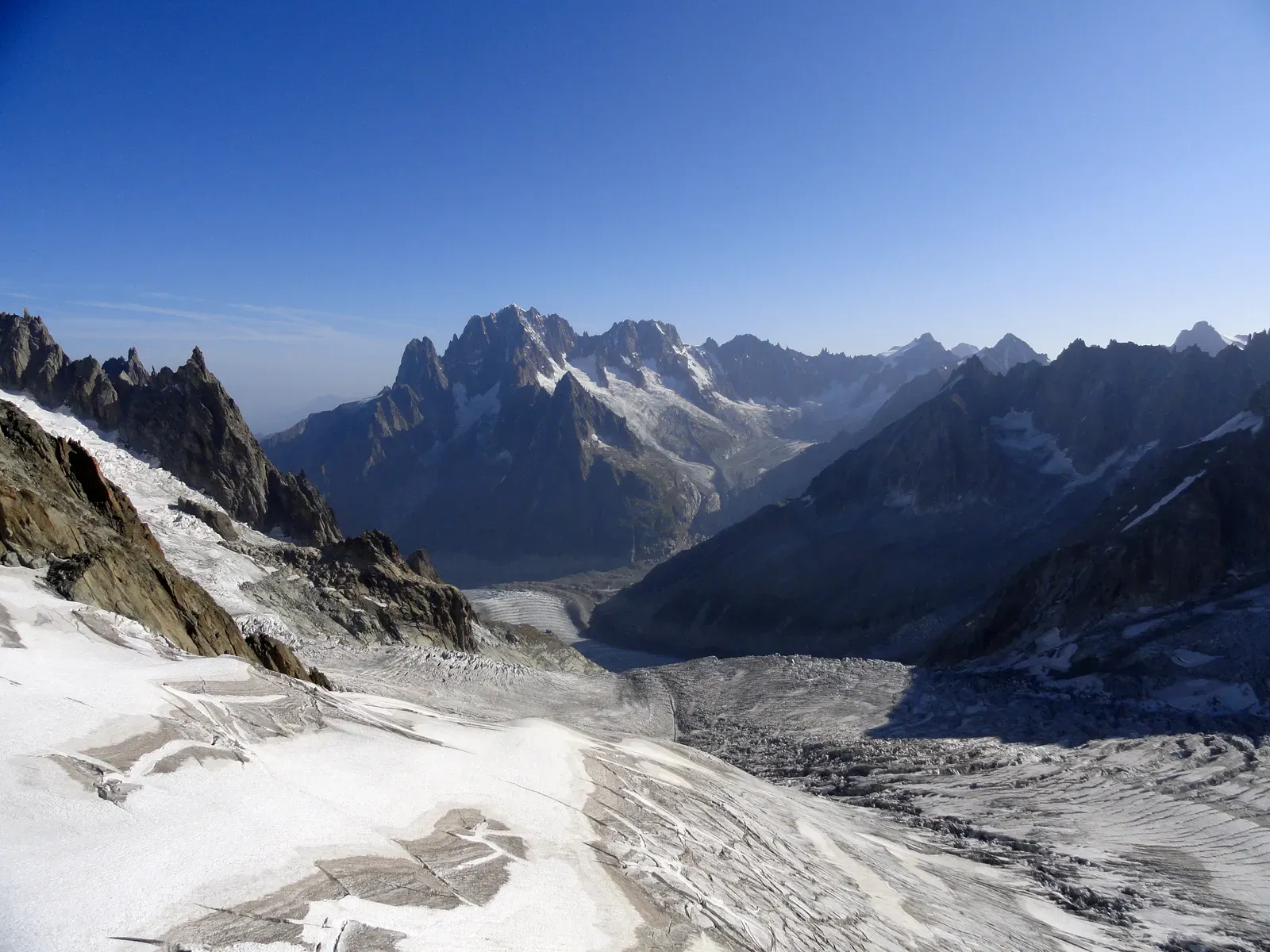
Mer de Glace is France’s largest glacier, running down from the Mont Blanc massif near Chamonix. Its ice surface has dropped by well over a hundred meters at the tourist station since the nineteenth century, and the pace has picked up since the 1980s. The lower tongue has retreated by a few kilometers over that longer span.
The clearest visual proof is the staircase. Visitors who once stepped almost directly onto the ice now descend hundreds of metal steps, and new ones are added as the surface falls. Photos taken from the Montenvers railway terminus show this gap growing year after year.
Furtwängler Glacier, Mount Kilimanjaro, Tanzania
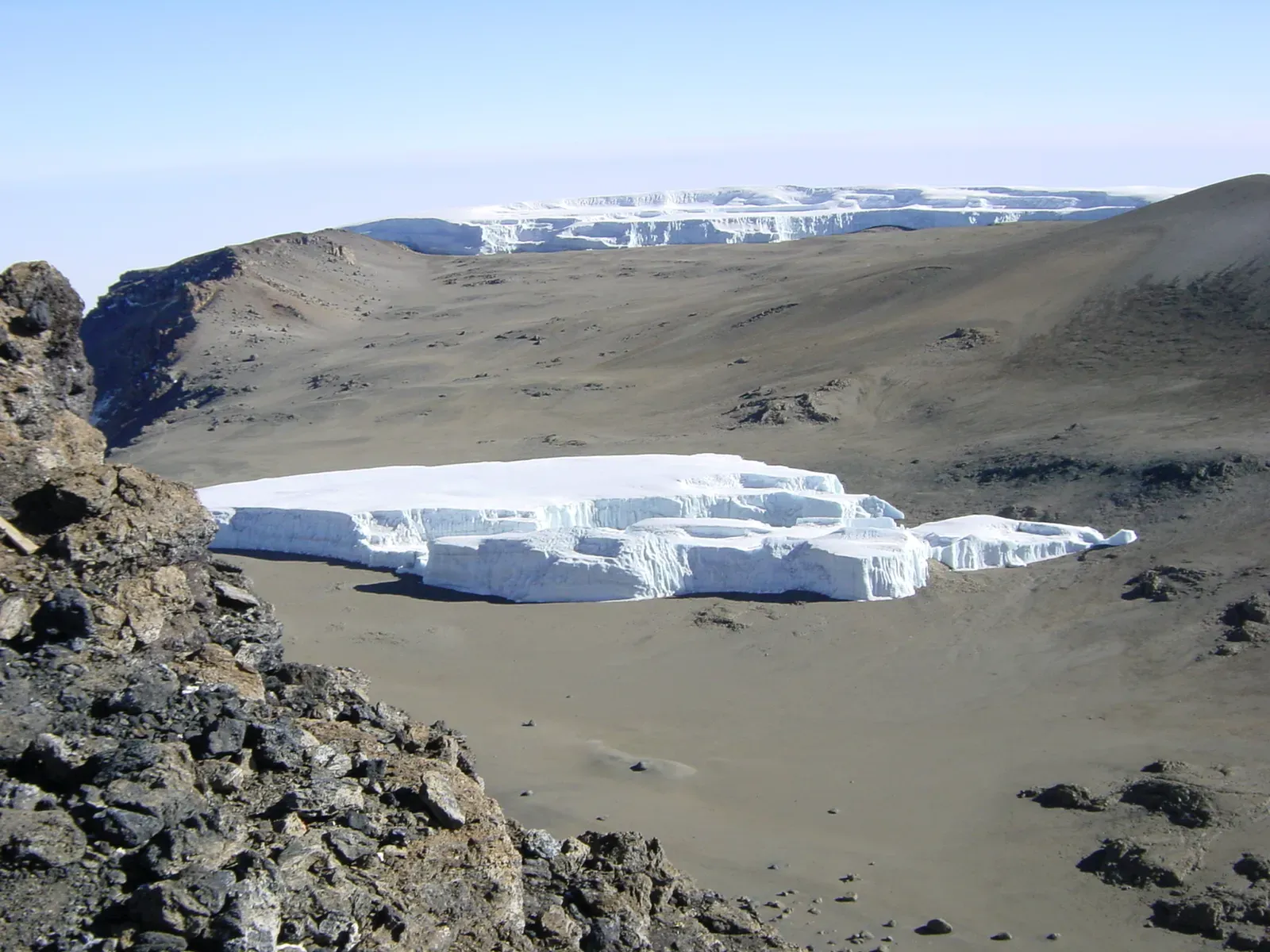
Kilimanjaro’s summit ice is among the best known in the tropics. Research based on aerial surveys and ground measurements shows that the mountain has lost the large majority of its ice cover since 1912. The Furtwängler Glacier, near the crater rim, has been shrinking and breaking apart in the decades since.
NASA satellite images from the 1990s through the 2020s tell the story neatly. Earlier frames show wide white caps across the summit plateau. Later ones show thin remnants and exposed dark rock, and scientists have long projected that the ice could vanish within a few decades.
Grinnell Glacier, Montana
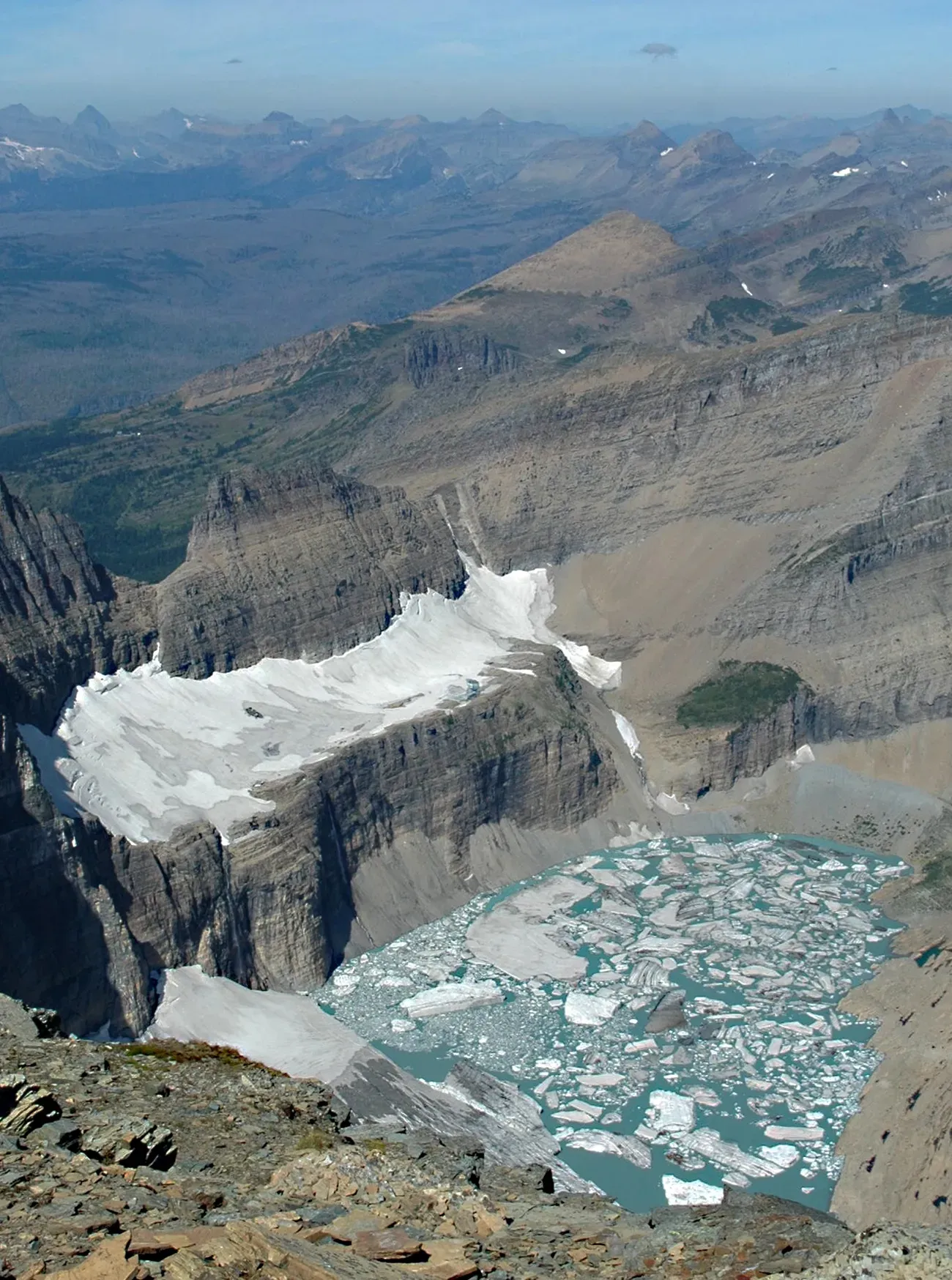
Grinnell Glacier sits in Glacier National Park, and it has one of the best photographic records in North America. The USGS Repeat Photography Project has matched early twentieth century images with modern ones from the same vantage points. Park estimates suggest that the region held about a hundred and fifty glaciers in the mid nineteenth century, but fewer than thirty now meet the size threshold to count as active.
The comparison shots are striking. Early photos show ice filling the basin and reaching a lake at its foot. Recent ones show a much smaller ice body perched higher on the slope, with a larger proglacial lake in front of it.
Athabasca Glacier, Alberta
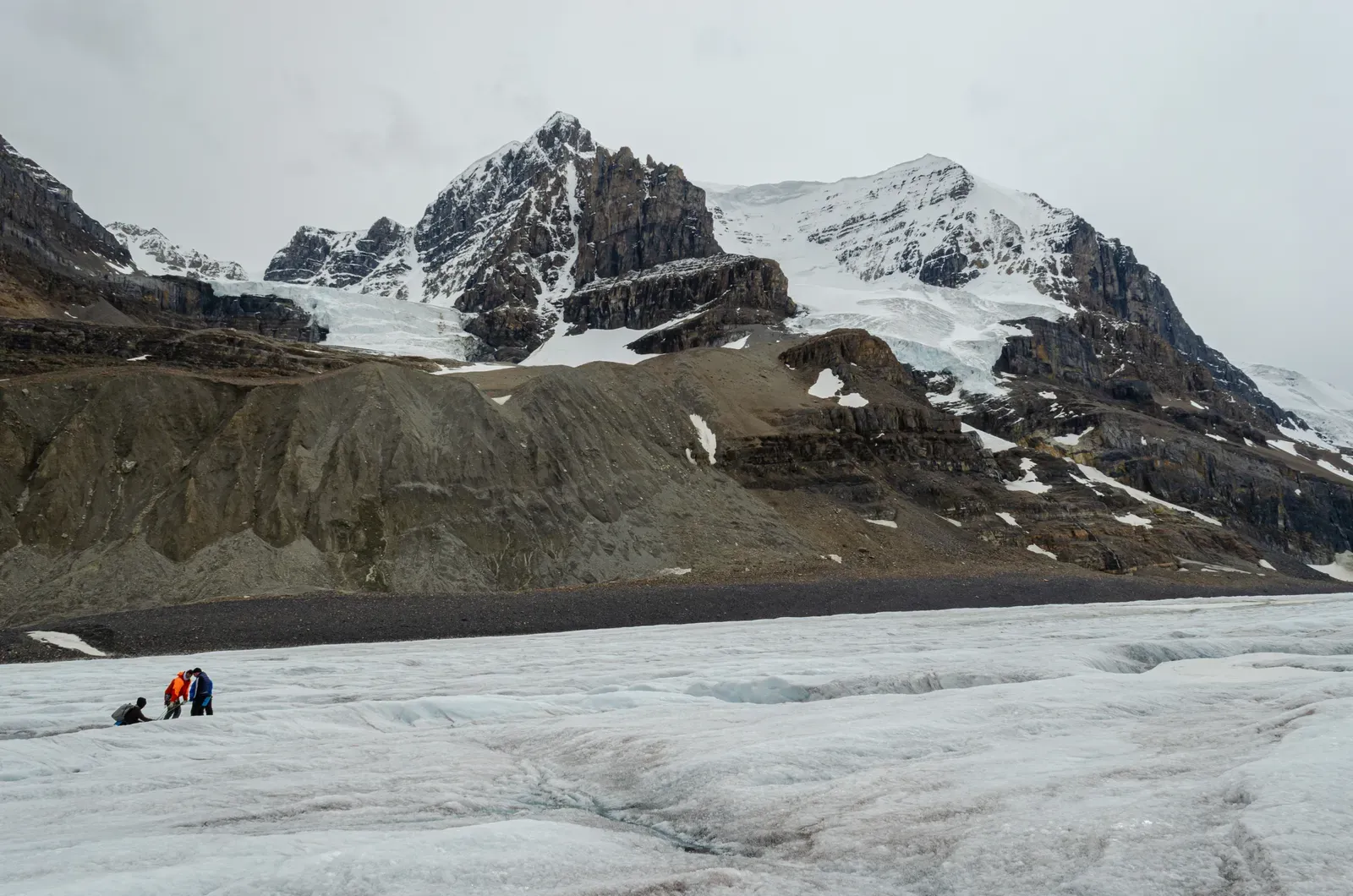
The Athabasca Glacier is an outlet of the Columbia Icefield and one of the most visited glaciers in North America. Parks Canada marks the former positions of its toe with signs along the access path, which turns the retreat into a walking tour. Over the last century or so it has lost more than half of its volume and pulled back well over a kilometer.
Photographs from the Icefield Centre in the 1980s show the ice much closer to the road. Present day views show a long stretch of rocky moraine between the parking area and the ice. The signs by the trail, with years printed on them, are the easiest before and after you can walk through yourself.
