


- Will travel insurance cover weather-related flight delays and cancellations? - November 11, 2026
- 8 Cities Where the Weather Changes So Fast Locals Carry Everything - November 11, 2026
- 10 Traditional Building Techniques From Hot Climates Architects Are Revisiting - November 10, 2026
Drive across the flat Florida coastline near Cape Canaveral, and one shape dominates the horizon. It’s a huge, boxy structure with a giant flag painted on its side. Most people know it as the Vehicle Assembly Building, or VAB.
It was built in the 1960s for Apollo, and it’s still where NASA puts its biggest rockets together. In 2025 and 2026 it hosted the stacking of the Space Launch System for Artemis II, the first crewed flight around the Moon in decades. Here’s a closer look at how the building works and what happens inside it.
Why the Building Is Called 52 Stories Tall
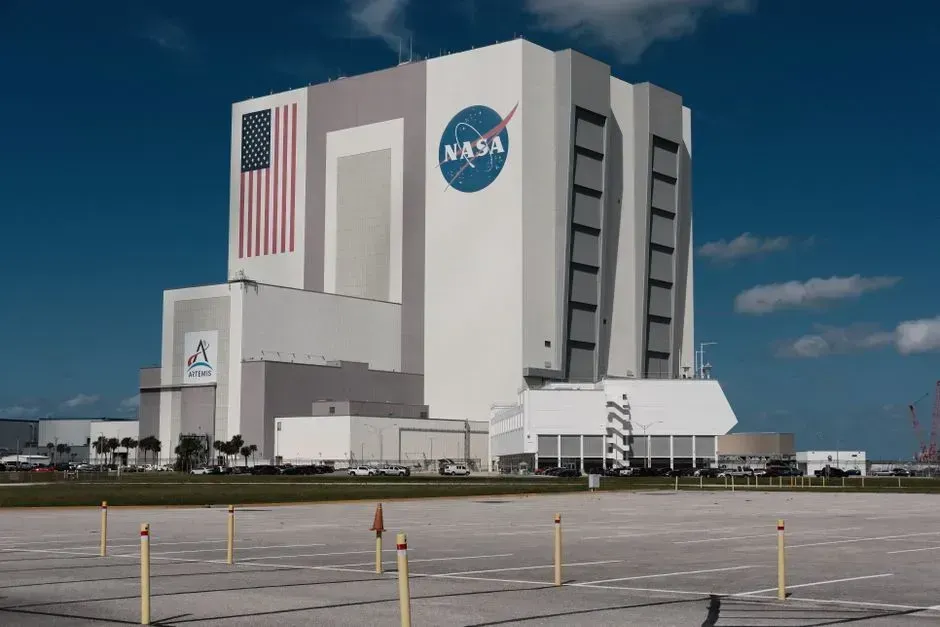
The VAB stands about 525 feet tall, which is where the common comparison to a 52 story building comes from. It’s also roughly 716 feet long and 518 feet wide. Those numbers made it one of the largest buildings in the world by volume when it was finished.
The size isn’t for show. A Moon rocket stands taller than a typical skyscraper lobby ever could, and it has to be assembled upright. The building simply had to be big enough to hold the rocket plus the cranes, platforms and mobile launcher that surround it.
Built for Saturn V, Reused for SLS
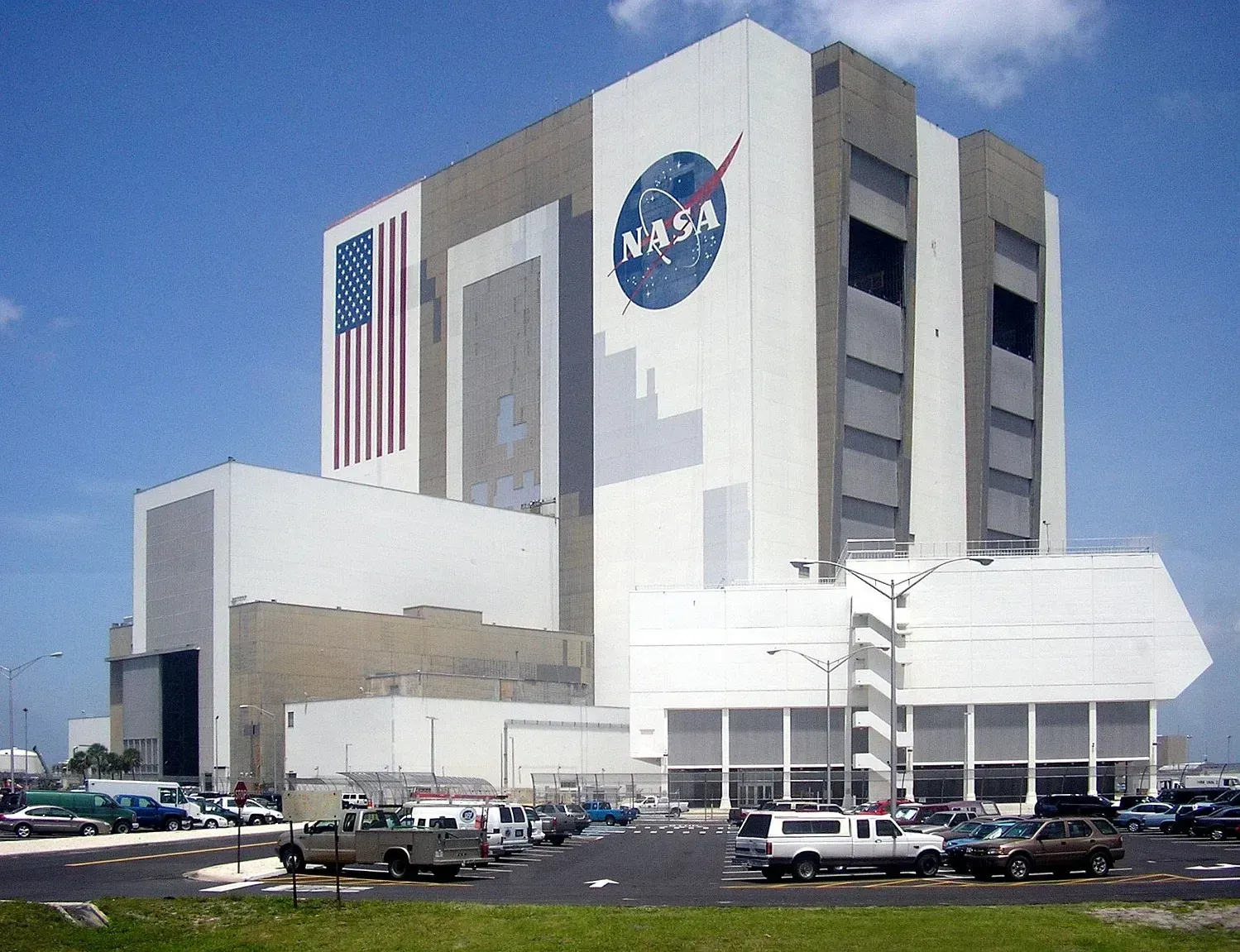
The VAB was constructed in the 1960s to assemble the Saturn V rockets that carried Apollo astronauts to the Moon. After Apollo, it served the Space Shuttle program for three decades. Each era required changes to the interior, though the basic structure stayed.
Today it supports the Space Launch System. One bay in particular, High Bay 3, has been the focus of recent Artemis work. NASA documented the Artemis II rocket being stacked there through 2025.
High Bays and the Transfer Aisle
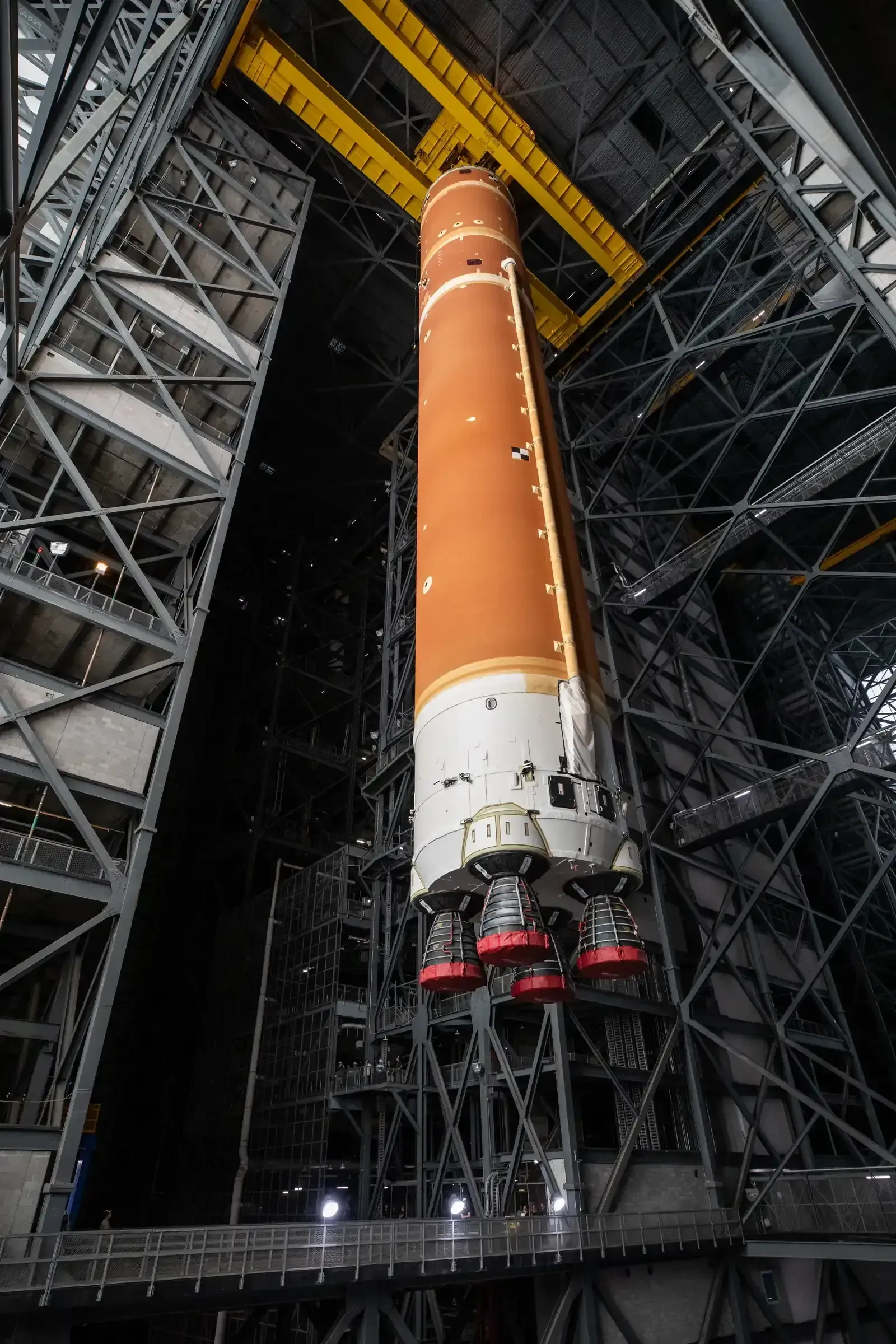
Inside, the VAB is organized around tall work areas called high bays. They’re connected by a central transfer aisle, which is where large rocket parts are moved and prepared before being lifted into position. Sections of rocket arrive horizontally and have to be turned upright.
That turn has a name. Teams moved the SLS core stage north in the transfer aisle, then used two overhead cranes to lift it vertical, a move called a “breakover.” It happened in March 2025 for the Artemis II core stage.
The Cranes That Do the Heavy Lifting
Almost everything in the VAB moves by overhead crane. Technicians use these cranes to hoist booster segments, the core stage and the spacecraft itself, one piece at a time. Precision matters more than speed.
NASA described the booster work in early 2025. During three months of stacking, technicians used a massive overhead crane to lift ten booster segments, five per booster, plus the nose cones, onto mobile launcher 1. That job finished on February 19, 2025.
Stacking the Boosters First
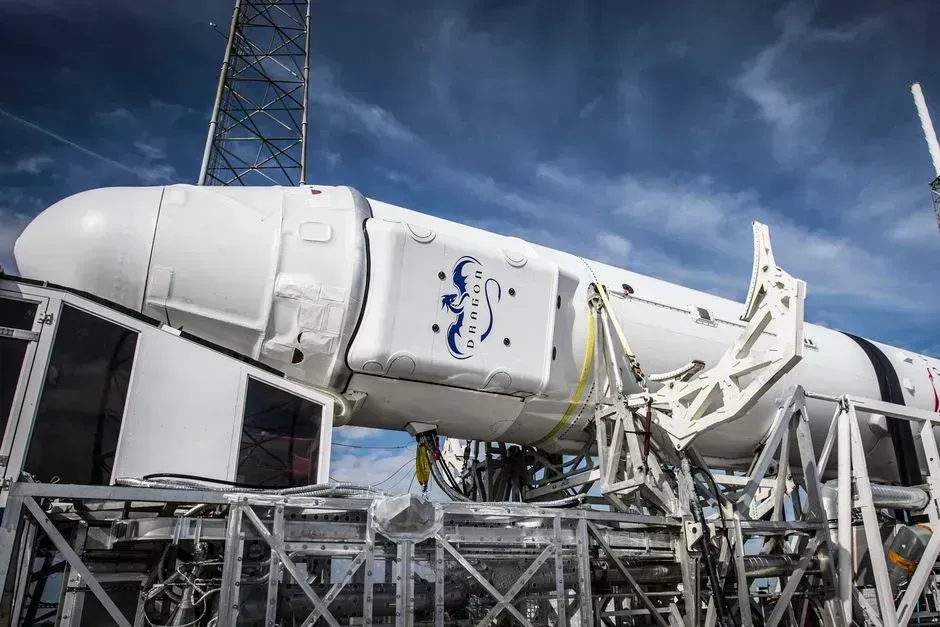
Assembly starts from the bottom. The two solid rocket boosters go up first, standing on the mobile launcher. Each booster stands 177 feet tall.
They’re powerful, too. Together they provide more than 75 percent of the total SLS thrust at liftoff. That means more than three quarters of the push off the pad comes from these two white columns.
Adding the Core Stage
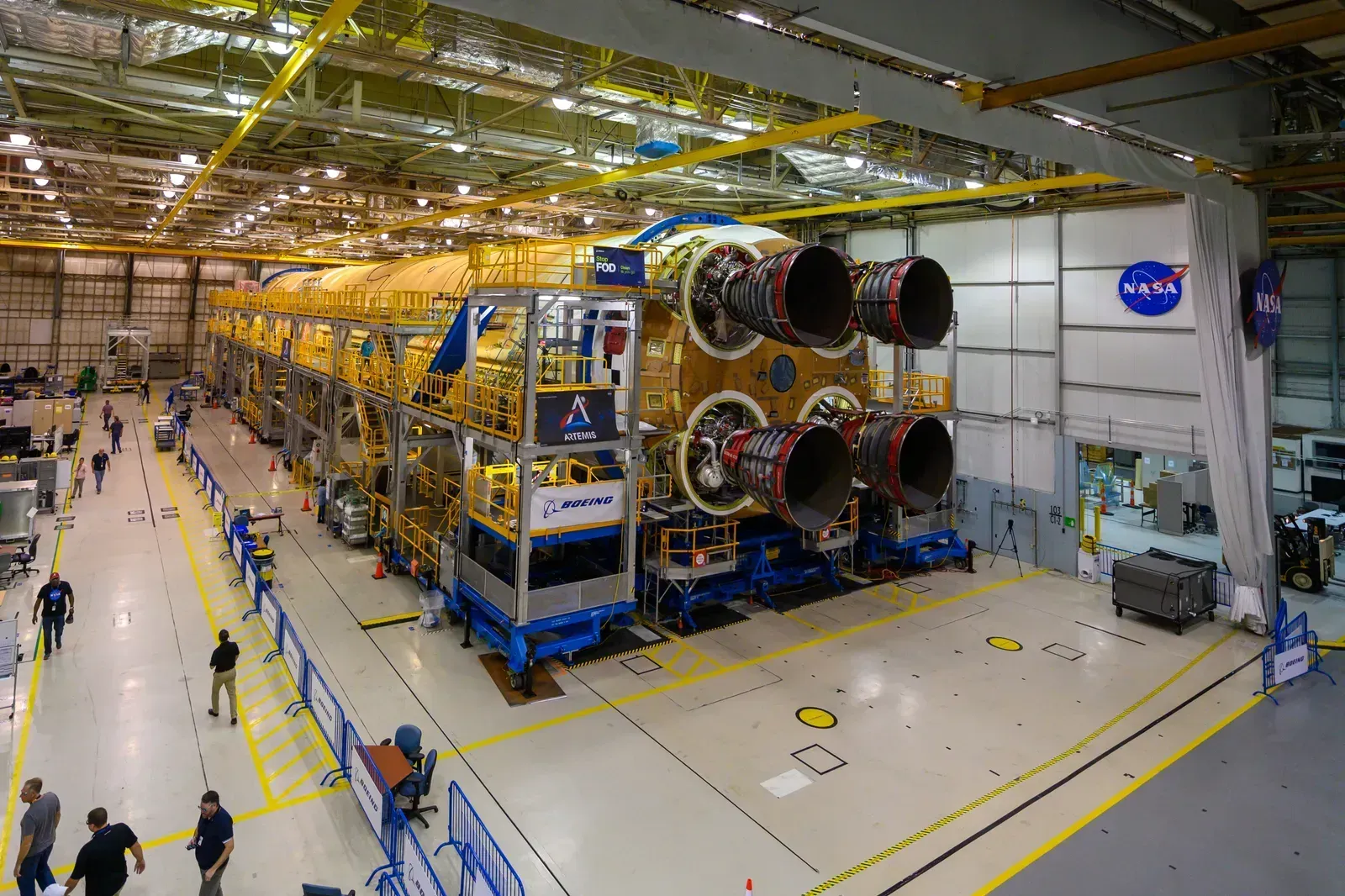
Next comes the orange core stage, the central body of the rocket. For Artemis II, it was lifted into High Bay 3 on March 23, 2025. It was then integrated between the standing boosters.
The core stage was built by Boeing, and it had arrived at Kennedy by sea and moved into the VAB beforehand. Once it sat between the boosters, the rocket had its basic skeleton. The upper pieces were still to come.
Upper Stage and the Orion Spacecraft
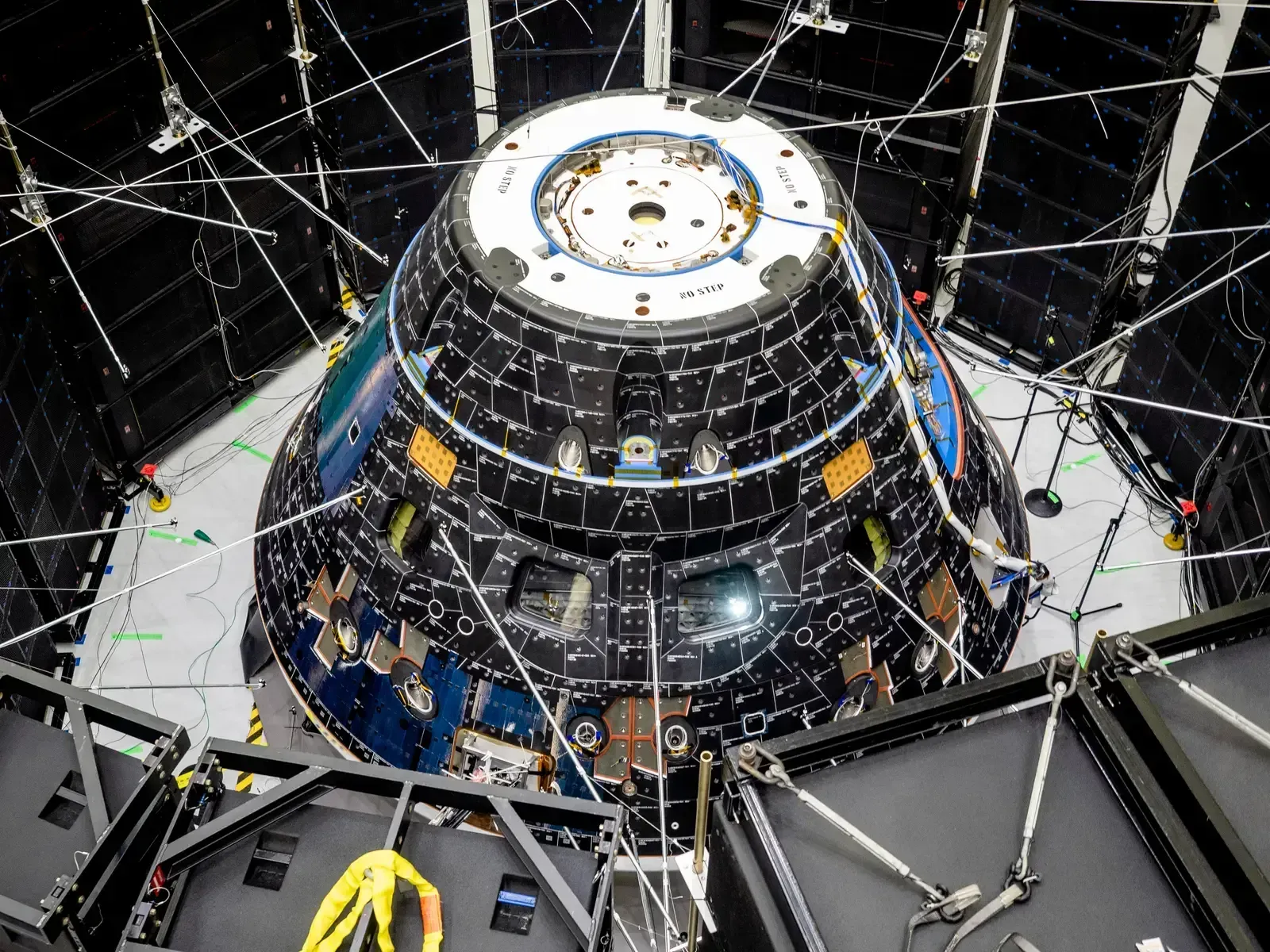
The top of the rocket was assembled through spring and autumn of 2025. The conical stage adapter was added on April 12, 2025. The interim cryogenic propulsion stage arrived three days after that, and it was lowered onto the stage adapter inside the VAB on May 1, 2025.
The final piece was the crew capsule. Orion, with its launch abort system, was stacked atop the SLS in High Bay 3 on October 20, 2025. It would carry Reid Wiseman, Victor Glover, Christina Koch and Canadian astronaut Jeremy Hansen on a ten day mission around the Moon.
From the VAB to the Launch Pad
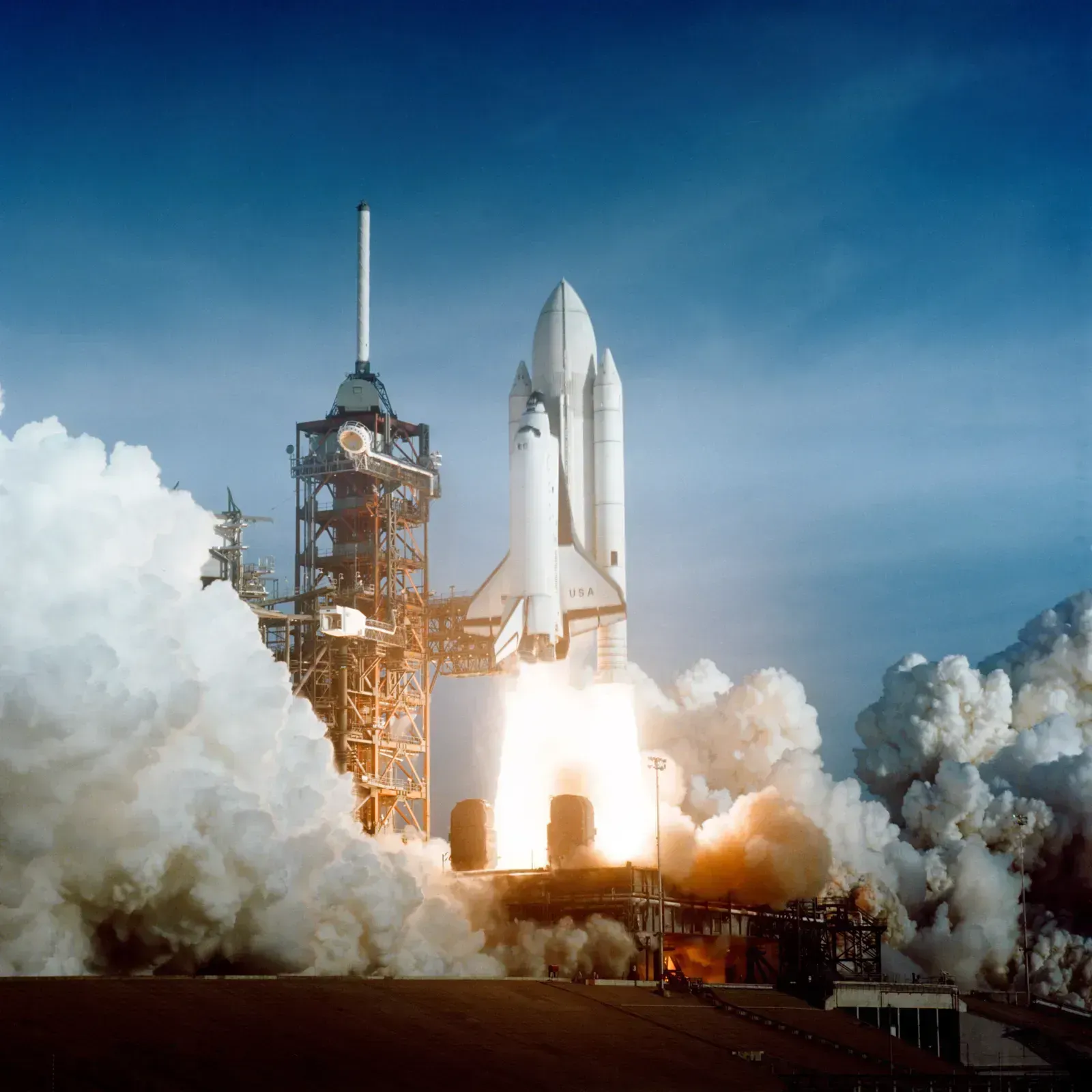
A fully stacked rocket doesn’t leave the VAB under its own power. It rides on the mobile launcher, which carries it to Launch Complex 39B. The trip is roughly four miles.
Artemis II finally launched on April 1, 2026, according to NASA. The mobile launcher tower was damaged during that liftoff, and teams planned inspections and repairs. The launcher came back to the VAB on April 17, 2026.
Preparing for Artemis III
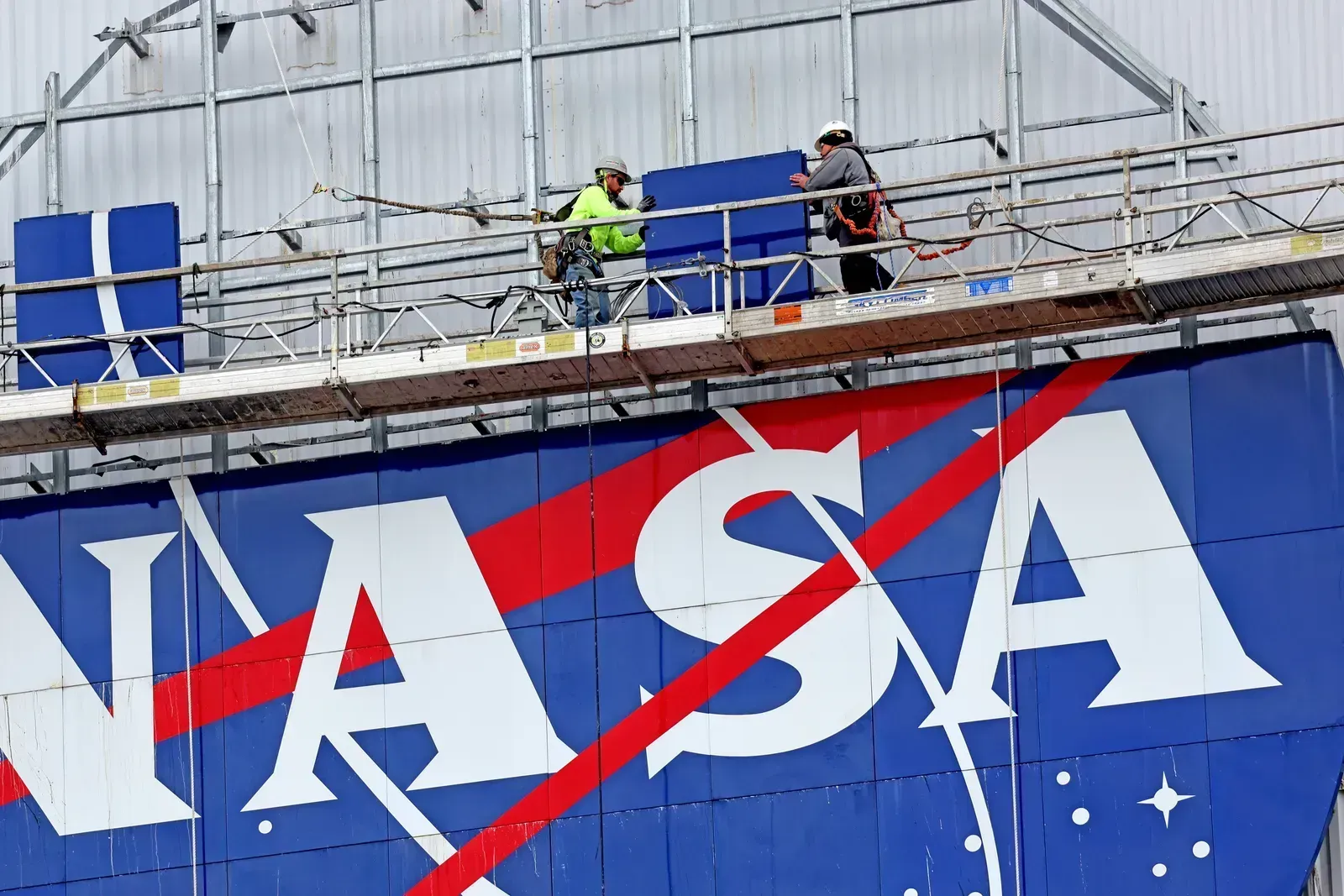
The VAB didn’t stay quiet for long. The mobile launcher went back inside to prepare for Artemis III stacking. Technicians and engineers also finished Artemis II post launch inspections and repairs there.
Hardware is already arriving. Major components of the Artemis III core stage and solid rocket boosters are at Kennedy undergoing buildup. NASA is targeting a lunar surface landing with astronauts no later than 2029.
