

Stand at the base of Mount Everest and you’re looking up at the highest point on Earth’s land. Now picture a mountain on Mars that would rise roughly two and a half times higher than that. It exists, and its name is Olympus Mons.
The comparison sounds like an exaggeration until you look at how the two peaks are measured. The numbers behind it come from laser altimetry and orbital imaging, and they hold up well. Here is how the Martian giant stacks up.
The Height Behind the Headline
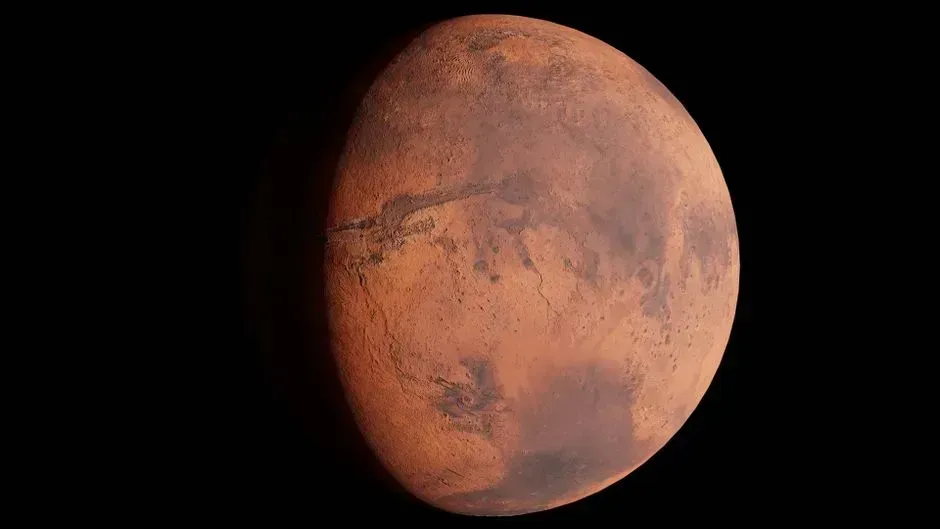
Olympus Mons rises about twenty two kilometers above the Martian datum, the reference level scientists use in place of sea level. Mount Everest’s official height is 8,849 meters, a figure revised in 2020 by Nepal and China. Divide one by the other and you land at about two and a half.
The ratio depends on the reference point, so it isn’t perfectly fixed. Measured from the surrounding plains, the volcano stands even taller, with NASA and other sources citing a summit roughly twenty five kilometers above its base. That is why the claim is usually phrased as “about” two and a half times.
Why Mars Has No Sea Level
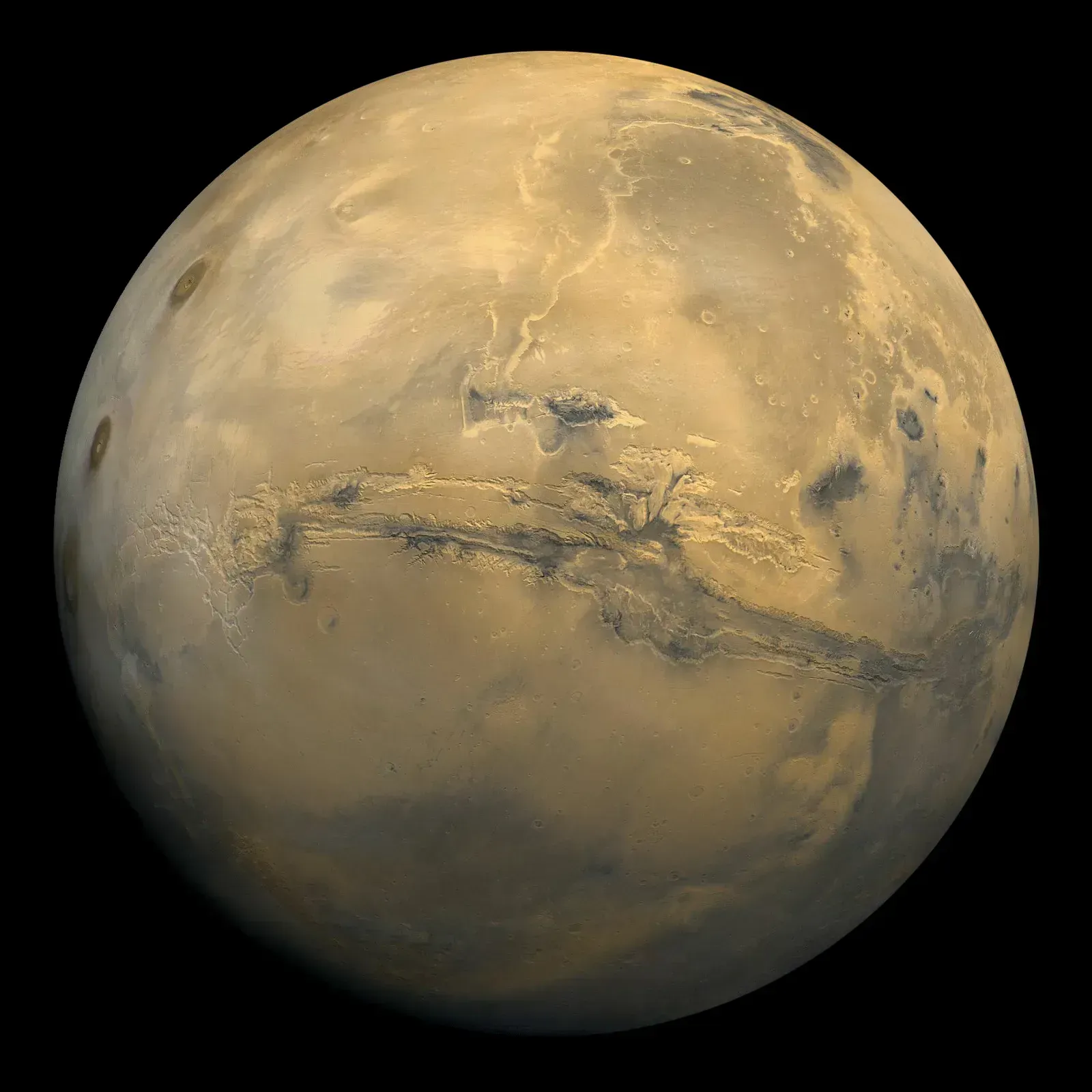
Earth’s elevations are measured from mean sea level, which is easy because oceans cover most of the planet. Mars has no liquid oceans today, so there is nothing to measure from. Planetary scientists defined a datum instead, based on a surface where atmospheric pressure reaches a set value and on the planet’s gravity field.
Laser data from NASA’s Mars Global Surveyor, which carried the Mars Orbiter Laser Altimeter, built the topographic maps used today. These measurements are why Olympus Mons has a reliable height figure. The mountain’s summit sits far above the datum, and its shoulders drop to the lowlands around it.
A Footprint the Size of a Country
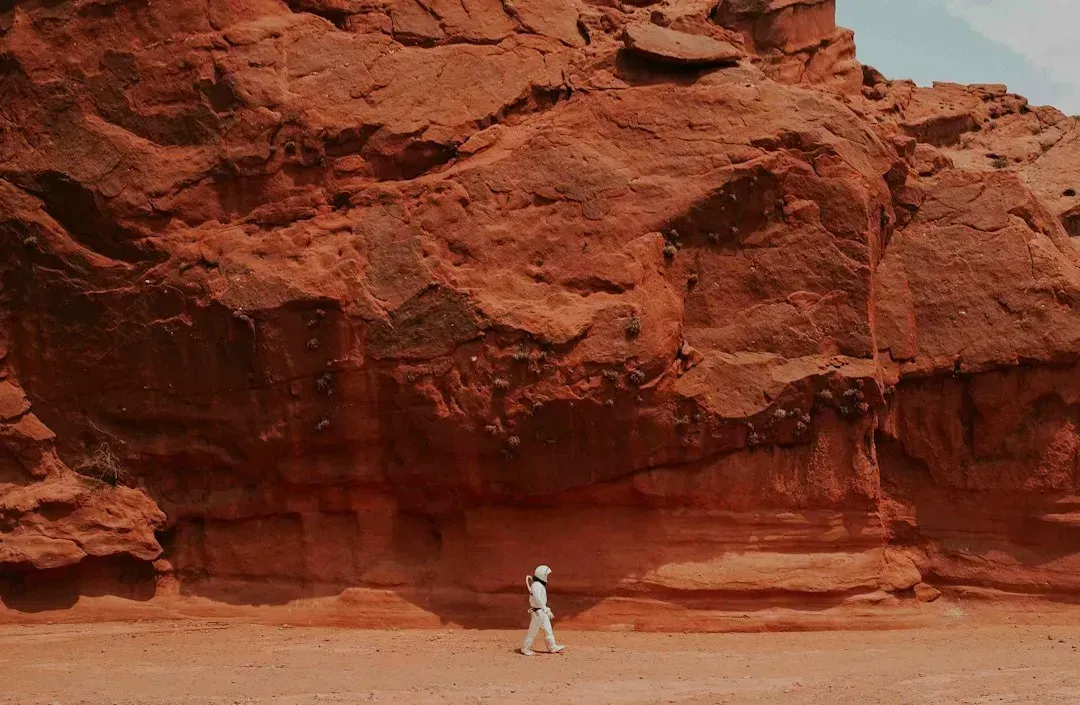
Height is only part of the story. Olympus Mons spans roughly six hundred kilometers across, which is comparable to the area of a large U.S. state such as Arizona. If you stood on its flank, you’d have no sense of standing on a mountain at all.
The slopes are gentle, averaging only a few degrees. The curve of the planet is tight enough that the summit would sit below the horizon from the base. Everest, by comparison, has a far steeper profile packed into a much smaller footprint.
A Shield Volcano Built by Runny Lava
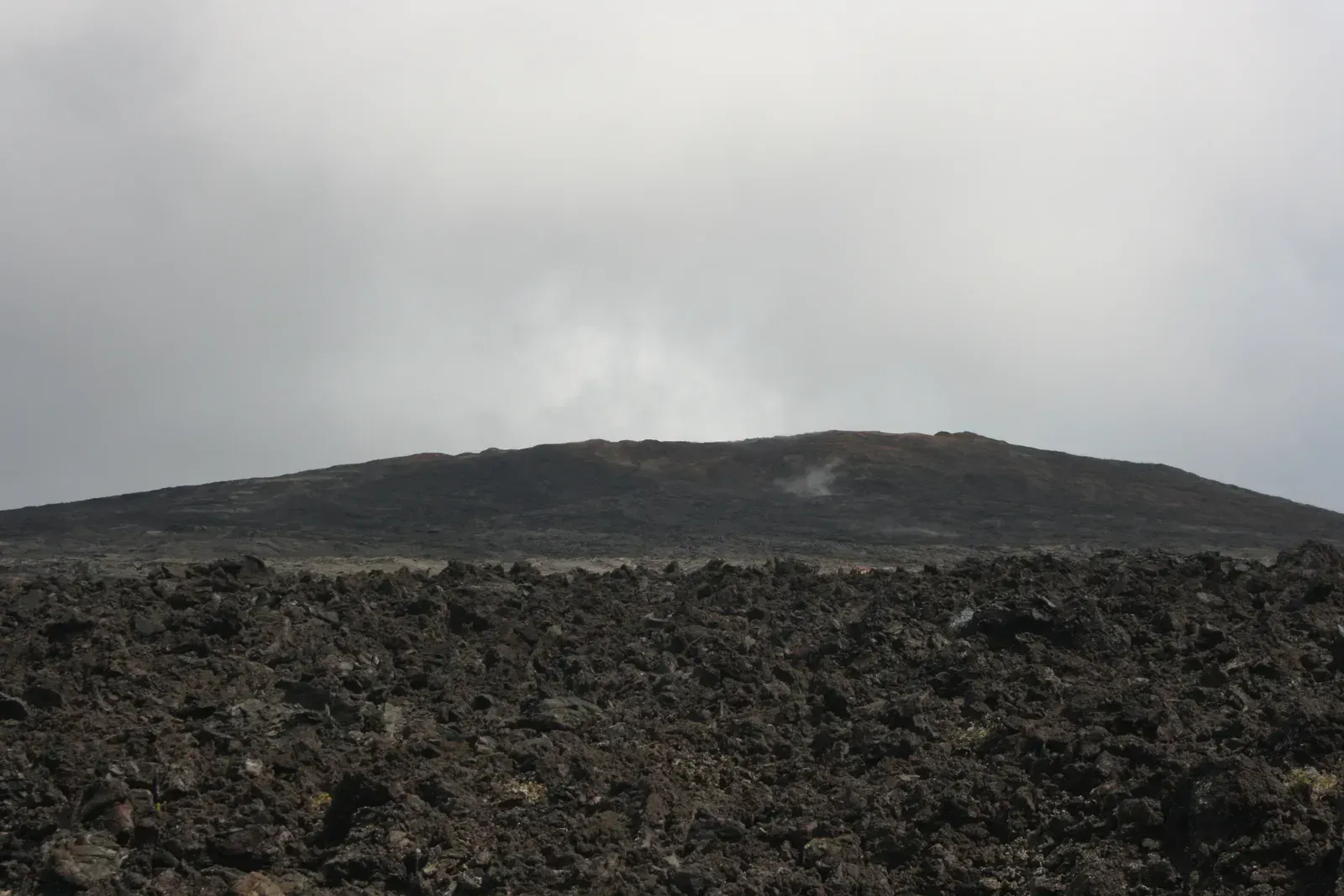
Olympus Mons is a shield volcano, the same broad type as Hawaii’s Mauna Loa. These volcanoes form from fluid basaltic lava that travels long distances before it cools. Layer after layer of eruptions piled up into a wide, low dome.
Everest has a completely different origin. It was pushed upward by the collision of the Indian and Eurasian tectonic plates, and it is made largely of folded and uplifted sedimentary and metamorphic rock. One mountain was built by fire pouring out, and the other by continents crumpling together.
Why Mars Allowed Such a Giant
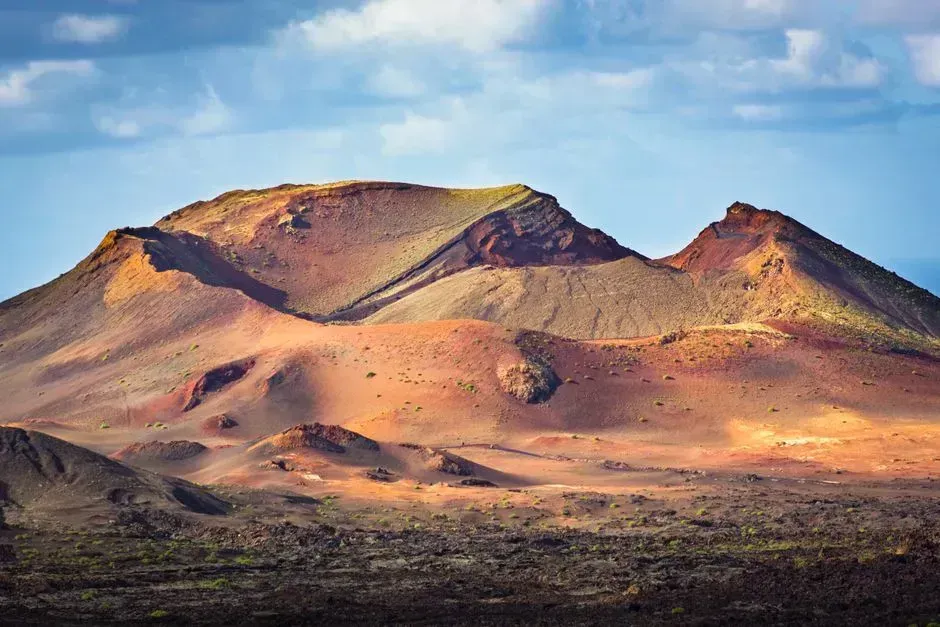
Mars lacks the plate tectonics that keep moving Earth’s crust over volcanic hot spots. On Earth, the Hawaiian chain stretches across the Pacific because the plate drifts over a fixed source of magma. On Mars, the crust stayed put, so a single volcanic center could keep building the same mountain for a very long time.
Gravity helps too. Martian gravity is only about thirty eight percent of Earth’s, so the planet’s crust can support a much taller pile of rock without collapsing under its own weight. That combination of a stationary crust and weak gravity explains why Mars grew mountains Earth cannot.
From a Bright Spot to a Mountain
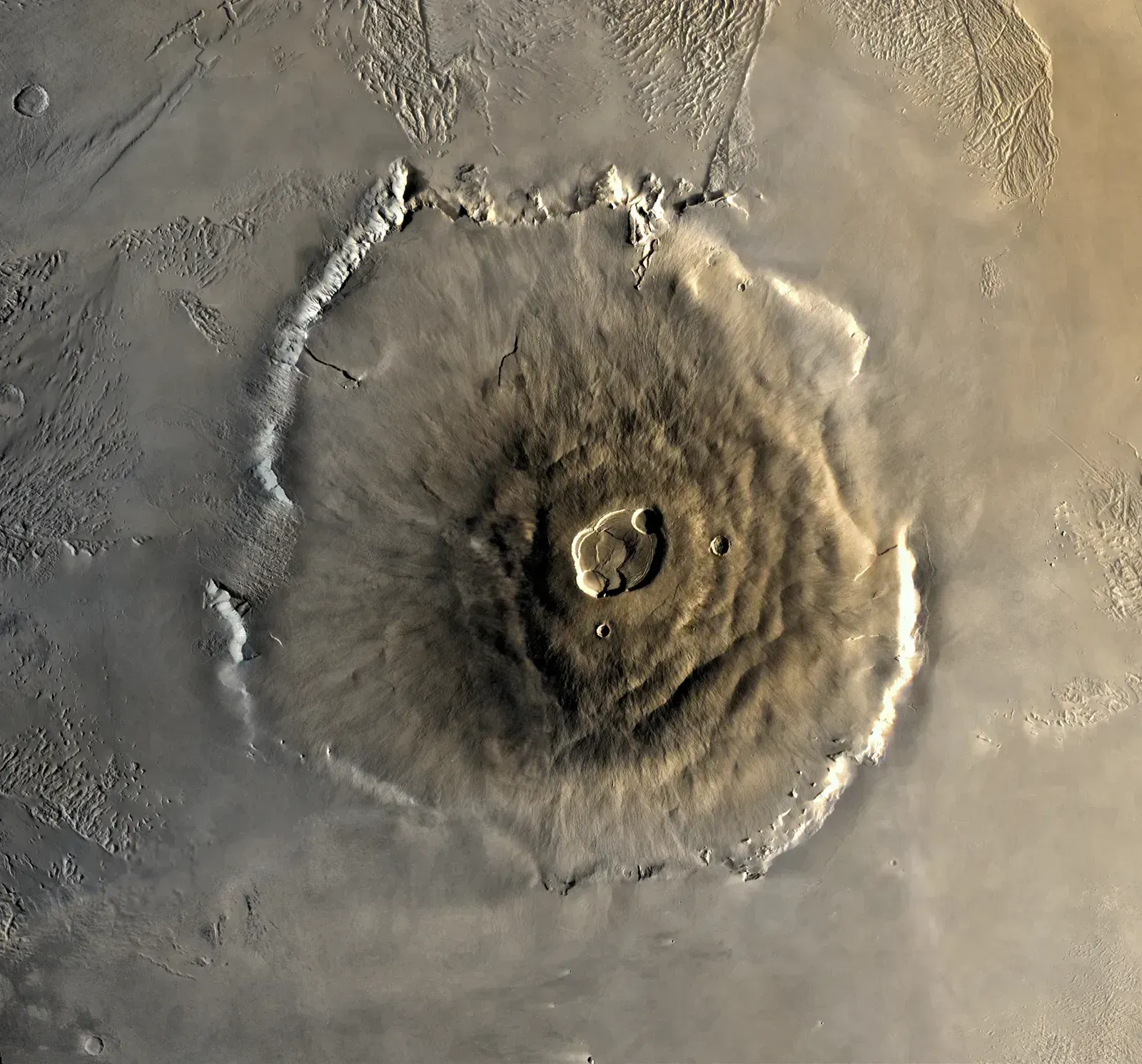
Early telescope observers noticed a bright patch on Mars and named it Nix Olympica, meaning the snows of Olympus. Its true nature stayed hidden until NASA’s Mariner 9 arrived in orbit in 1971. During a global dust storm, the summit poked above the haze, which hinted that something huge lay beneath.
Later orbital missions mapped it in far greater detail, and the feature was reinterpreted as a volcano. The name Olympus Mons was adopted afterward. It stands as a good example of how spacecraft turned a vague bright spot into one of the best known landforms in the solar system.
What the Comparison Really Shows
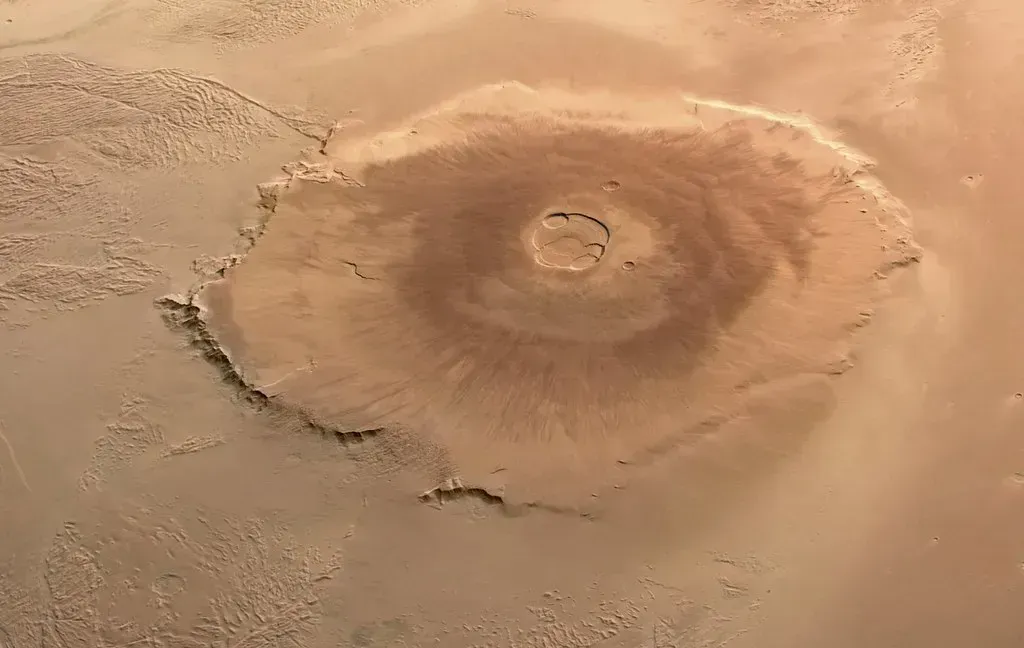
Olympus Mons stands about twenty two kilometers above the Martian datum, against Everest’s 8,849 meters above sea level. That puts the Martian volcano at roughly two and a half times the height of Earth’s tallest peak. Measured from its surrounding plains, it rises even higher.
Its width of about six hundred kilometers and its gentle slopes set it apart from any mountain on Earth. Mauna Kea, measured from the ocean floor, comes closest among Earth’s peaks, at around ten kilometers in total height. Even so, it remains well under half the height of Olympus Mons.

- Blue whales vanish from the Galápagos, and scientists suspect El Niño - November 11, 2026
- 8 Famous Battles That Were Decided by the Weather - November 11, 2026
- Black Sunday 1935: 9 Photos From the Worst Dust Storm of the Dust Bowl Era - November 11, 2026
