


- Atlantic Hurricane Activity Has Often Rebounded After Strong El Niño Years, Records Show - November 15, 2026
- The Planet Where It Rains Liquid Glass – 7 Alien Worlds Defying Known Physics - November 14, 2026
- Stars Consuming Entire Worlds – 6 Planetary Systems Swallowing Their Own Worlds - November 14, 2026
AI Is Starting to Design Drugs From Scratch
For decades, drug discovery meant screening thousands of chemical compounds and hoping something stuck, a process that takes a decade and costs billions. That model is starting to look outdated. Successors to AlphaFold are now being used to simulate the physical rules of biology rather than just guess at them, and in 2026 these AI models are delivering their first entirely AI-designed drugs into advanced human trials, simulating the laws of physics to design proteins and molecules from scratch.
The shift is less about speed and more about approach. Instead of stumbling onto a useful molecule, researchers are engineering one the way an architect designs a building, with a target already in mind. Early candidates are aimed at antibiotic-resistant superbugs and rare neurodegenerative diseases, two categories where traditional drug pipelines have struggled for years. If even a fraction of these AI-designed compounds clear clinical trials, it could compress timelines that used to span a decade into something closer to a few years.
Quantum Computers Are Finally Behaving
Quantum computing has spent years promising more than it delivered, but something changed in December 2024. Google’s Willow chip became the first quantum processor to achieve “below-threshold” error correction, meaning more qubits actually produce fewer errors, which is the opposite of how these systems used to behave. That single result flipped the field’s trajectory, and research has accelerated fast since then, with quantum error correction papers surging to 120 peer-reviewed papers published in the first ten months of 2025 alone, up from just 36 in all of 2024.
Microsoft added its own twist in February 2025 with Majorana 1, a chip built on topological qubits, with a design theoretically scalable to one million qubits on a single chip. Nobody is claiming victory yet. Most credible estimates still put the arrival of full fault-tolerant quantum computers capable of running commercially valuable algorithms somewhere between 2029 and 2033, but the pace of progress over the last two years has genuinely surprised a lot of the physicists working in the field.
Fusion Energy Is Inching Toward the Grid
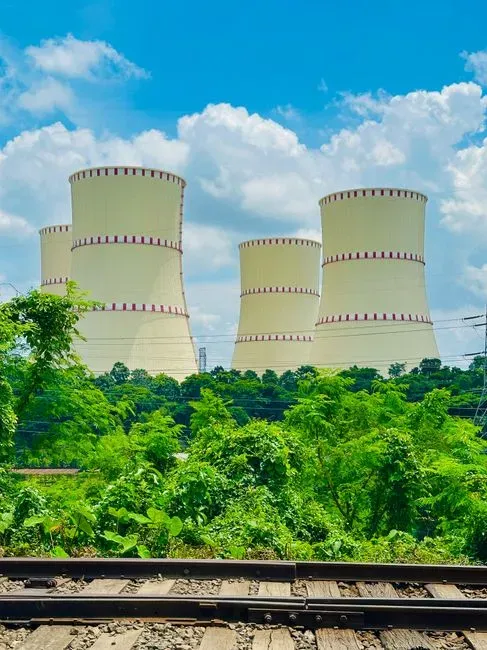
Fusion has been “twenty years away” for about seventy years, so skepticism is fair. Still, the numbers coming out of labs are moving in the right direction. The National Ignition Facility, which first proved net energy gain in 2022, pushed its output further in April 2025, delivering 8.6 megajoules, more than four times the 2.08 megajoules provided by the laser for ignition.
What’s more interesting than the physics is the money now chasing it. Private fusion funding has grown to $10.6 billion between 2021 and 2025, and companies like Commonwealth Fusion Systems are no longer just running experiments, they’re applying to connect future plants to actual electric grids. Commonwealth’s demonstration reactor, SPARC, is about 75 percent finished and expected to start operating by late 2027. Nobody serious thinks fusion solves the climate problem this decade, but the infrastructure being built right now suggests the 2030s could look very different.
Brain Implants Are Moving Past Proof of Concept
The first Neuralink patient, a quadriplegic man named Noland Arbaugh, received his implant in January 2025 and quickly demonstrated the ability to play video games, online chess and other activities using thought alone. That single case captured public attention, but the more meaningful shift is what’s happened since. As of late 2025, 12 patients have successfully received the device, and the company is now focused on scaling manufacturing rather than proving the basic concept works.
Competitors are taking different paths. Synchron’s Stentrode device is implanted through blood vessels rather than open brain surgery, trading some signal precision for a dramatically lower risk profile, since no brain surgery means no risk of brain tissue damage during implantation, no risk of infection from cranial hardware, and a recovery period measured in days rather than weeks. Realistic timelines for commercial approval still stretch to 2028-2030 for limited commercial availability, so this remains a research-stage technology for now, not something you’ll see on a shelf anytime soon.
Gene Editing Is Getting More Precise
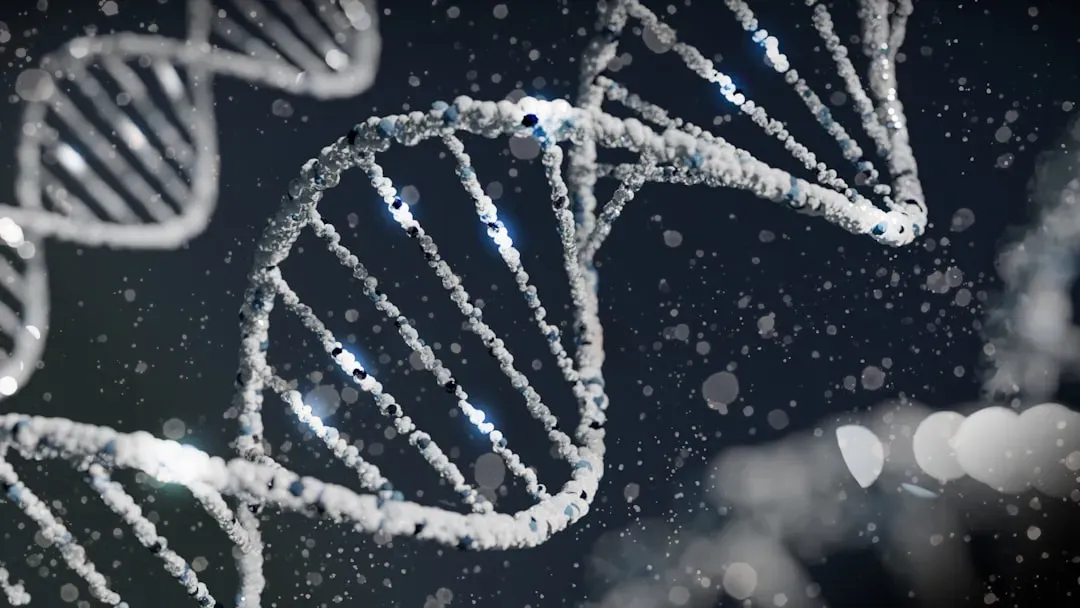
CRISPR made headlines for cutting DNA. The next generation of gene editing is about correcting it without the collateral damage that comes from cutting strands altogether. Harvard geneticist David Liu received recognition in 2025 for developing a revolutionary gene-editing platform that precisely corrects genetic mutations, a step beyond the blunter tools that defined the field’s first decade.
This distinction matters more than it sounds. Early CRISPR approaches worked by breaking DNA strands and letting the cell repair itself, which occasionally introduced unwanted errors. Base and prime editing tools instead rewrite genetic letters directly, reducing the risk of off-target effects. As these tools mature, the diseases they can realistically target expand well beyond the narrow set of conditions gene therapy has addressed so far.
Enzymes Are Learning to Eat Plastic
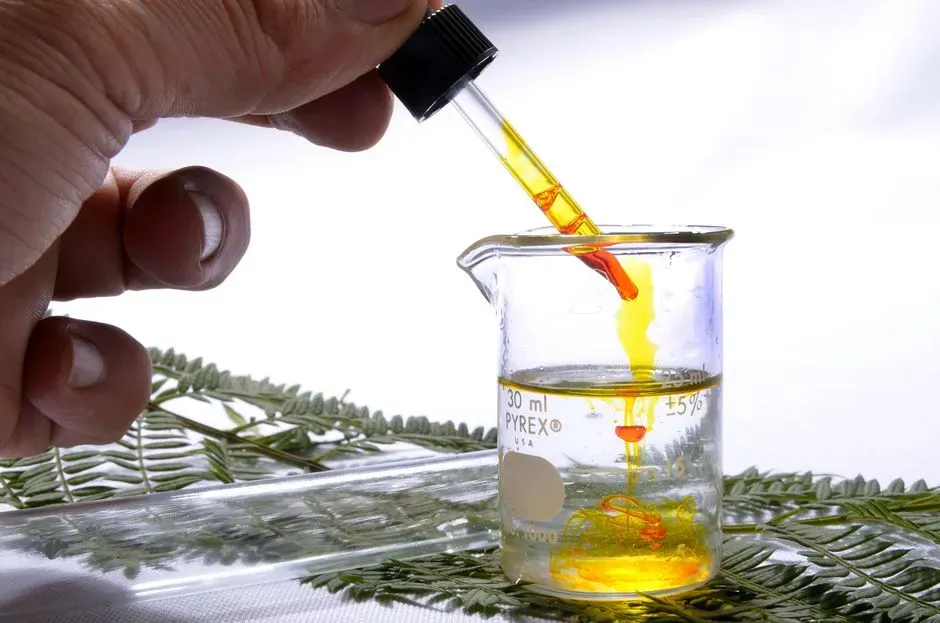
Plastic pollution has always felt like a problem without a clean technical fix, but a 2025 paper suggests otherwise. Researchers reported complete degradation of thin-film polyethylene in 48-72 hours using an engineered enzyme cocktail, a genuine surprise given that no natural degradation pathway existed for it before now.
The scale of the problem this could address is significant, since polyethylene accounts for roughly 30% of all plastic production. The enzymatic approach won’t replace mechanical recycling outright, but it could complement mechanical recycling by handling contaminated, mixed, or degraded plastic streams that current systems reject. Whether this scales beyond the lab depends on cost per tonne and energy use, questions researchers are actively working through now.
AI Is Now Doing Science, Not Just Assisting It
Somewhere along the way, AI stopped being a tool scientists used and started becoming something closer to a collaborator. In 2025, DeepMind’s Gemini model earned a gold medal at the International Mathematical Olympiad, a feat forecasters in 2021 predicted would remain out of reach until 2043. That’s a twenty-year jump in one year.
The pattern repeated across other fields. A fine-tuned version of Meta’s Llama model identified optimal conditions for a previously unreported complex reaction in just 15 experimental runs, saving researchers hundreds of trials that would have taken weeks in the lab. Google’s AI co-scientist went further still, and it reproduced in 2 days an insight into the parasitic spread of DNA in bacteria, a result that had taken researchers years to uncover. These aren’t isolated stunts. They point toward a research process where AI systems generate testable hypotheses alongside the humans who used to do that work alone.
Astronomers Keep Finding More Than Expected
Space research had a genuinely strong run in 2025, the kind that reminds you how much is still out there to find. Astronomers surpassed 6,000 confirmed exoplanets, and a new observatory unveiled its first space photos, adding to a catalog that keeps growing faster than most predicted a decade ago.
Closer to home, discoveries reshaped how we think about early human behavior too. Rock fragments offered tantalizing evidence that humans set the first deliberate fires roughly 350,000 years earlier than thought, pushing back a milestone that anthropologists had treated as settled for years. Harvard astronomers also published new evidence involving the closest known supermassive black hole and a cosmic explosion that could be a rare flare from a magnetar, one of the more mysterious object classes in astrophysics. Each of these findings is a reminder that observational astronomy is still producing genuine surprises, not just confirming what theorists already expected.
Textile Waste Is Getting a Real Recycling Solution
Clothing waste has been a stubborn problem because cotton and polyester blends are notoriously hard to separate. Researchers at Avantium and the University of Amsterdam developed a process using highly concentrated hydrochloric acid at room temperature to separate cotton and polyester in mixed-waste textiles, and early results look promising.
The recovery rates are strong enough to matter commercially, with the process achieving a 75% recovery rate of cotton as glucose and a 78% recovery rate of polyester monomers. The technology is moving to a demonstration plant in 2026 with commercial-scale operations of 100,000 tons annually targeted for the end of the decade. Regulation is pushing adoption too, since new EU rules now require fashion brands to pay for textile waste processing, creating immediate economic incentive to adopt recycling technologies rather than simply landfilling old clothes.
Renewable Energy Passed a Tipping Point
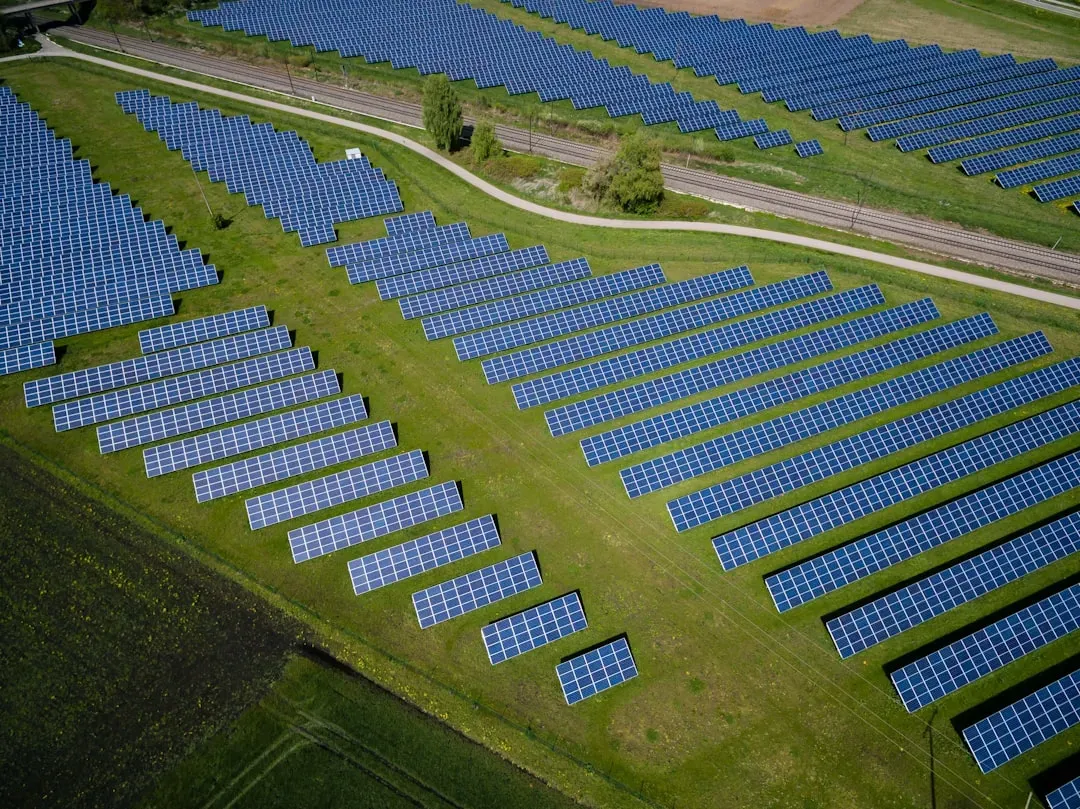
The most consequential scientific and economic story of 2025 wasn’t a single lab result. It was the sheer scale of renewable deployment, which is why Science magazine named it the Breakthrough of the Year. Solar and wind have now reached cost and adoption levels that make them the default choice for new electricity generation in most of the world, not the alternative option they were treated as a decade ago.
This matters for every other technology on this list, because fusion, AI-driven drug discovery, and quantum computing all depend on cheap, abundant electricity to function at scale. As one industry assessment put it plainly, current clean energy sources are already helping, with falling costs and a 15-year head start over newer technologies still working their way out of the lab. The next decade’s story may end up being less about any single scientific miracle and more about how these overlapping technologies, quantum, biological, and energy, reinforce one another as they mature together.
