


- The Planet Where It Rains Liquid Glass – 7 Alien Worlds Defying Known Physics - November 14, 2026
- Stars Consuming Entire Worlds – 6 Planetary Systems Swallowing Their Own Worlds - November 14, 2026
- The Ground Liquefies Like Water – 6 Silent Fault Lines Geologists Watch Closely - November 14, 2026
Radio waves cross the distance from the Moon to Earth in about a second. Sunlight needs a little over eight minutes. For Voyager 1, a message from home now takes close to a full day to arrive.
The probe launched in 1977, and it’s still talking. The details of how it got this far, and what keeps it going, are more interesting than the headline number. Here are fifteen facts worth knowing as of late October 2026.
A Milestone Is Only Weeks Away
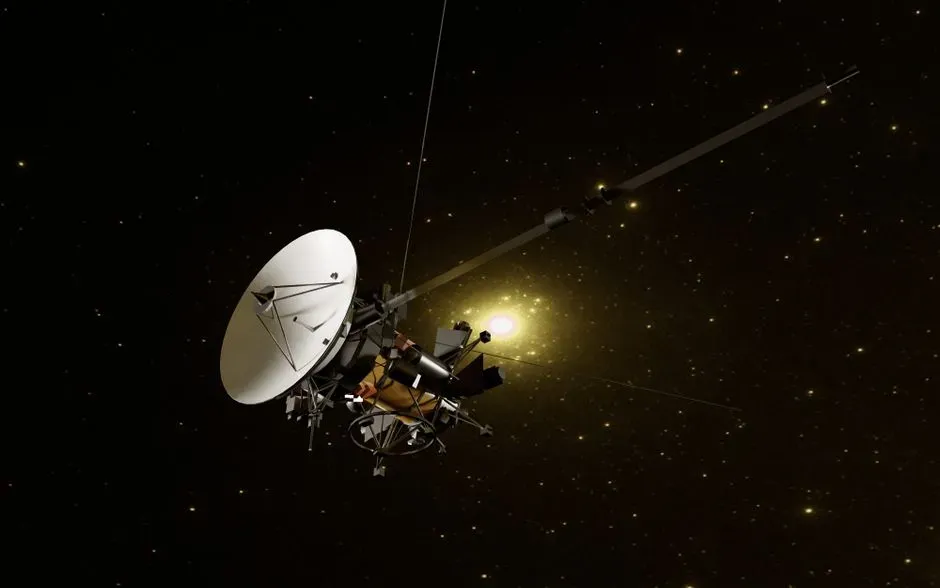
NASA’s mission page says that on November 18, 2026, Voyager 1 will be 16.094 billion miles (25.902 billion kilometers) away from Earth, the distance light travels in 24 hours. That distance is called a light day.
Some outlets have given slightly different dates in the days around it. NASA’s figure is the one most trackers use, and Voyager 1 will be the first human-made object to reach this distance from Earth.
What a Light Day Actually Measures
The term is about distance, not time. A light day is the distance light travels in a vacuum in one day of 86,400 seconds.
That works out to roughly 25.9 billion kilometres, about 173 times the distance between Earth and the Sun. It’s a handy unit for the outer solar system, where kilometres get unwieldy and light years are far too big.
Why Every Message Takes a Day Each Way
Radio waves travel at the speed of light, so they follow the same rule. A spacecraft one light day away hears a command a full day after it is sent.
The reply then needs another day to come back. NASA’s Voyager project manager, Suzy Dodd, has explained that once the probe is at that point, it will take another day for Voyager to respond. A simple question and answer therefore takes about two days.
A Speed That Still Feels Slow
Voyager 1 has been moving at roughly 38,000 miles per hour, on the same trajectory since its flyby of Saturn in November 1980. That sounds fast, and by human standards it is.
Against light, though, it barely registers. One estimate notes that at this speed, it would take about 155 days to travel one astronomical unit, a distance light covers in about eight minutes.
Launched in 1977 for a Much Shorter Job

NASA launched Voyager 1 on September 5, 1977. It was originally designed for a five year mission to study Jupiter and Saturn.
That plan has been stretched far past anything the designers promised. The probe is now close to fifty years old, and it’s still sending data home.
Crossing Into Interstellar Space
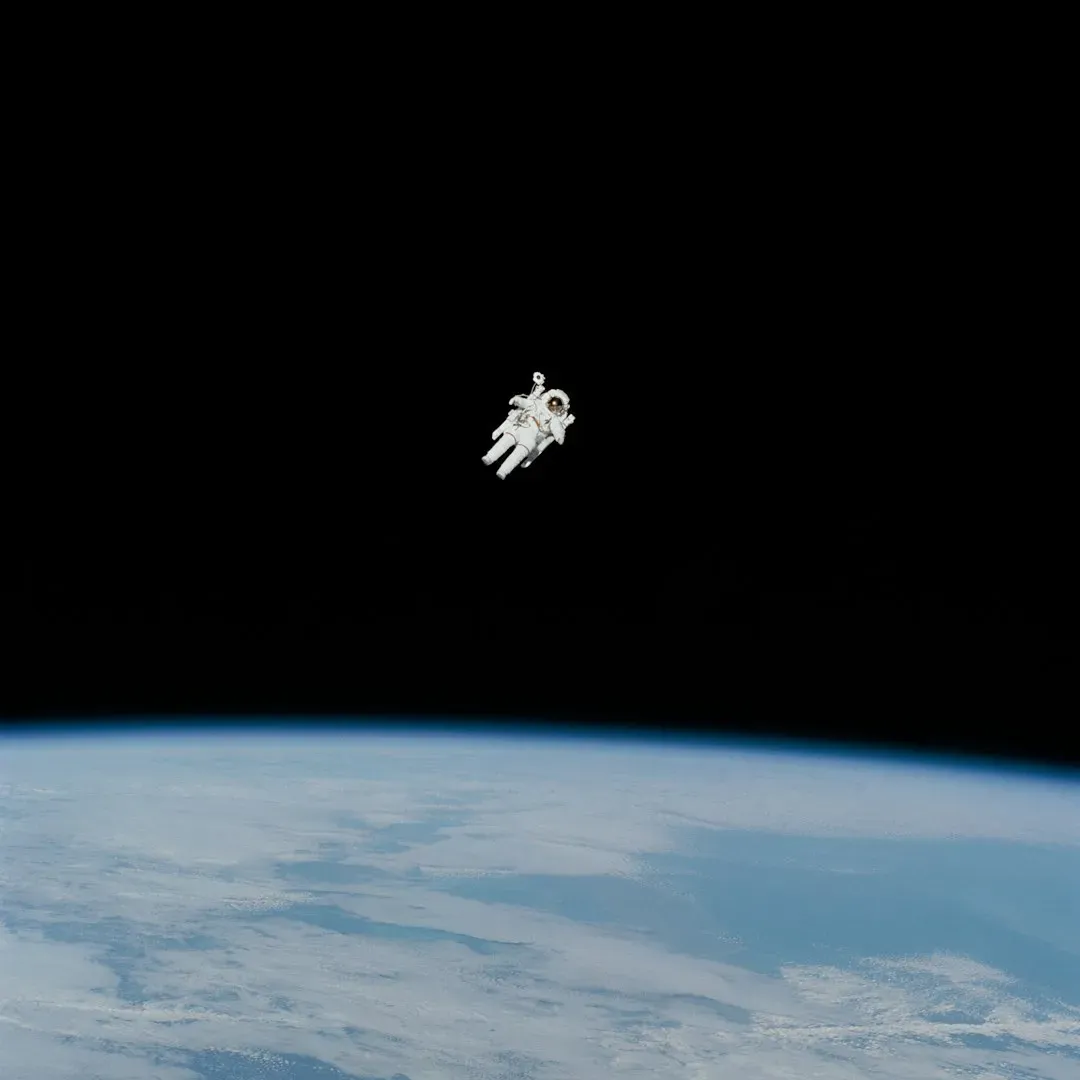
The spacecraft reached the edge of the heliosphere and the beginning of interstellar space in 2012. The heliosphere is the bubble of particles and magnetic fields that the Sun creates.
Voyager 2 reached the same boundary in 2018. That crossing is why the probes’ instruments are now sampling an environment no other machine has measured directly.
The Only Two Probes Out There
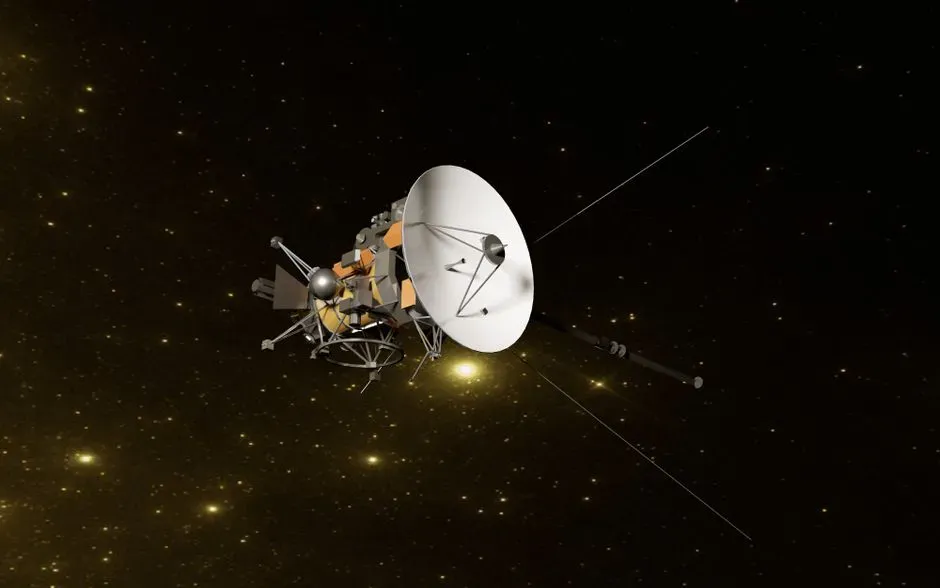
NASA states that Voyager 1 and Voyager 2 are the only spacecraft to ever operate outside the heliosphere. No other human-made craft has returned data from interstellar space.
That makes each remaining instrument unusually valuable. Scientists can’t easily replace what these two are measuring, which helps explain the effort to keep them alive.
Voyager 2 Will Take Far Longer
Voyager 2 is also heading outward, but it’s on a different path and farther behind. CNN reports it isn’t expected to reach one light day from Earth until November 2035.
The same report adds that even the most ambitious estimates suggest the spacecraft won’t still be operating by then. For now, the light day record belongs to Voyager 1 alone.
Running on Decaying Plutonium
Voyager 1 relies on a radioisotope thermoelectric generator, which converts heat from decaying plutonium into electricity. There are no solar panels out here, because sunlight is far too faint.
The supply is shrinking steadily. NASA says both Voyagers lose 4 watts of power every year, so the team has to keep trimming what’s switched on.
The Power Scare of February 2026

On February 27, 2026, Voyager 1’s power levels dropped, and the team concluded a science instrument would have to go. The margin was thin.
Smithsonian reporting explains that the drop was large enough that any further decrease could start an automated system that would try to protect the spacecraft by shutting down some of its components. Engineers wanted to avoid that outcome.
The Low Energy Charged Particles Instrument Goes Dark
On April 17, 2026, engineers at JPL sent commands to shut down the Low energy Charged Particles experiment, known as LECP. It measures ions, electrons and cosmic rays from the solar system and the galaxy.
NASA kept a small part of it powered. The unit uses little power (0.5 watts), and keeping it running gives the team the best chance of turning the instrument back on someday.
Two Instruments Still Working
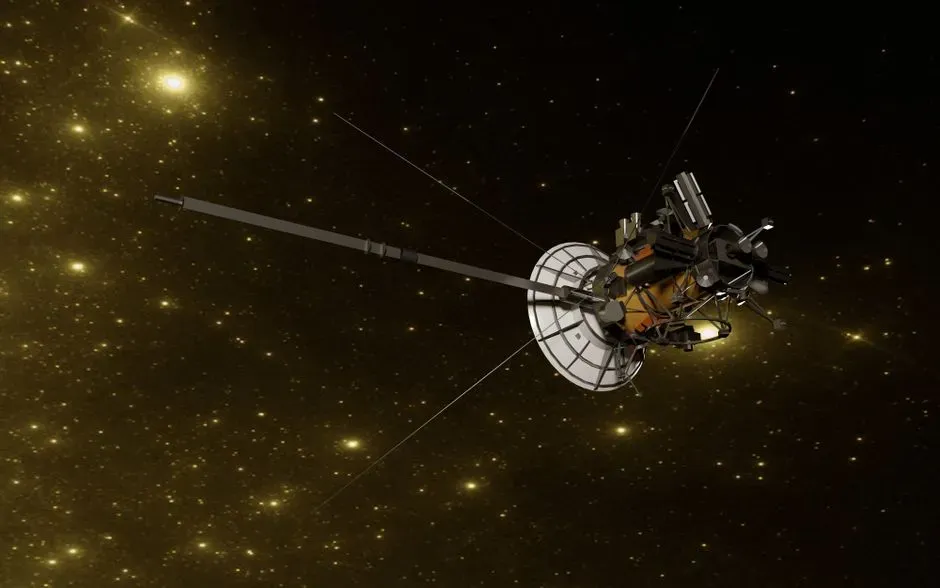
After that shutdown, Voyager 1 is gathering data with only its magnetometer and its plasma wave subsystem. The cosmic ray instrument had been switched off earlier, in February 2025.
NASA expects the probe to manage in this configuration for about a year, given its present power supply. Both devices are still returning useful readings from beyond the heliosphere.
A Fix Nicknamed the Big Bang
Engineers are working on a bigger energy saving plan for both probes. The idea is to swap out a group of powered devices all at once, replacing some with lower power alternatives to keep the spacecraft warm enough.
Voyager 2 was chosen to go first, since it has a little more power to spare and is closer to Earth. If the tests worked, the team planned to try the same fix on Voyager 1 no sooner than July, and success might even let the LECP come back on. I couldn’t find a confirmed result of those tests, so that outcome remains unclear.
A Run of Close Calls Since 2023
The probe has had a rough few years. One tracker summarizes it as a memory fault that garbled its data from November 2023, clogged thruster fuel lines and a transmitter that switched itself off in October 2024.
NASA reported that the October 2024 event left the probe using a much weaker backup radio, and the main one was later restored. Even at its best, the link is slim, with data arriving at about 160 bits per second through NASA’s Deep Space Network.
Still Going Into the 2030s, Then Drifting On
NASA’s engineers believe the two probes could have enough electricity to continue operating with at least one science instrument into the 2030s. They also caution that unforeseen problems could shorten that timeline.
When the power finally runs out, the radio will go quiet. The craft itself won’t stop, though, and one tracker notes it will keep travelling for millions of years.
