

- Real Estate Analysts Just Changed Their Mind About the Safest Places to Buy – Here’s Why - November 12, 2026
- Black Holes Firing Beams at Near-Light Speed – 5 Cosmic Engines Warping Spacetime - November 12, 2026
- Silent Rogue Worlds Drifting in Total Dark – 6 Planets Ejected From Their Star Systems - November 12, 2026
Earth is often described as the ocean planet, yet most of the liquid water in our solar system may be hidden somewhere else. Several moons of Jupiter and Saturn look like frozen worlds from the outside. Underneath their ice, measurements suggest very different conditions.
None of these oceans has been seen directly. The evidence comes from magnetic fields, gravity, wobbling rotations and plumes of material spraying into space. The six moons below show how varied that evidence is, and how much is still being debated.
Europa
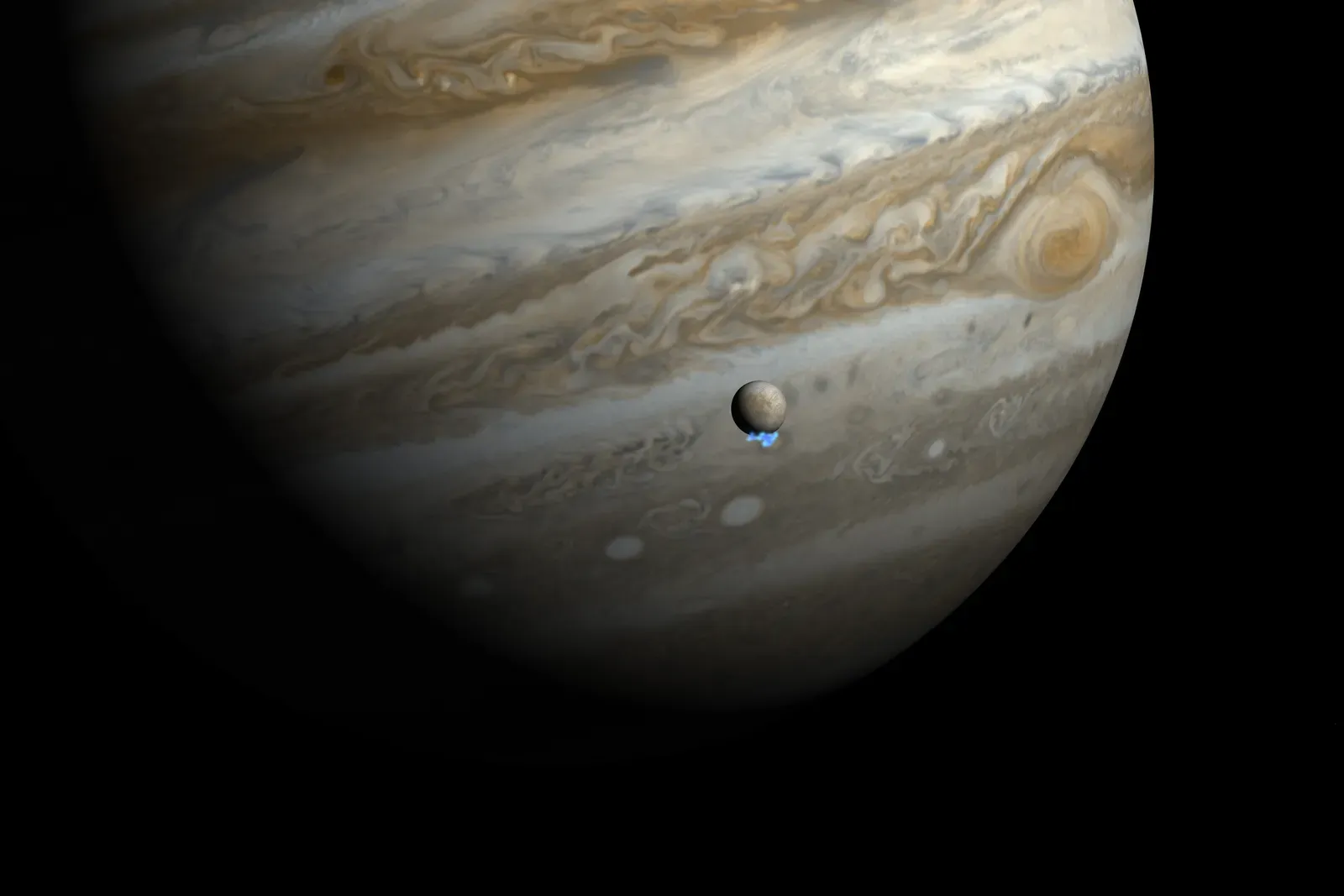
Europa is the classic case. NASA’s Galileo spacecraft measured magnetic disturbances around the moon in the 1990s. They fit best with a layer of salty liquid water beneath the ice, which conducts electricity and reacts to Jupiter’s powerful field. Many researchers think the ocean holds more water than all of Earth’s seas combined.
Hubble observations over the years have also hinted at occasional water vapor plumes, though those detections remain debated. NASA’s Europa Clipper launched in October 2024 and is due to reach Jupiter in 2030. It will make repeated flybys to measure the thickness of the ice shell and the ocean beneath it.
Enceladus
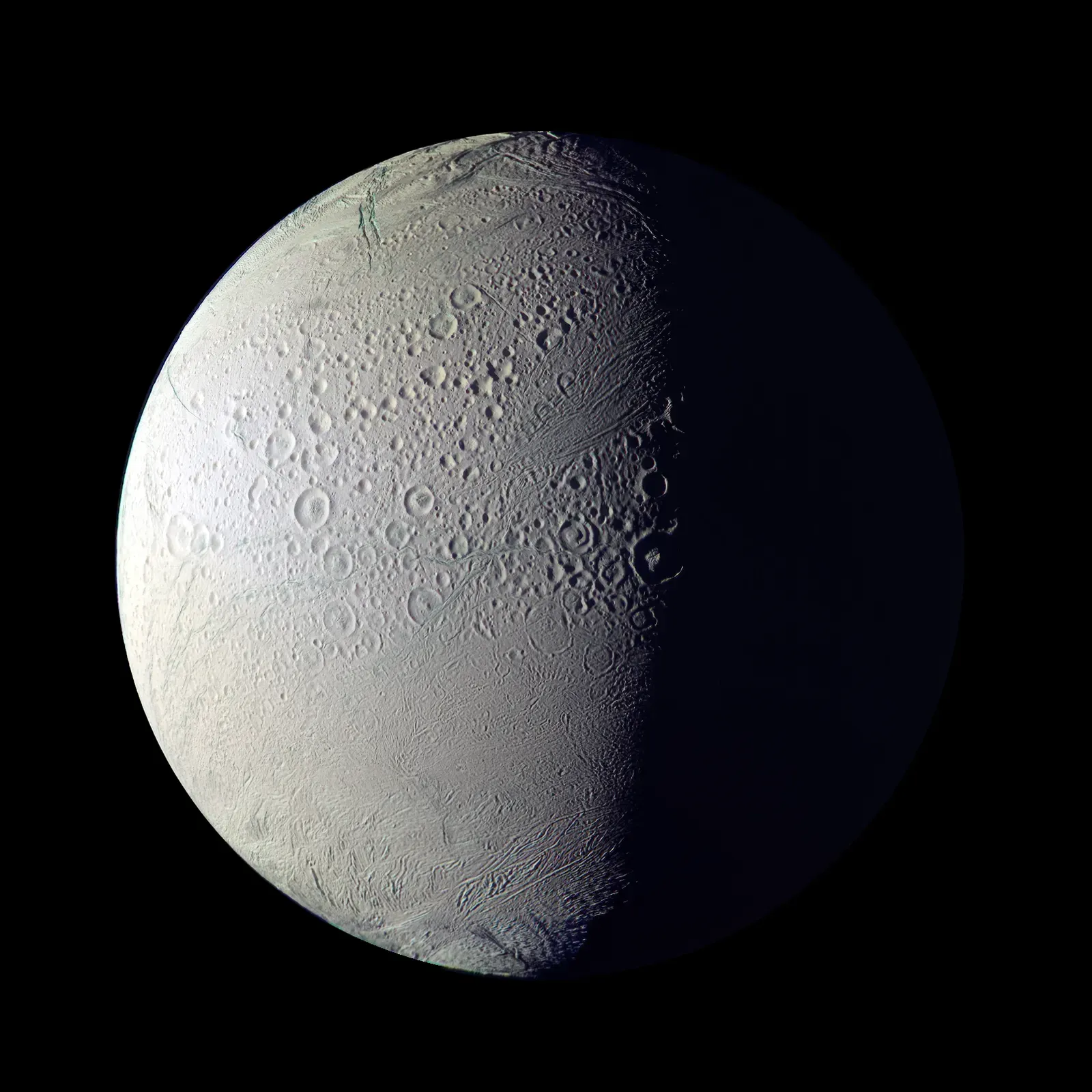
Enceladus is a small moon of Saturn, only a few hundred kilometers across, and it gives away its secret openly. Cassini flew through jets of vapor and ice grains erupting from cracks near the south pole. The grains contained salts and other compounds that point to a source of liquid water below.
Later analyses found molecular hydrogen and silica particles, which suggest hydrothermal activity on the seafloor. A 2023 study reported phosphorus in the ice grains, an element essential to life as we know it. More recent work using Cassini data has also identified fresh organic molecules in newly ejected ice, strengthening Enceladus as a prime target for future missions.
Ganymede
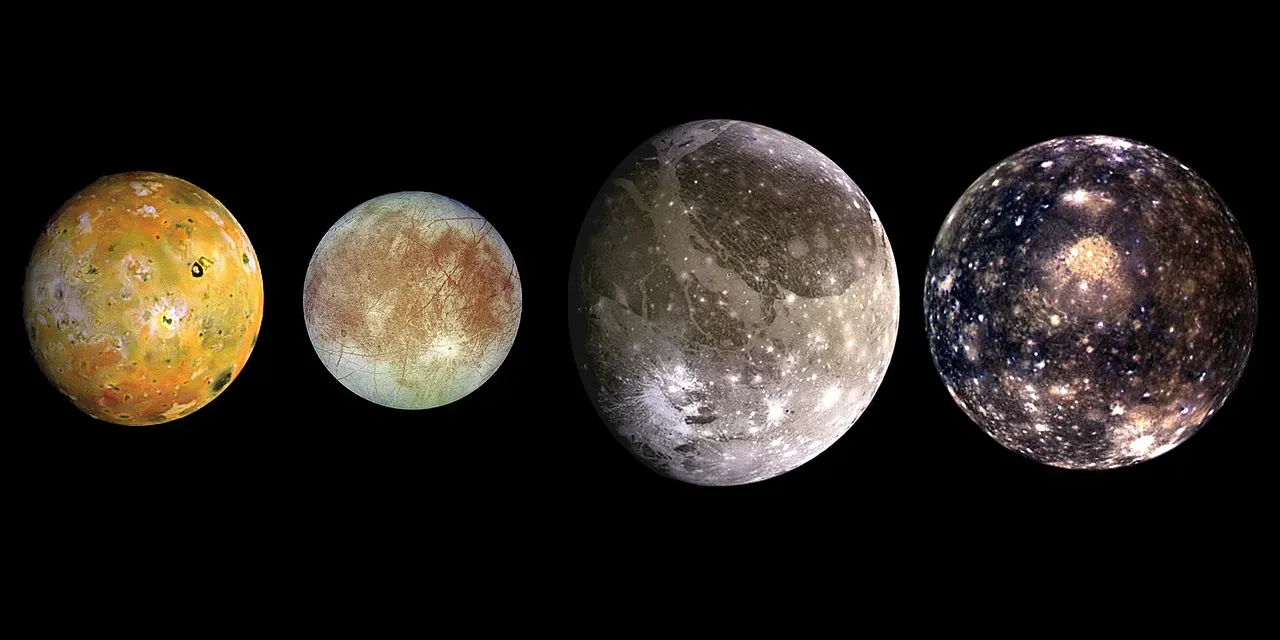
Ganymede is the largest moon in the solar system, bigger than Mercury. It is the only moon known to generate its own magnetic field, and that field produces auroras. Hubble observations in 2015 showed that the auroras rocked in a way that is best explained by a salty ocean damping Jupiter’s influence.
Models suggest the ocean is sandwiched between layers of ice, sitting deep beneath the crust. That could limit direct contact with rock, which matters for habitability. The European Space Agency’s JUICE spacecraft launched in 2023 and is expected to reach the Jupiter system in 2031 before eventually orbiting Ganymede.
Titan
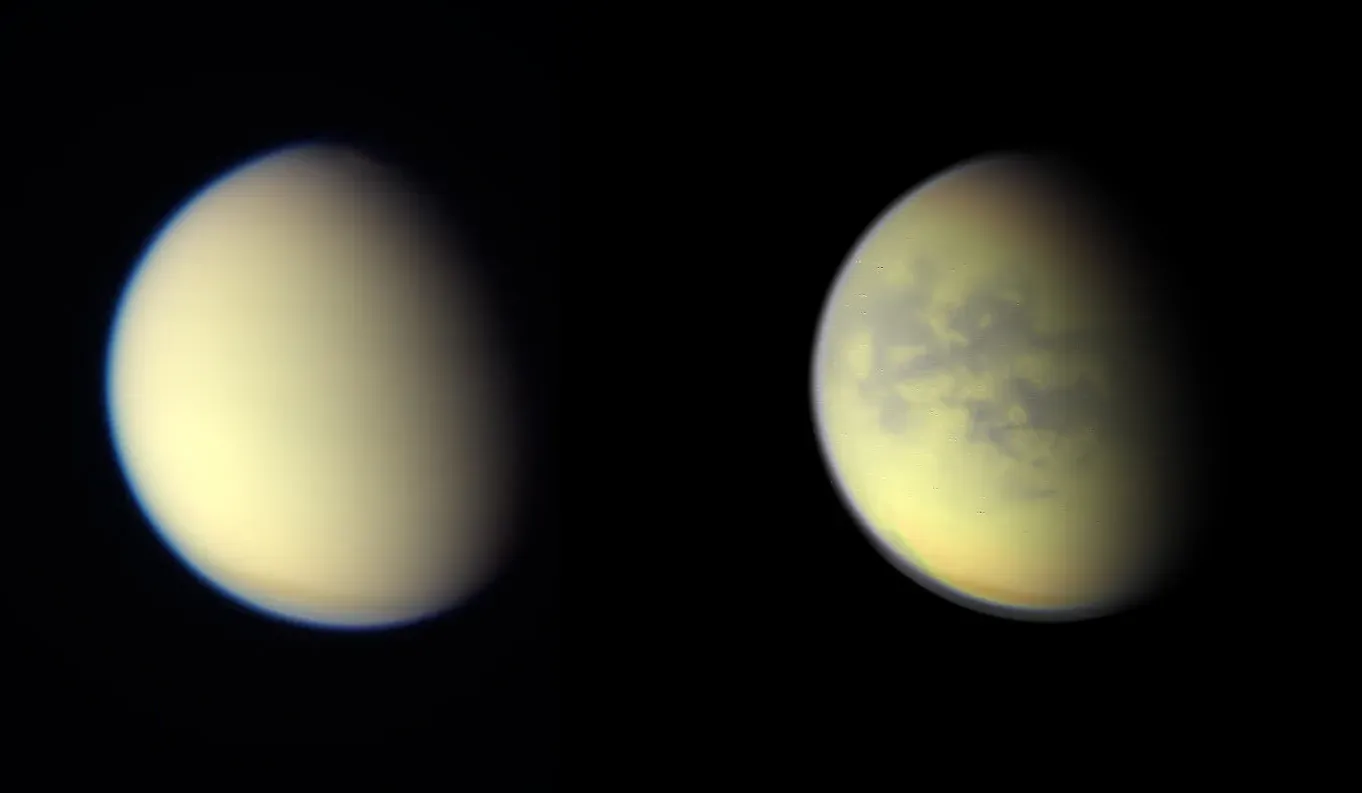
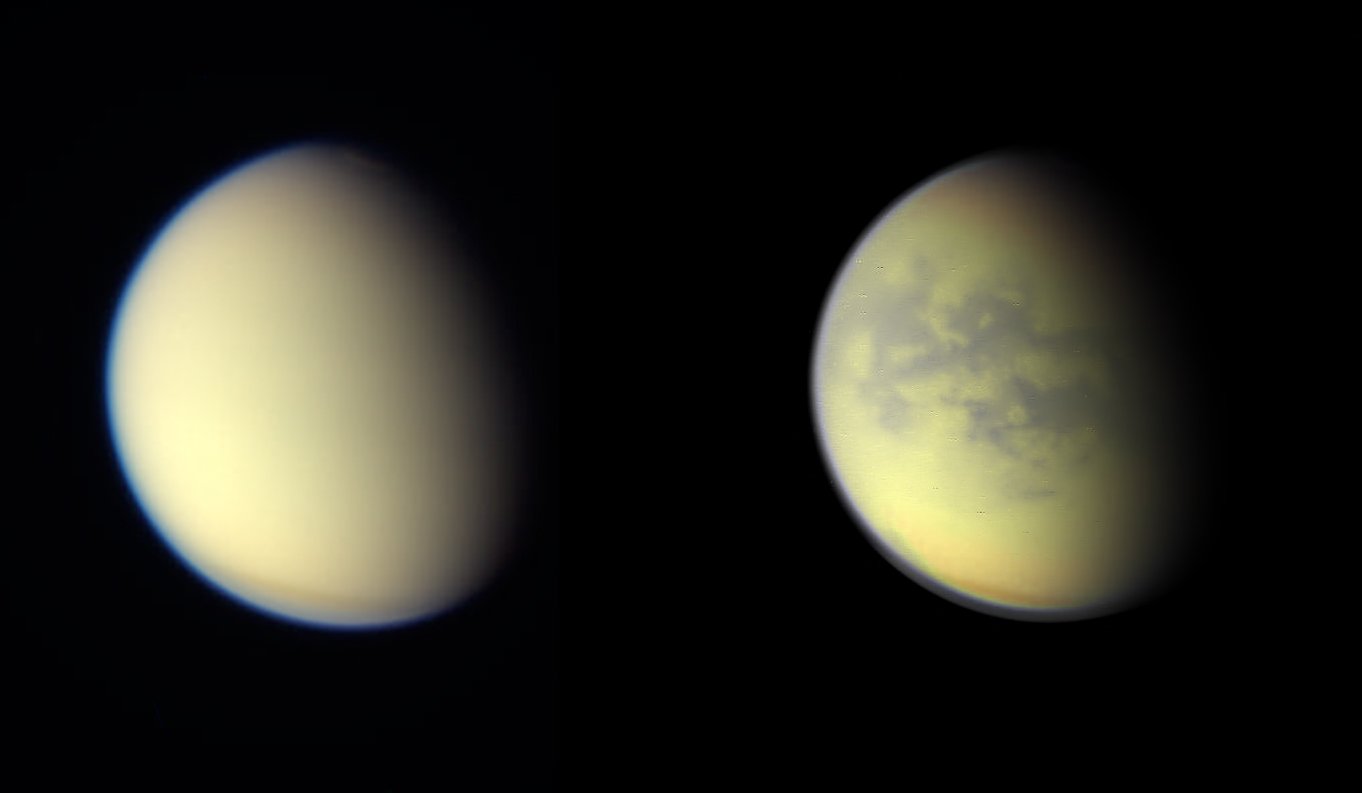
Titan is the only moon with a thick atmosphere, plus lakes and seas of liquid methane and ethane on its surface. Cassini’s measurements of how the moon flexes under Saturn’s gravity were long taken as evidence for a global water ocean deep below. Radio signals picked up by the Huygens probe in 2005 were also interpreted as consistent with a buried liquid layer.
The picture has become less settled. A 2025 reanalysis of Cassini data suggested the interior may include slushy ice and pockets of liquid water rather than one open ocean. Either way, Titan appears to hold substantial liquid water. NASA’s Dragonfly rotorcraft, planned to launch in 2028, will study the surface chemistry.
Callisto
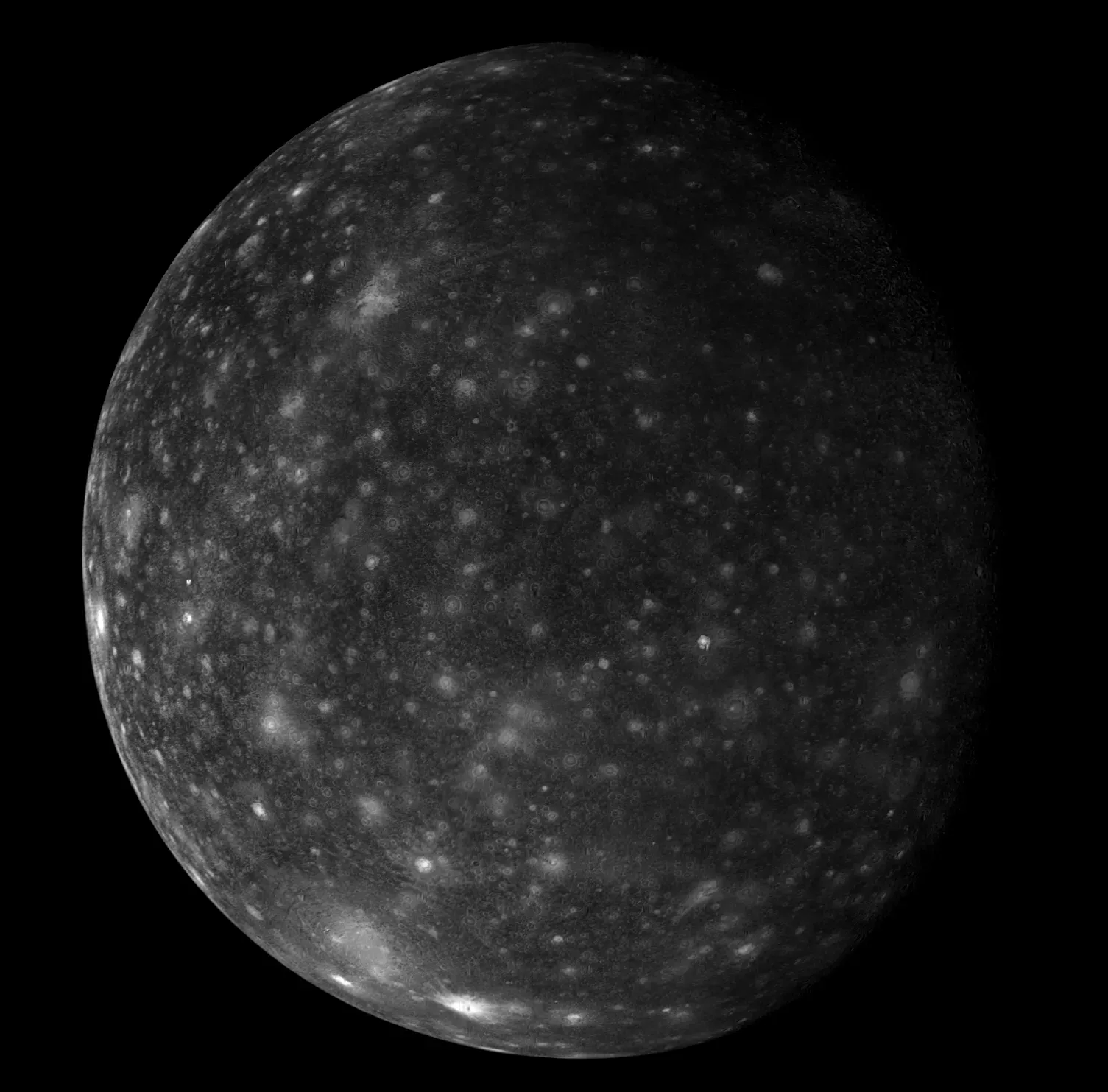
Callisto is Jupiter’s heavily cratered outer moon, and from orbit it looks like a quiet, ancient world. Galileo detected a magnetic signal there that changes in response to Jupiter’s field, a pattern usually linked to a conducting layer such as salty water. That makes Callisto a candidate for a buried ocean, probably deep under a thick shell of ice.
The evidence is less firm than for Europa or Ganymede. Some of the magnetic signal could have other explanations, and models disagree about how the interior is arranged. Callisto is expected to be observed by JUICE during flybys, which should help narrow down the question.
Mimas
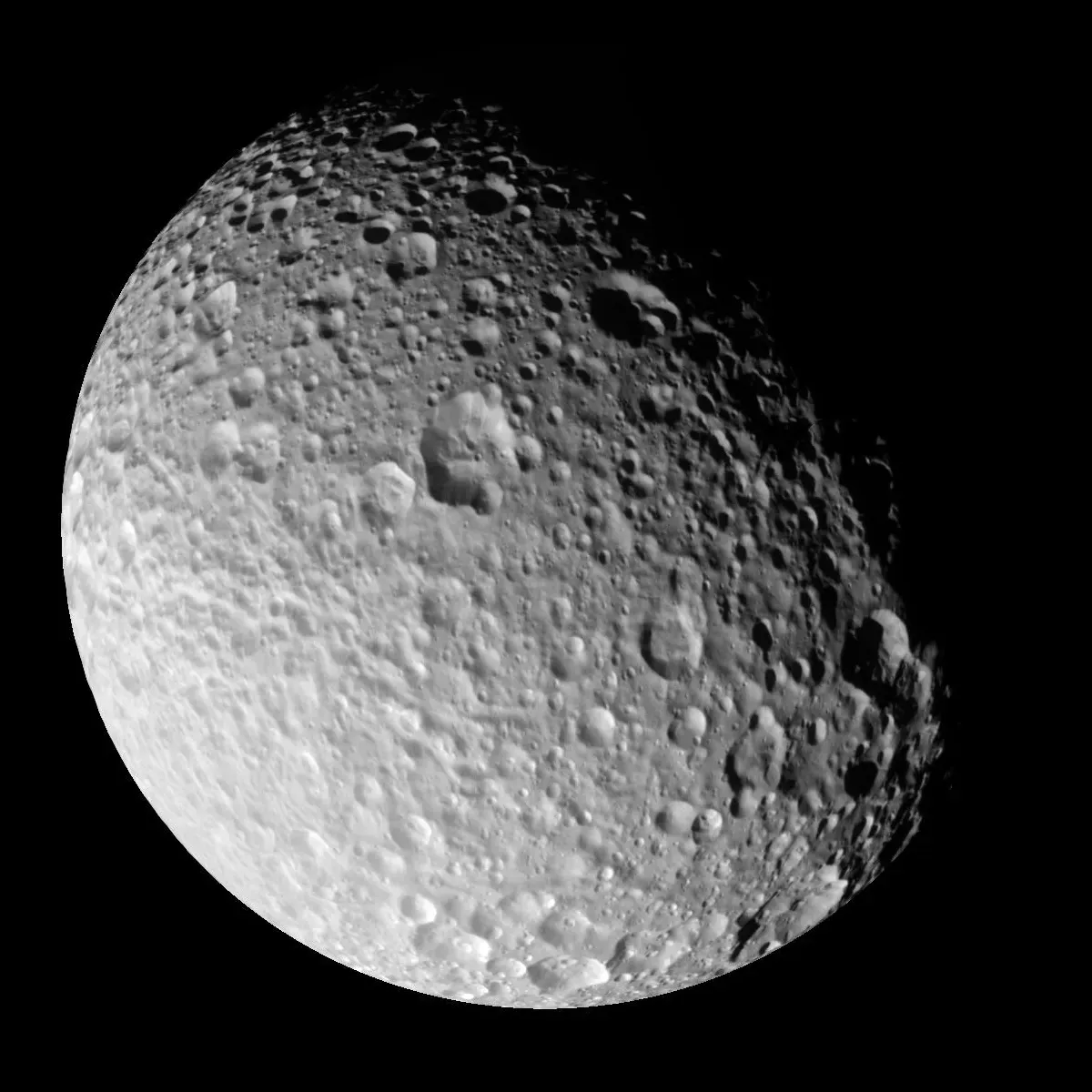
Mimas, the small Saturn moon whose giant crater earned it comparisons with the Death Star, was long thought to be a solid ball of ice. Its surface shows no cracks or geysers, so nothing hinted at an ocean. A 2024 study in Nature changed that by analyzing the moon’s orbit and rotation using years of Cassini images.
The researchers found that the motion fit a young ocean, estimated to lie roughly twenty to thirty kilometers below the surface. They proposed it formed relatively recently in the moon’s history, perhaps within the last several million years. That would explain why the surface looks unchanged, and it suggests other icy moons could hide oceans with no visible clues.
