


The sun does not warn us the way a thunderstorm does, with darkening skies and a change in the wind. Its warnings arrive as flashes of light, bursts of charged particles, and subtle shifts in instruments most people never think to check. Yet after the intense activity of the past two years, scientists and space weather forecasters have gotten much better at reading those signals before a major storm actually hits Earth.
Since the sun reached solar maximum, the period of peak activity in its eleven year cycle, forecasters have tracked a string of significant events, including the historic storm of May 2024 and another intense episode in November 2025. Looking at what preceded those storms reveals a pattern. Below are six signs that tend to show up before a truly develops.
1. A large, magnetically complex sunspot group appears
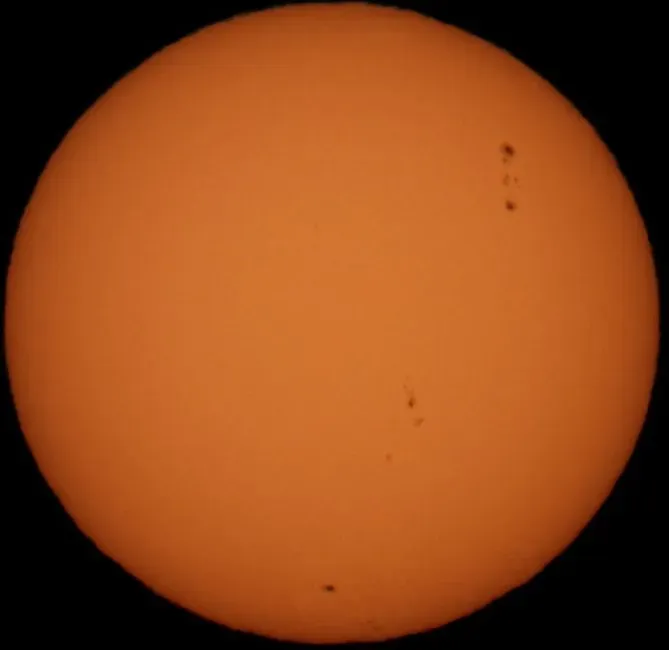
Big storms almost always start with a sunspot region that looks unusually large and tangled on the sun’s surface. The May 2024 superstorm traced back to a single active region, numbered AR3664, that had been producing flares for days before the main event arrived. On 8 May 2024, that region produced an X1.0-class and multiple M-class solar flares and launched several coronal mass ejections toward Earth.
Forecasters at NOAA and NASA watch these regions closely because size and magnetic complexity tend to predict how much energy a sunspot group can release. A more recent example came in December 2025, when a sprawling sunspot group drew attention from researchers well before it turned toward Earth. As one report noted, a massive sunspot group known as Active Region AR4294 aims our way, a massive sunspot emerges from around the solar limb, in the first week of December 2025.
2. An X-class flare erupts and radio signals go quiet
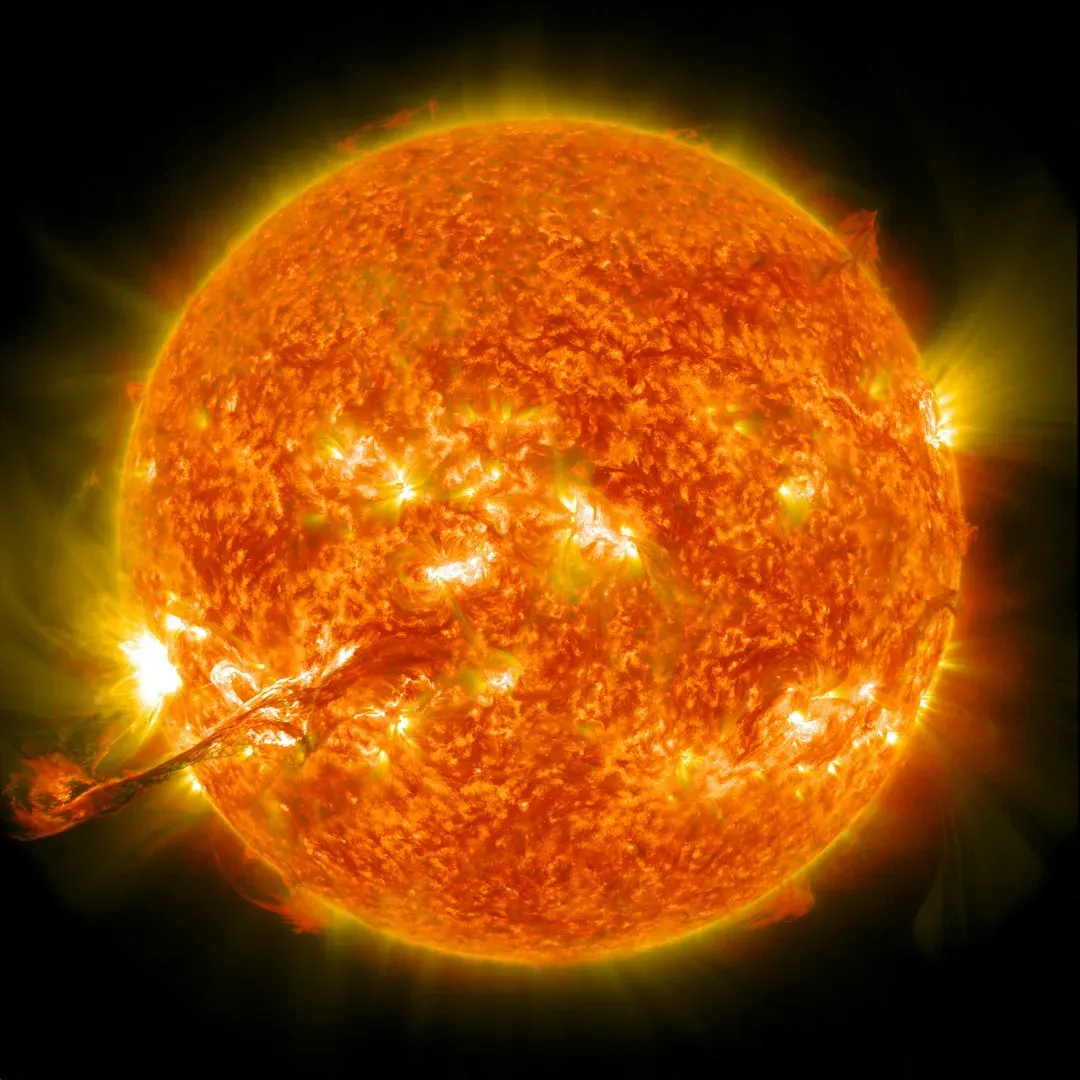
Solar flares are graded on a letter scale, and the top tier, X-class, is where things get serious. Each letter in the classification is roughly ten times more powerful than the one before it, with X representing the most powerful flares, the largest ever recorded estimated at roughly X45. When an X-class flare fires off, it is often the first visible clue that something bigger may follow.
The effects show up almost immediately, since the explosion can release as much energy as a billion atomic bombs, with a torrent of electromagnetic waves leaving the sun at the speed of light and arriving at Earth eight minutes later, potentially disrupting short-wave radio transmissions and causing errors in navigation systems. This is why amateur radio operators and airline dispatchers are sometimes among the first to notice trouble, well before the geomagnetic storm itself arrives. A sudden radio blackout on the sunlit side of the planet is a strong early clue that a major event is underway.
3. A fast, Earth-directed coronal mass ejection is detected
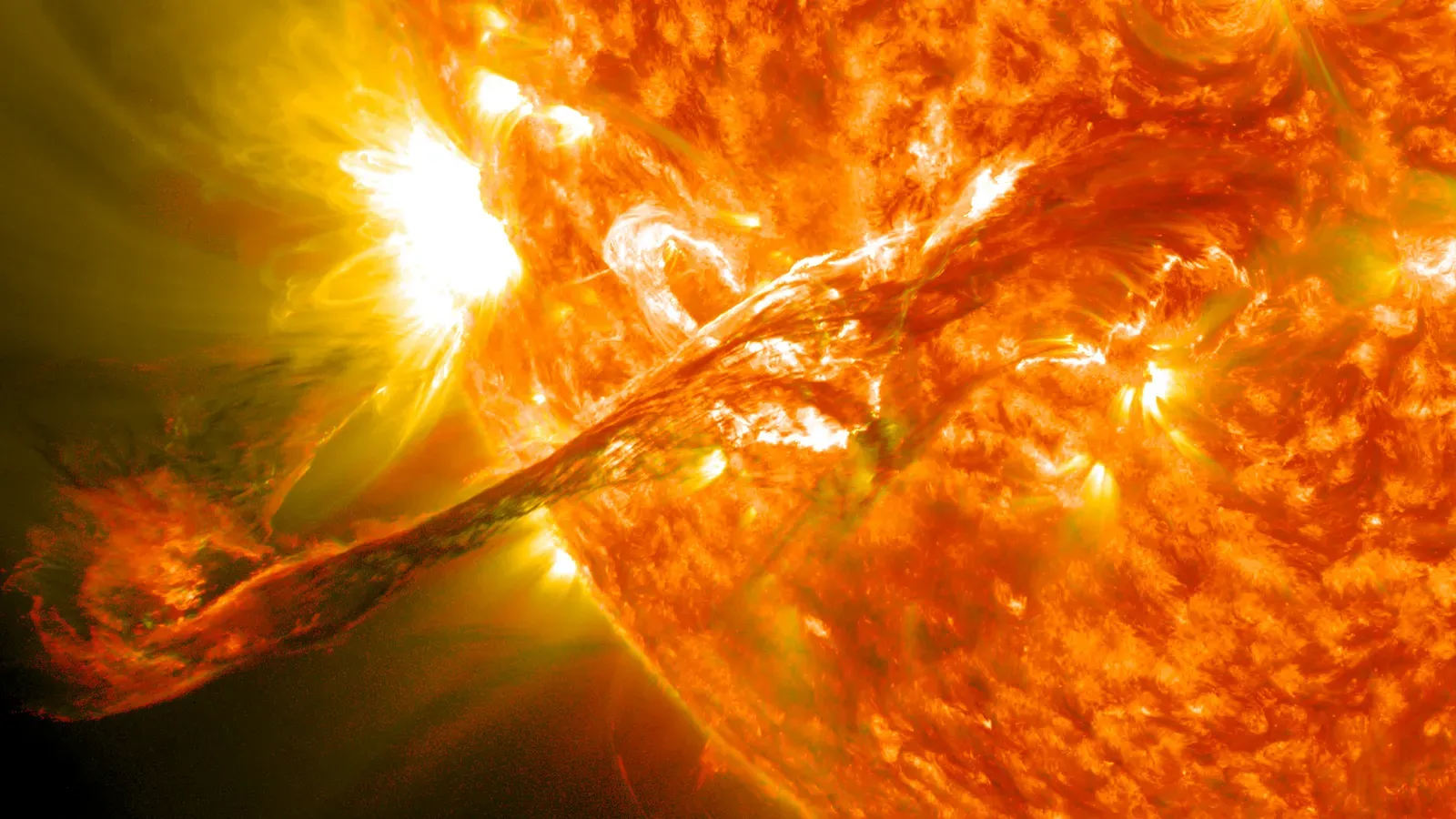
A flare alone does not guarantee a major storm. The bigger concern is a coronal mass ejection, a massive cloud of solar plasma and magnetic field that can take a day or more to cross the gap between the sun and Earth. This cloud of plasma travels more slowly, over one to three days, and upon reaching Earth can trigger a geomagnetic storm.
Speed matters enormously here. During the November 2025 event, satellites tracked a CME that left the sun with startling velocity, as an intense solar flare peaked around 10:04 UTC, followed less than an hour later by the observation of a coronal mass ejection with an initial speed estimated to be around 1500 km/s. When coronagraphs like NASA and NOAA’s LASCO and CCOR-1 instruments spot a fast, full halo CME aimed squarely at Earth, that is a clear signal that a significant storm may be only a day or two away.
4. Solar wind speed and magnetic field data spike at the L1 point
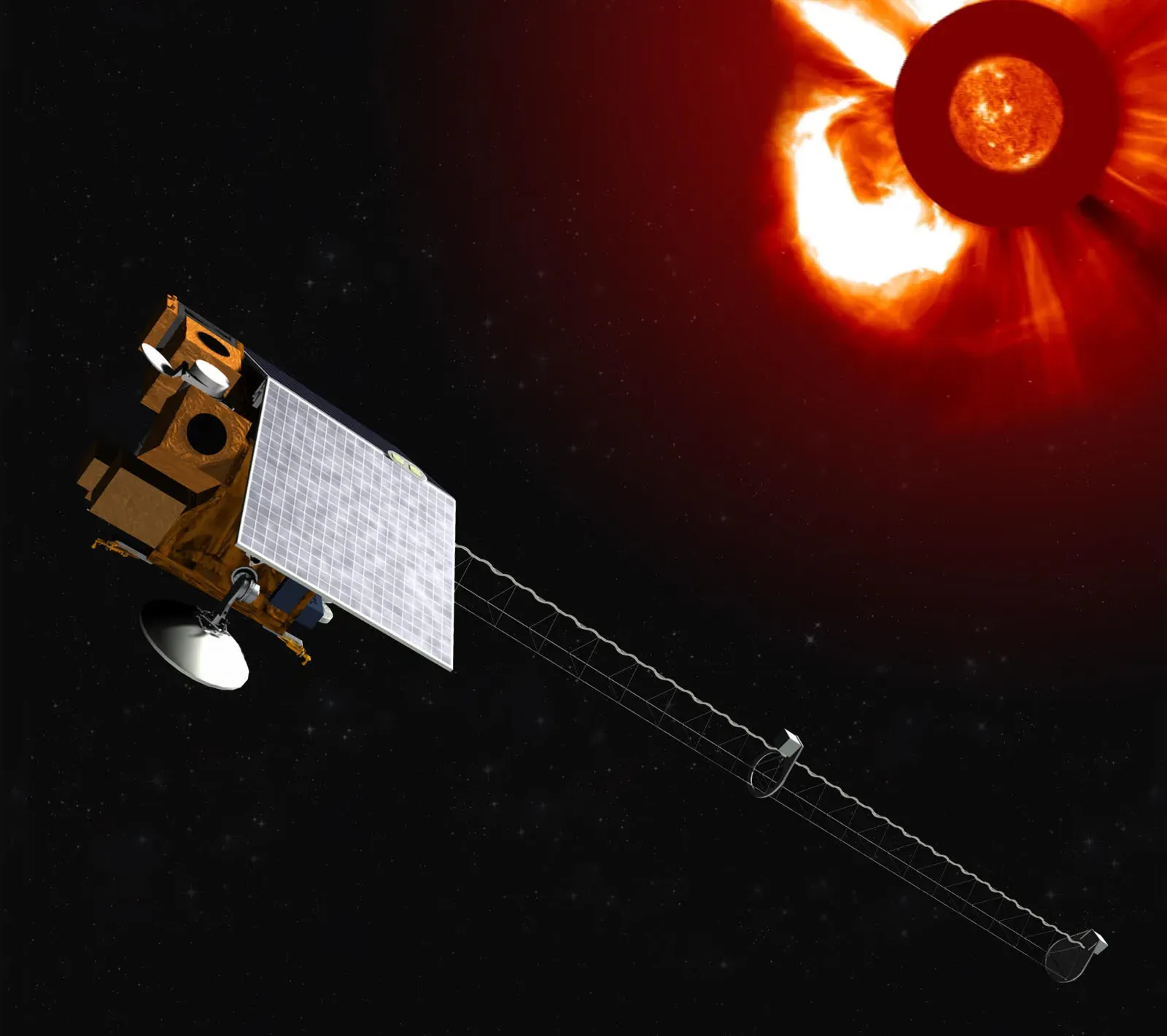
About a million miles from Earth, spacecraft parked at a gravitational balance point called L1 serve as an early warning post, sampling the solar wind before it reaches our planet. When a CME arrives there, instruments record a sudden jump in particle speed and density. During the November 2025 storm, this arrival was documented precisely, as on 12 November, at 18:50 UTC, this CME arrived at Earth and coincided with an increase in the measured solar wind speed to 1000 km/s.
The direction of the magnetic field embedded in that plasma matters just as much as its speed. As one explainer put it plainly, geomagnetic activity can climb quickly when the CME’s magnetic field points south, opposite Earth’s field, but if it aims north, the response is usually mild. Unfortunately, that orientation often cannot be confirmed until the cloud is practically on top of us, which is why forecasters describe the final warning window in stark terms, noting that the polarity of the magnetic field cannot be measured until the CME has reached the L1 position, and then there is only approximately 30 min warning until impact.
5. NOAA issues a geomagnetic storm watch or warning
Once satellite data confirms an incoming disturbance, the U.S. Space Weather Prediction Center formalizes the threat with an official alert, graded from G1 to G5. These alerts are the clearest, most direct warning sign available to the public, and they carry real operational weight. In December 2025, for instance, forecasters flagged an approaching event well ahead of time, noting that a full-halo CME, associated with an M8.1 flare from Region 4299 at 20:39 UTC on 06 December, was expected to impact Earth early to midday on 09 December, potentially causing periods of G3 storming.
These watches give infrastructure operators time to prepare, even if the lead time is short. The Space Weather Prediction Center notifies power grid and satellite operators in the US so they can prepare. When a watch escalates from G2 to G4 or higher, as happened multiple times through 2024 and 2025, it is a strong indication that the sun has produced something out of the ordinary.
6. Auroras appear far outside their normal range
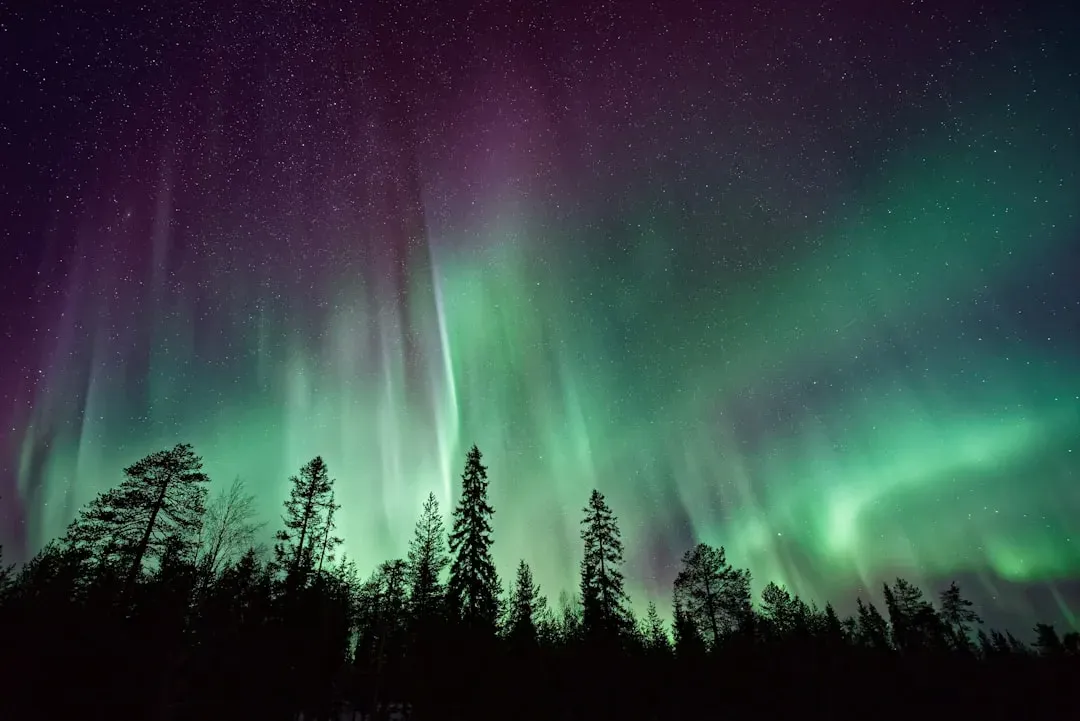
By the time the aurora becomes visible from unusual places, the storm has usually already arrived, but the forecasts leading up to it are themselves a warning sign worth watching. Ahead of the April 2025 storm, observers noted that colorful auroras had already reached Germany, the United Kingdom, New England, and New York City as activity built through the week. That kind of geographic spread, well beyond the polar regions where auroras normally stay confined, tends to correlate with the more severe end of the storm scale.
The May 2024 event remains the benchmark for this sign. During that storm, a cluster of X-class flares and multiple CMEs caused one of the strongest geomagnetic storms of the 21st century, rated G5 on the NOAA scale, with widespread aurorae seen across North America, Europe, and parts of Australia. When forecasters begin predicting aurora visibility at latitudes as low as Alabama or northern Italy, it is a near certain sign that a major geomagnetic storm is either underway or about to peak.
Taken together, these six signals rarely appear in isolation. A complex sunspot region, an X-class flare, a fast halo CME, a spike in solar wind readings at L1, an official NOAA watch, and reports of aurora sightings far from the poles tend to build on each other over a span of one to three days. Solar cycle 25 has already produced its share of memorable storms, and with activity expected to stay elevated for a while longer, learning to recognize these early signs is a practical skill, not just a curiosity for space weather enthusiasts.
