

Open a science textbook from the early 1800s and you’d find a longer list of planets than the one taught today. Ceres, Pallas, Juno, and Vesta all sat on it, next to Mercury, Venus, Earth, and the rest. More than a century later, Pluto joined the roll call too.
None of these five were casually mislabeled. Each earned the title under the standards of its time, and each lost it when better telescopes and better definitions arrived. The reasons say a lot about how astronomy actually works.
A Gap in the Sky That Begged to Be Filled
By the late 1700s, astronomers were fascinated by a numerical pattern known as the Titius-Bode law. It described planetary distances with a simple sequence, and it fit the known planets fairly well. The one glaring exception was a missing planet between Mars and Jupiter, at roughly 2.8 times the Earth-Sun distance.
The pattern got a boost in 1781, when William Herschel found Uranus close to where the sequence predicted. That made the gap between Mars and Jupiter look like unfinished business. Some astronomers even organized a search party to comb the sky for the absent world.
Ceres Arrives on New Year’s Day 1801
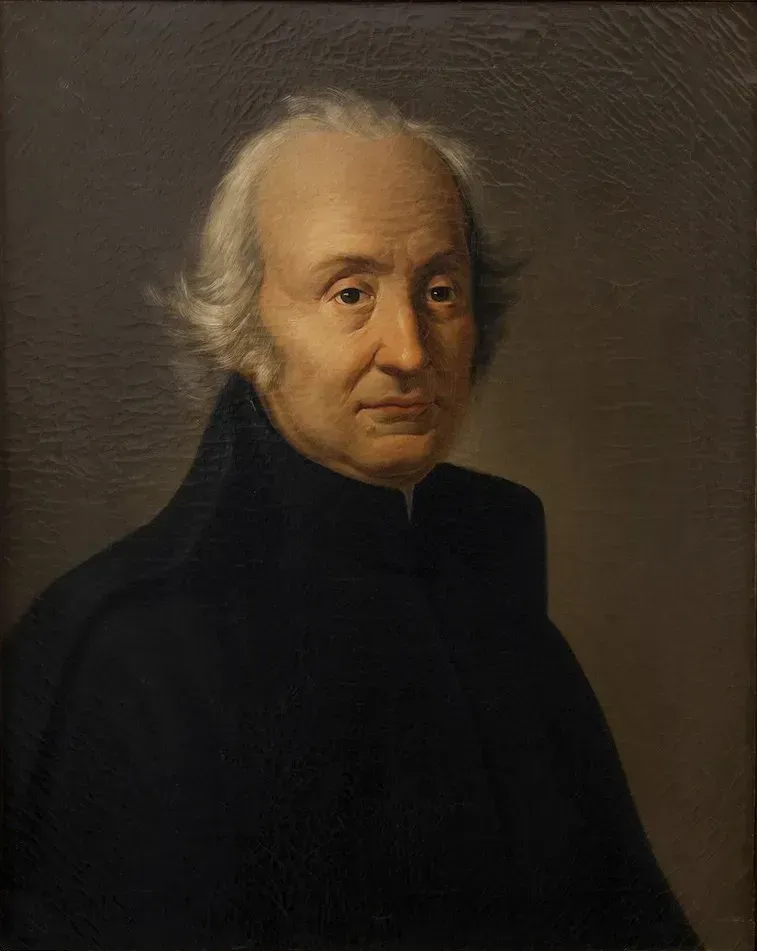
The find came from Giuseppe Piazzi, who spotted a moving point of light from Palermo on January 1, 1801. It sat almost exactly where the pattern said a planet should be, so it was accepted as the missing world and named Ceres. For a while, the puzzle looked solved.
Ceres is small, though. Its diameter is roughly 940 kilometers, far less than the width of the Moon, which is what NASA’s Dawn mission later confirmed in detail. Astronomers at the time couldn’t resolve it as a disk, so its tiny size wasn’t obvious right away.
Pallas, Juno, and Vesta Join the List
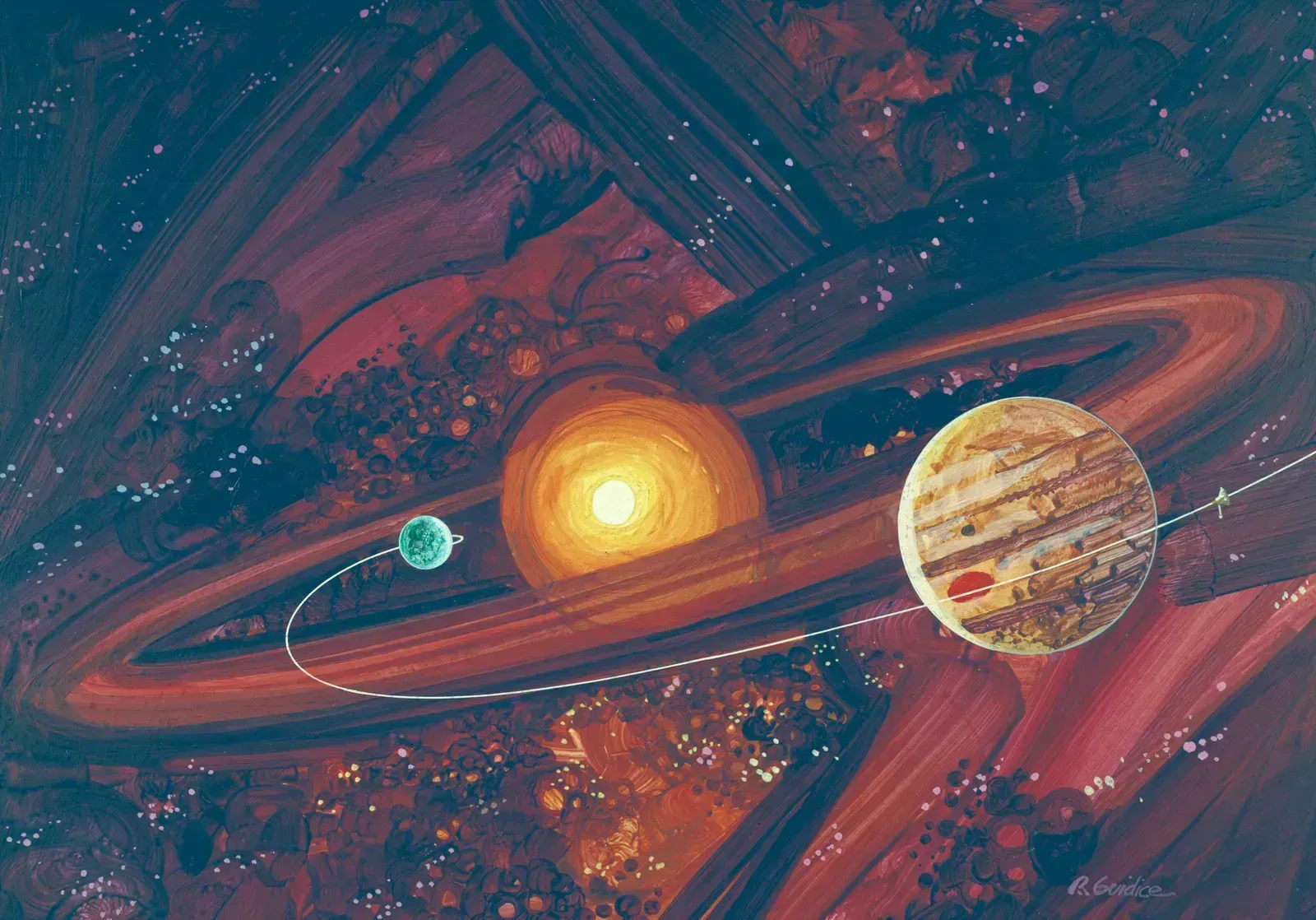
The neat story fell apart quickly. Heinrich Olbers found Pallas in 1802, Karl Harding found Juno in 1804, and Olbers spotted Vesta in 1807. All of them orbited in the same region between Mars and Jupiter, and all were counted as planets for several decades.
Herschel had already suggested a different label for these faint objects. He proposed the word asteroid, meaning starlike, because even large telescopes showed them as points of light rather than discs. Still, the planet label stuck in many reference books until the middle of the 1800s.
Why the Asteroid Planets Got Demoted
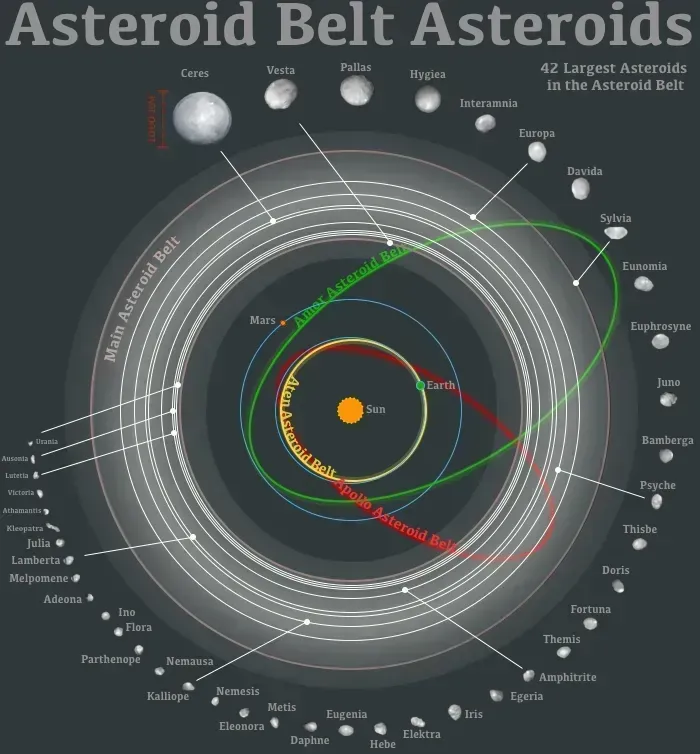
The turning point came in 1845, when Karl Hencke discovered a fifth object in the region, Astraea. More followed, and within a few years the count ran into the double digits. Listing dozens of tiny bodies alongside Jupiter and Saturn made the planet table look silly, so astronomers gradually moved them into a separate category.
Modern spacecraft have since shown how different these objects are from the major planets. NASA’s Dawn orbited Vesta from 2011 to 2012 and then Ceres beginning in 2015, and it found two complex, geologically interesting worlds. Vesta is about 525 kilometers across, while Pallas is roughly similar in size and Juno is much smaller. Together, all the asteroids hold far less mass than a single large moon.
Pluto Gets Its Turn in 1930
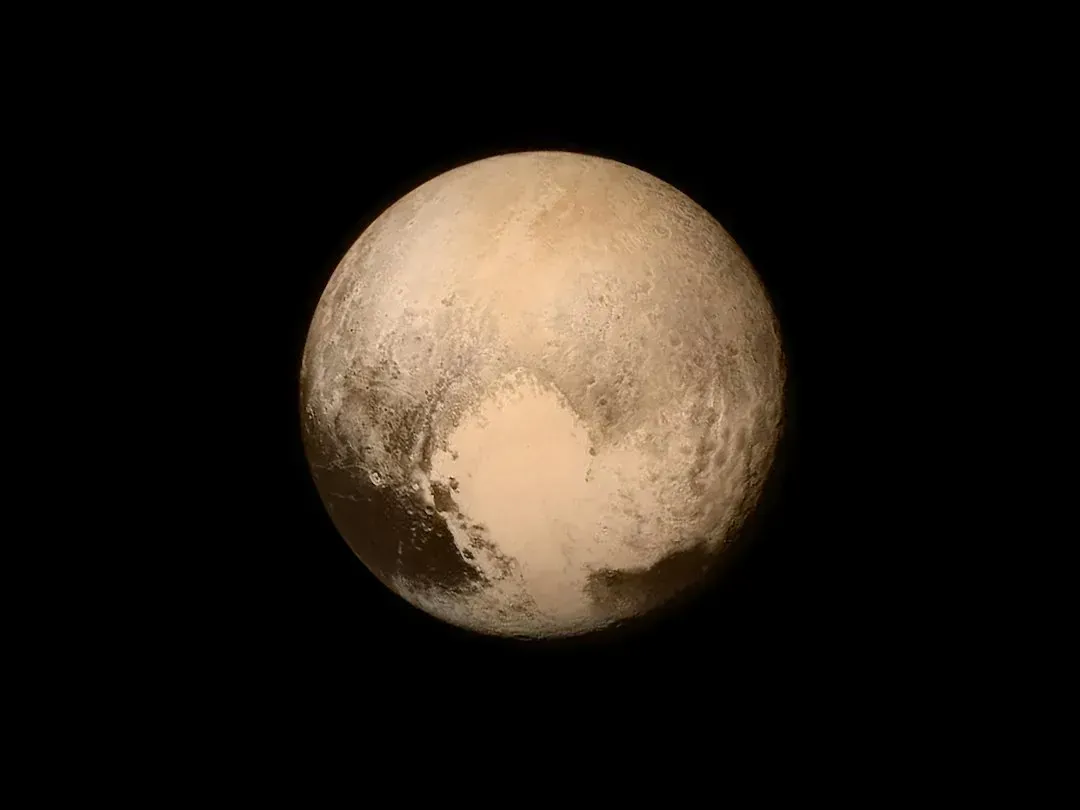
Pluto’s story began with Percival Lowell, who suspected that an unseen planet was tugging on the orbits of Uranus and Neptune. Clyde Tombaugh, working at Lowell Observatory in Arizona, found Pluto in 1930 by comparing photographic plates. It was celebrated as the ninth planet, and it held that status for 76 years.
The trouble was that Pluto kept shrinking as measurements improved. The discovery of its moon Charon in 1978 revealed that Pluto was far less massive than first thought. Today its mass is estimated at only about one sixth that of Earth’s Moon, and the original perturbation calculations turned out not to require such a planet at all.
The 2006 Definition That Changed the Count
The decisive shift came from discoveries beyond Neptune. Astronomers began finding many icy objects in the Kuiper belt starting in 1992, and in 2005 the discovery of Eris, a body about as large as Pluto, forced the issue. If Pluto counted, then Eris and likely more would too.
In August 2006, the International Astronomical Union voted in Prague on a formal definition. A planet must orbit the Sun, be massive enough to pull itself into a nearly round shape, and have cleared its orbital neighborhood of other objects. Pluto meets the first two conditions but shares its region with many other bodies, so it was reclassified as a dwarf planet, and Ceres received the same designation.
Where the Five Worlds Stand Now
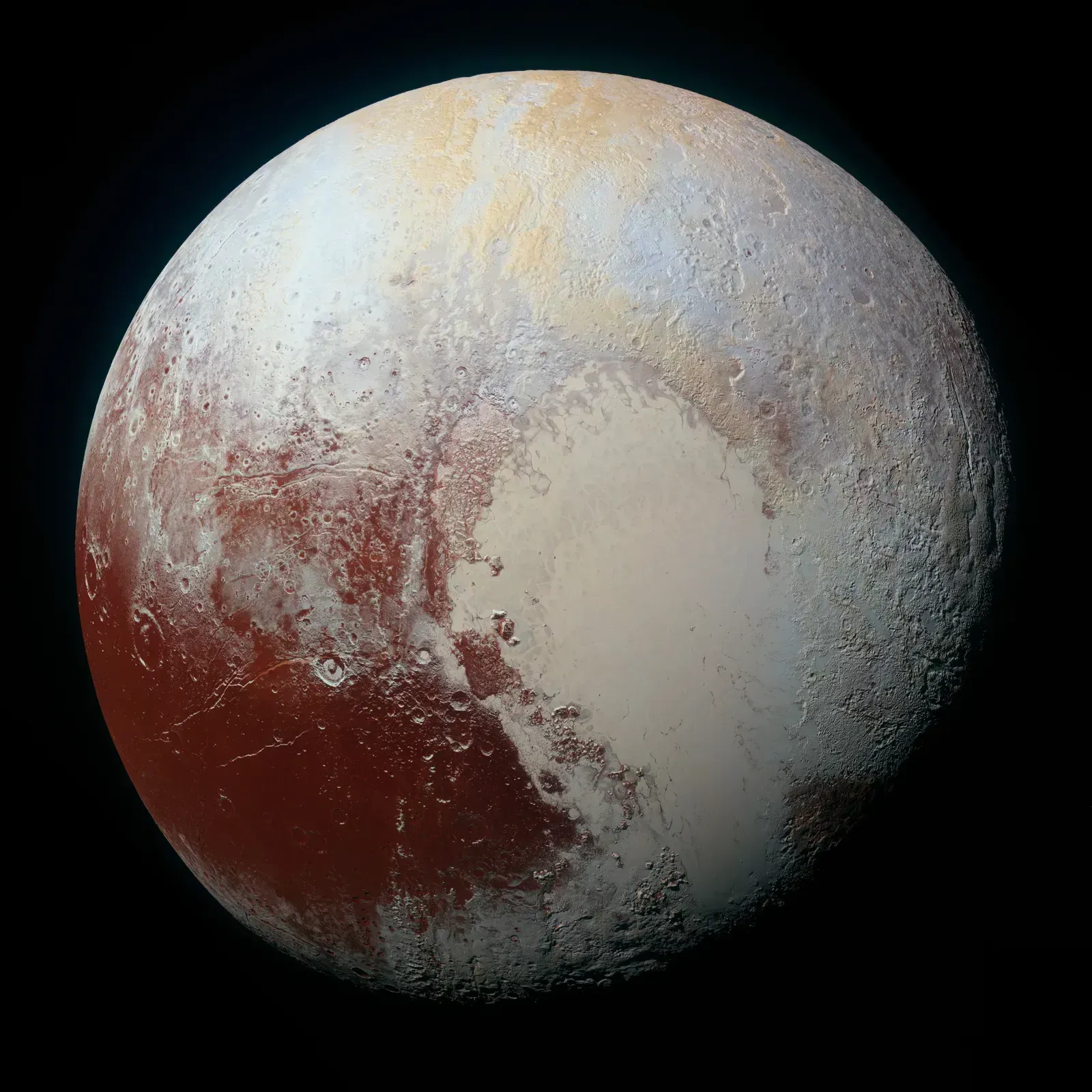
Ceres and Pluto are both officially dwarf planets, and both have been visited up close. Dawn reached Ceres in 2015, and New Horizons flew past Pluto in July of that same year, revealing mountains of water ice and a large, bright nitrogen plain. Scientists are still working through the data from both missions.
Vesta, Pallas, and Juno are classed as asteroids, though Vesta and Pallas are among the largest in the belt. The IAU definition remains in place, and some planetary scientists still argue over its wording, especially the clearing requirement. Formally, though, the solar system has eight planets, and these five worlds are counted among its other bodies.

- 9 Wildfire-Season Routines Many California Residents Follow - November 10, 2026
- Most US states face earthquake risk as major fault lines span the country - November 10, 2026
- The Joplin Tornado of 2011 Killed 158 People and Led to New Warning Language - November 10, 2026
