


- 10 Home Upgrades That Can Lower Summer Cooling Costs - November 10, 2026
- 10 Questions to Ask Before Buying a Home in a Flood Zone - November 10, 2026
- 9 Coffee-Growing Regions Reporting Lower Yields as Temperatures Rise - November 10, 2026
A single snowflake can drift for ten or fifteen minutes through the sky before it lands on a coat sleeve. In that short trip, it takes on a shape that records the air it passed through.
People have been studying that shape for centuries, from early sketches to modern laboratory chambers. The explanation draws on chemistry, weather, and a bit of chance.
It Starts With a Speck
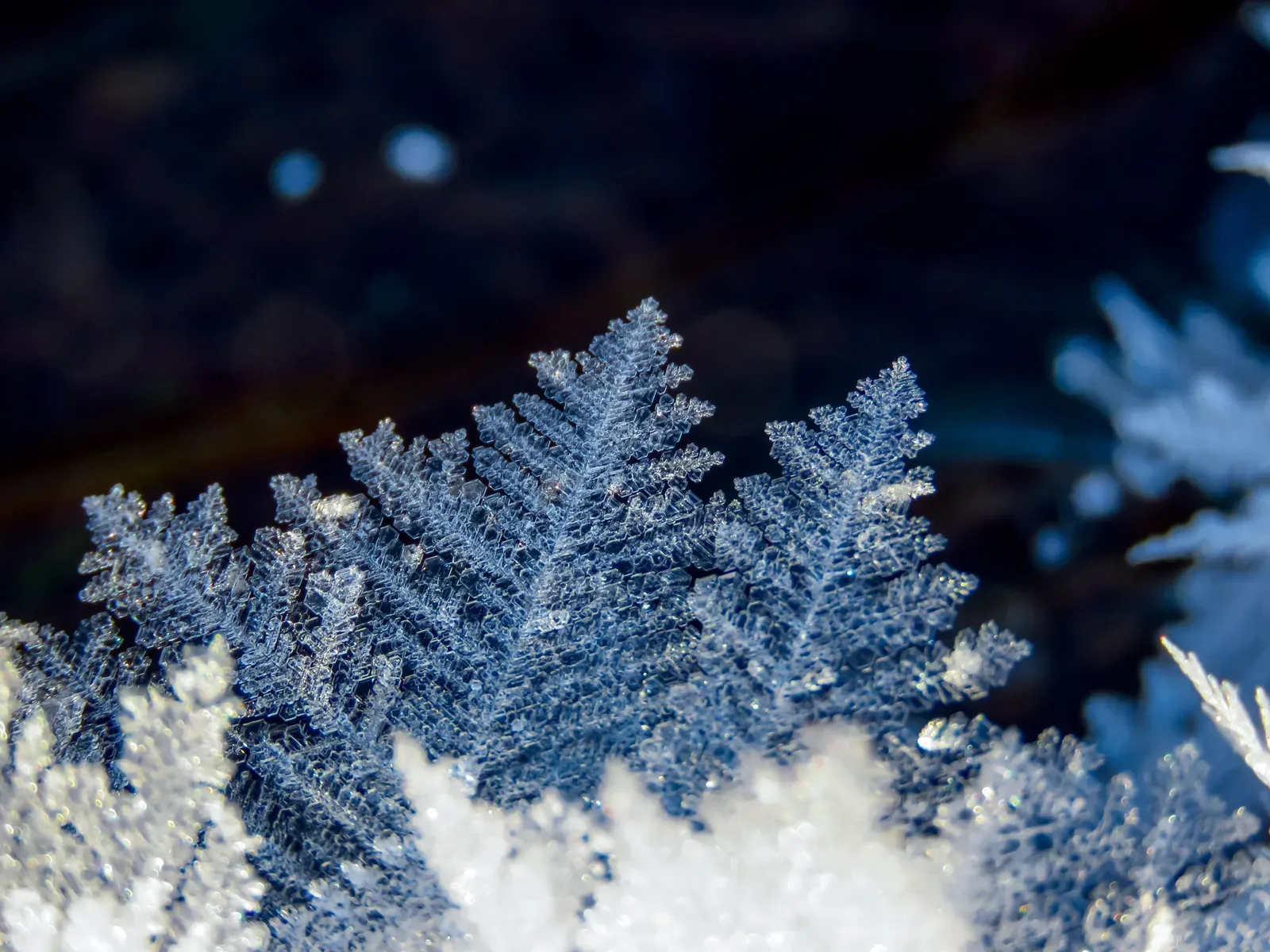
Snow doesn’t begin as a finished crystal. Inside a cold cloud, tiny water droplets can stay liquid well below freezing, a state called supercooling. They often need a solid particle to start freezing, and that particle is called an ice nucleus.
Dust, soot, and mineral grains can all do the job. So can biological material such as pollen and certain bacteria. Pseudomonas syringae is a well known example because its proteins help ice form at relatively warm temperatures.
Why Six Sides Every Time
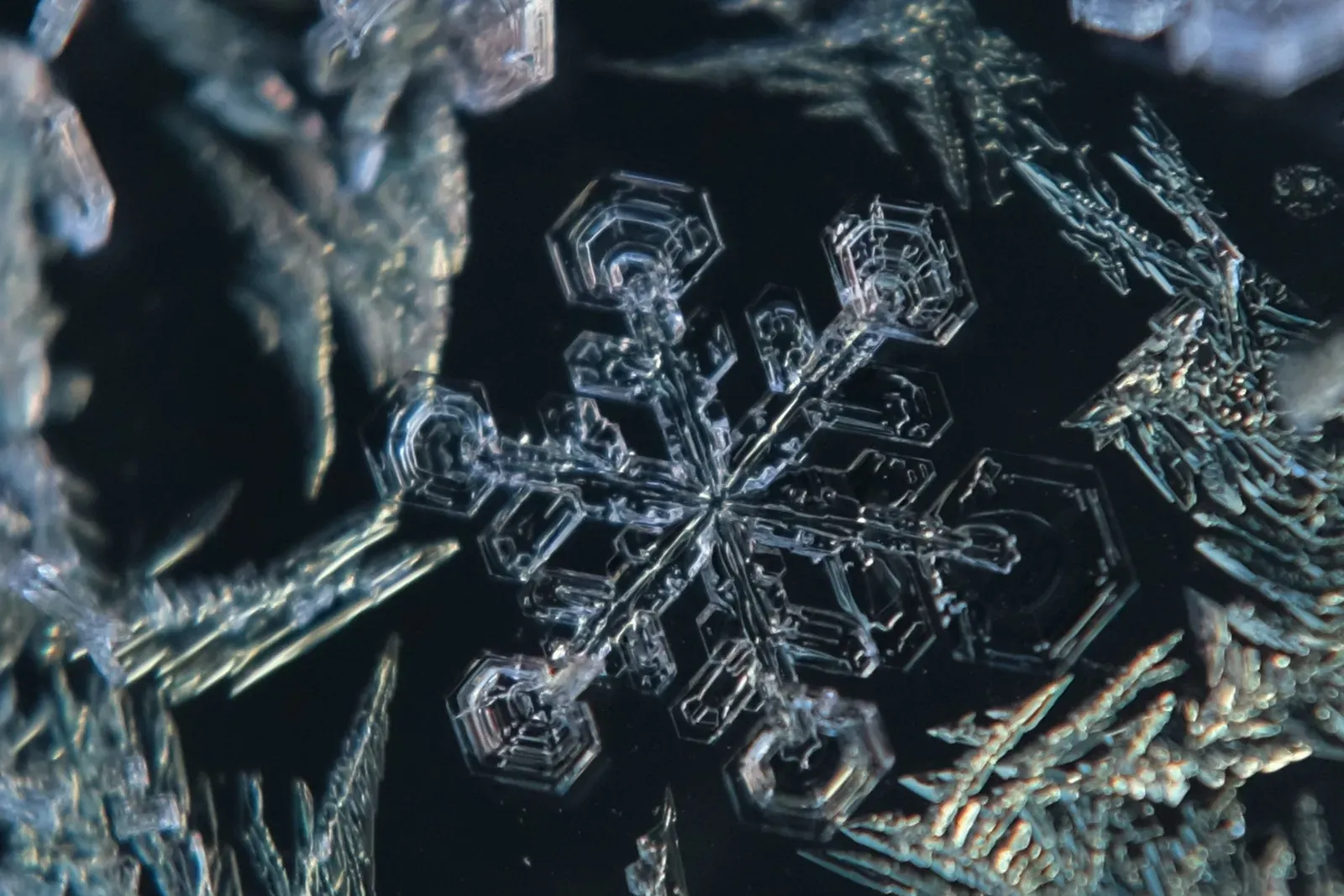
The six fold symmetry comes from the way water molecules bond when they freeze. Each molecule links to four neighbors through hydrogen bonds, and those links settle into a hexagonal lattice. This ordinary form of ice is known as ice Ih.
That internal arrangement shows up on the outside. A young crystal begins as a tiny hexagonal prism, and it keeps that outline as it grows. Snowflakes with three, twelve, or other symmetries do exist, but they usually come from unusual growth conditions or from crystals fused together.
Growing From Vapor
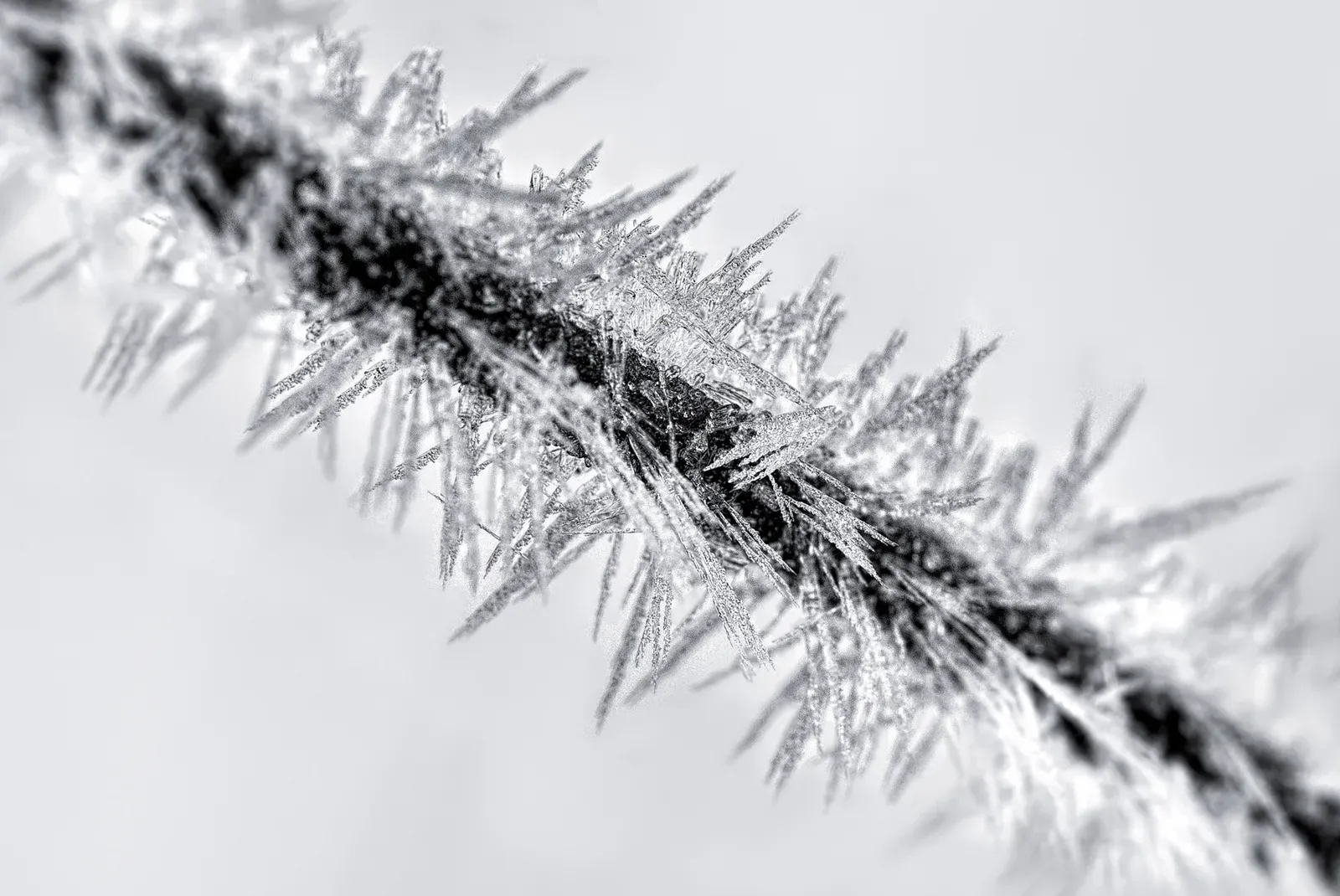
Once a crystal exists, it grows by collecting water vapor. Vapor in the cloud is more plentiful than the crystal’s surface can hold, so molecules settle onto it directly as ice. This process is called deposition.
The corners of the hexagon stick out into moister air, so they collect molecules faster than the flat faces do. Over time, the corners stretch into arms. This is why growth tends to turn a simple hexagon into something more intricate.
Temperature Chooses the Shape
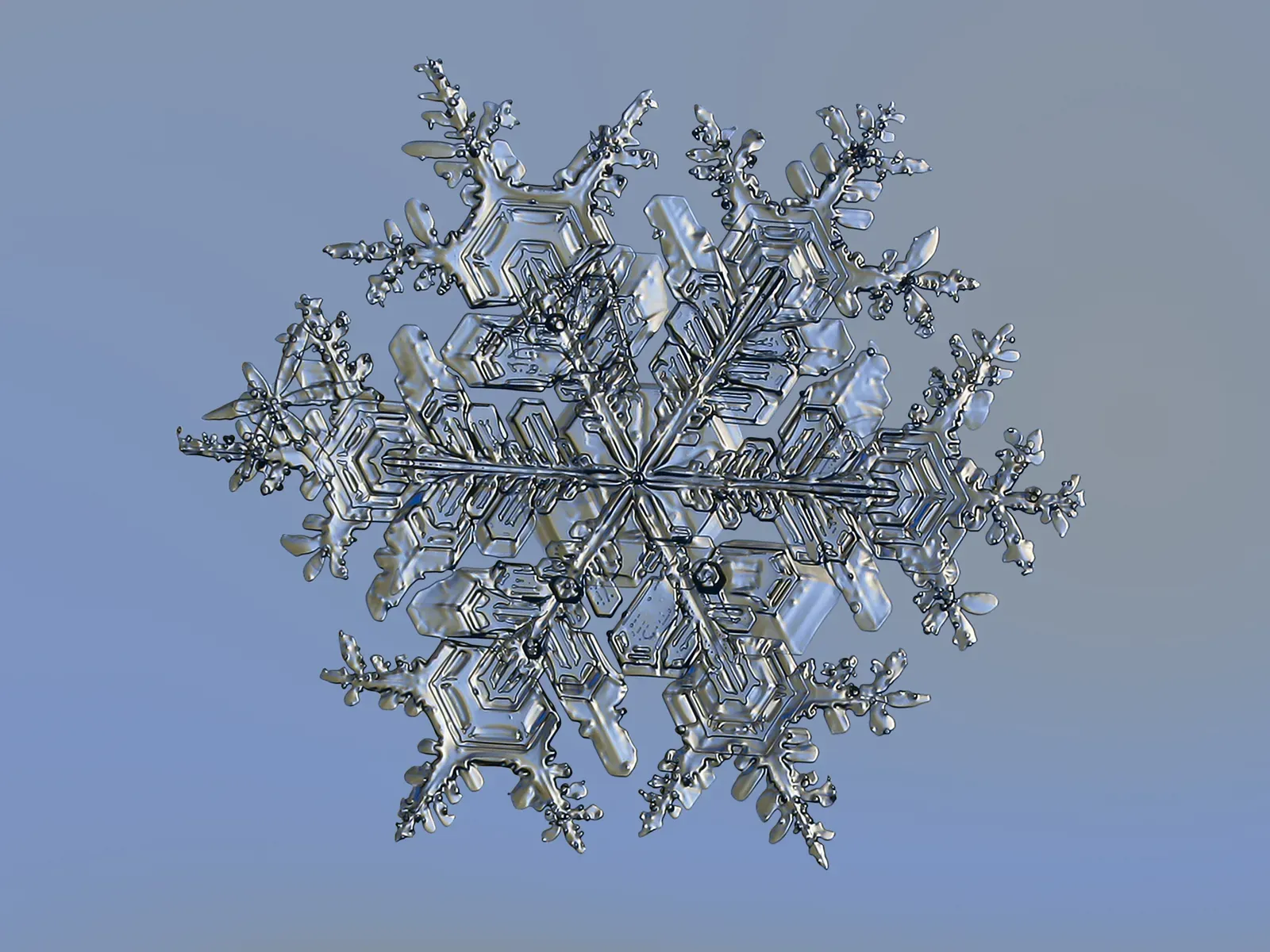
Temperature has a strong say in what type of crystal forms. Thin plates grow in a narrow range just below freezing, and needles and hollow columns appear a little colder. Around fifteen degrees below zero Celsius, the classic branching stars, called dendrites, flourish.
Much colder air brings a return to plates and columns. Japanese physicist Ukichiro Nakaya mapped these patterns in the 1930s by growing artificial crystals in his lab. Later work by physicist Kenneth Libbrecht at Caltech refined the picture and showed that humidity matters too.
Humidity Adds the Detail
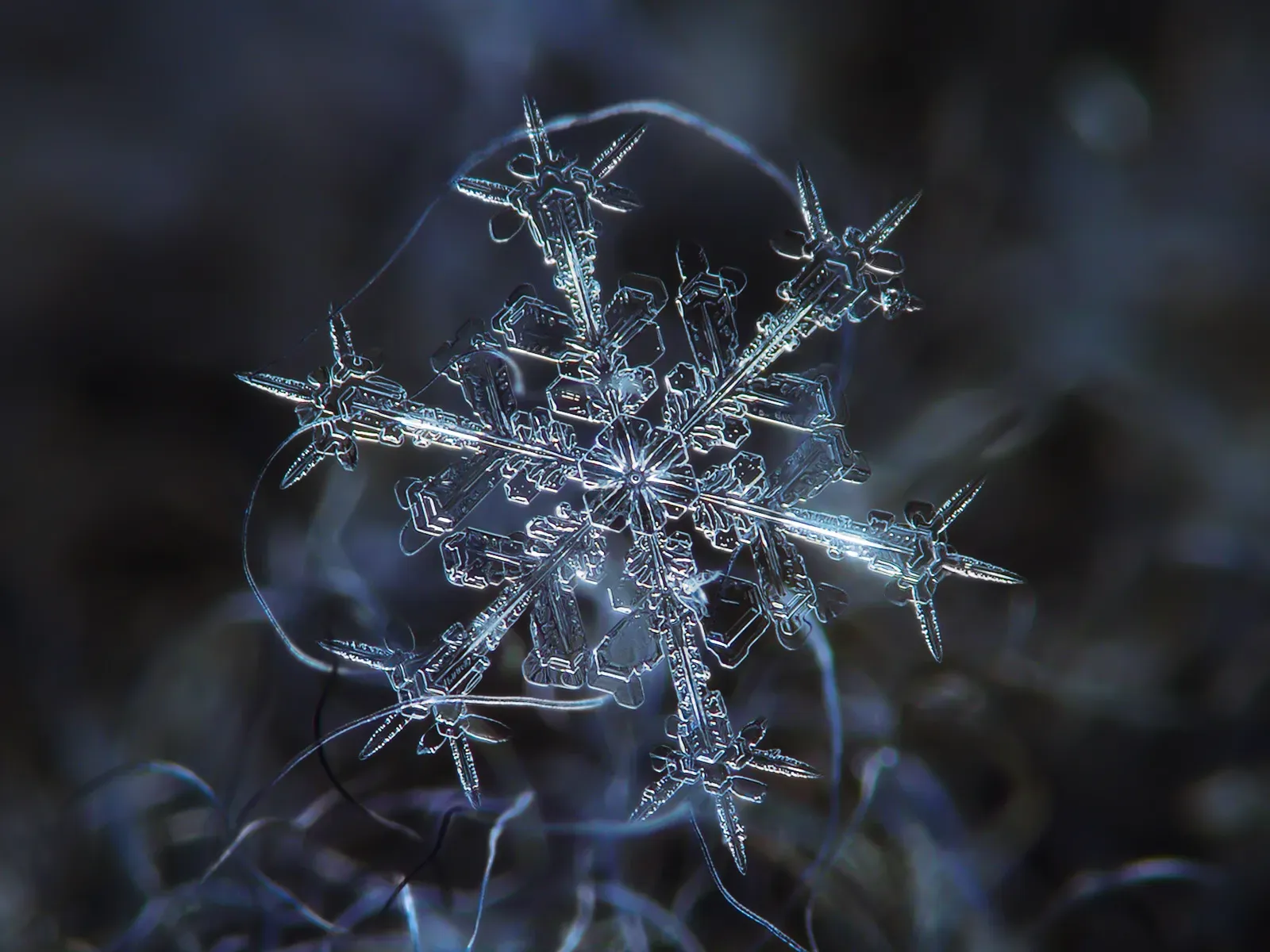
Moisture in the air decides how elaborate a crystal becomes. In drier air, growth is slow and the crystal stays simple, often a plain plate or a short column. When the air is very humid, the arms race ahead and sprout side branches.
The same temperature can therefore produce quite different results. A crystal in nearly saturated air may grow fern like arms, while one in thinner air at the same temperature stays plain. Laboratory chambers that control both variables have confirmed this relationship.
A Trip With Many Turns
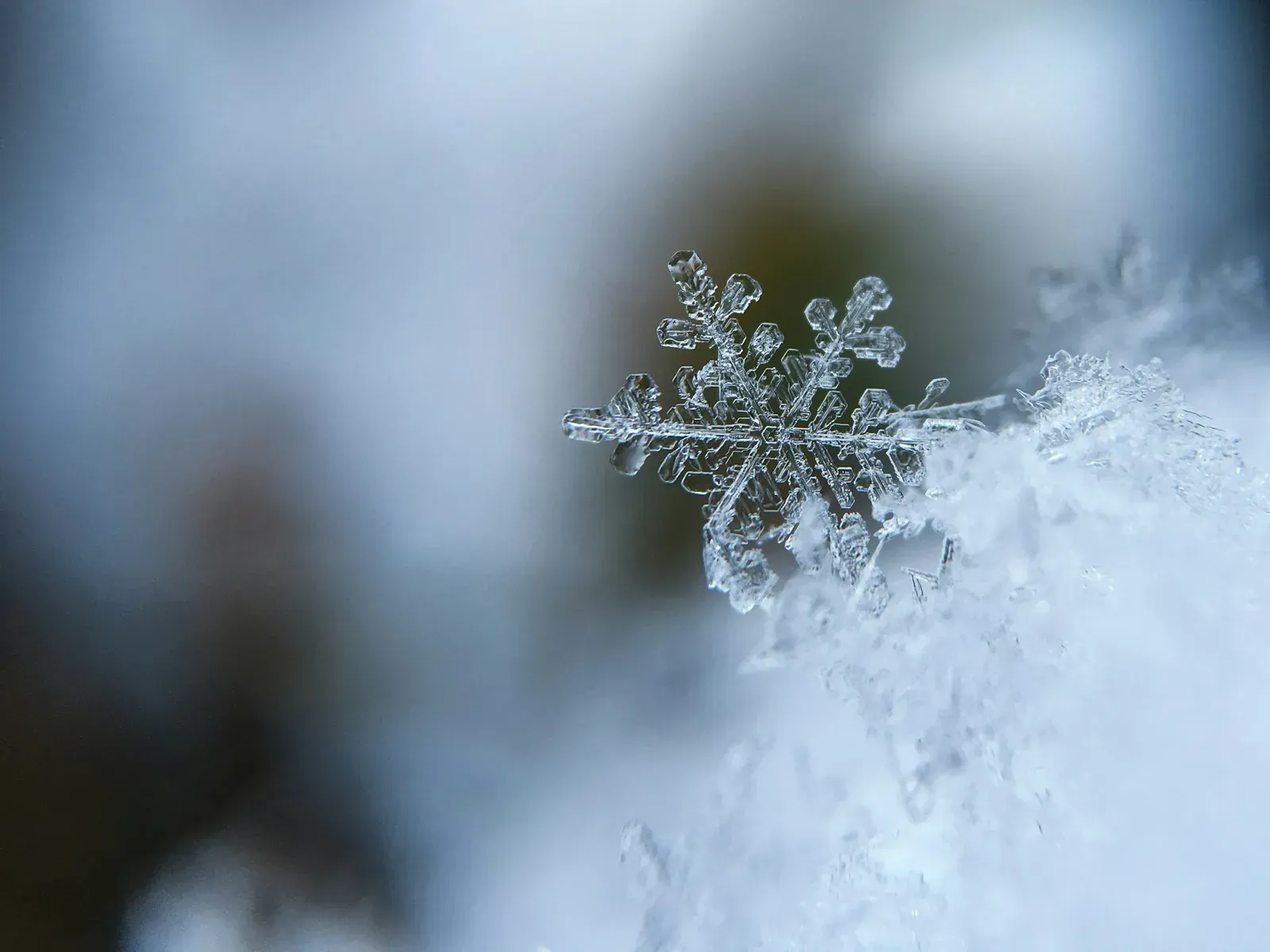
A snowflake doesn’t sit in one spot while it grows. Air currents carry it up and down, through pockets of different temperature and moisture. Each change nudges the growth in a new direction.
A crystal might start as a plate, then sprout dendrite arms when it drifts into a different layer. Because all six arms travel together, they usually experience nearly the same conditions at nearly the same time. That is why many snowflakes look symmetrical even though no one is coordinating them.
Why No Two Match
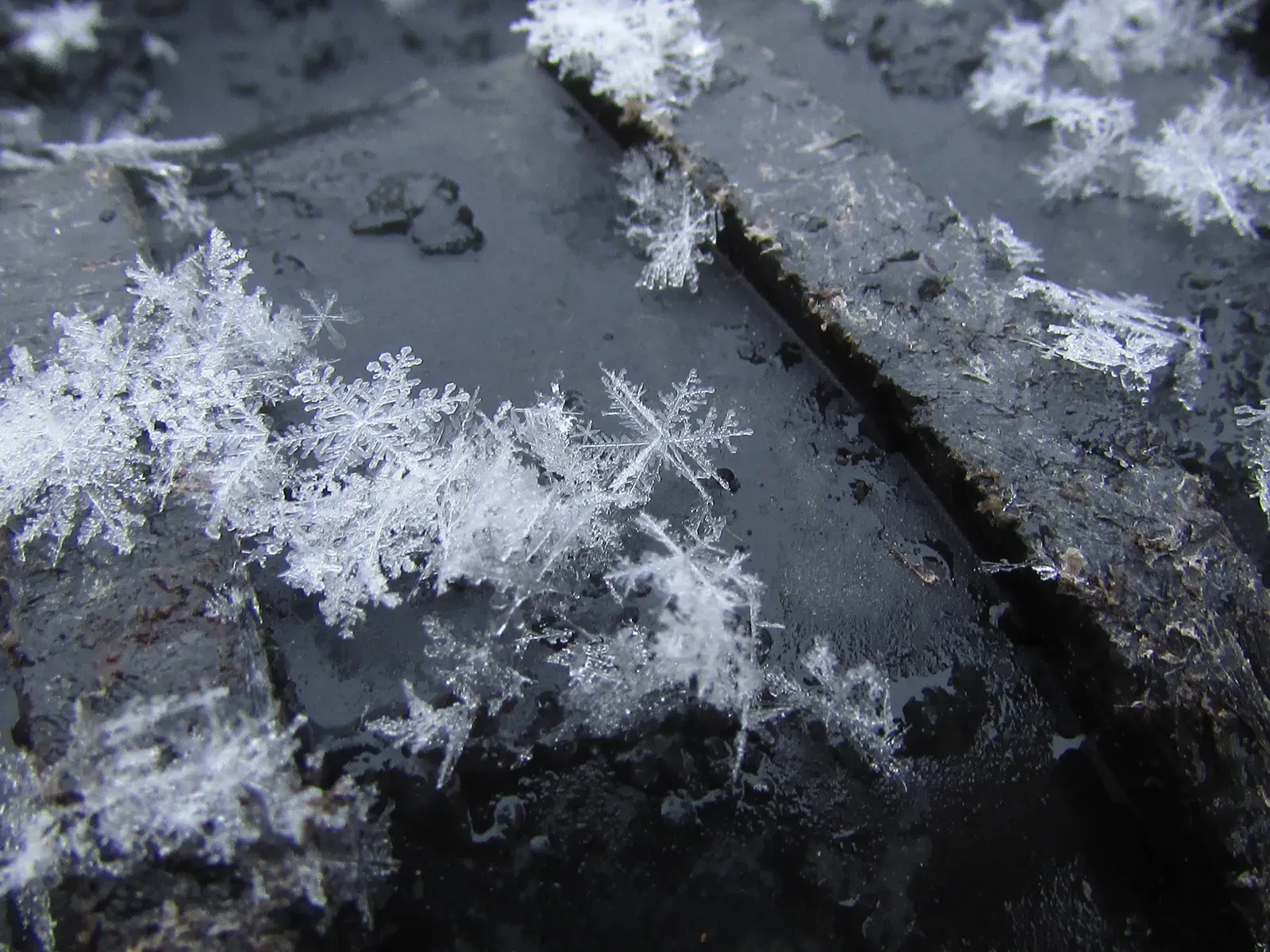
The argument for uniqueness is mostly a matter of numbers and paths. A typical snowflake holds on the order of a quintillion water molecules. The number of ways to arrange growth over a winding journey through changing air is far beyond anything nature is likely to repeat.
Small differences also build on each other. A slightly different early branch changes how later vapor collects. Two crystals can start out nearly identical and still drift apart in detail within minutes.
The Case of the Identical Twins
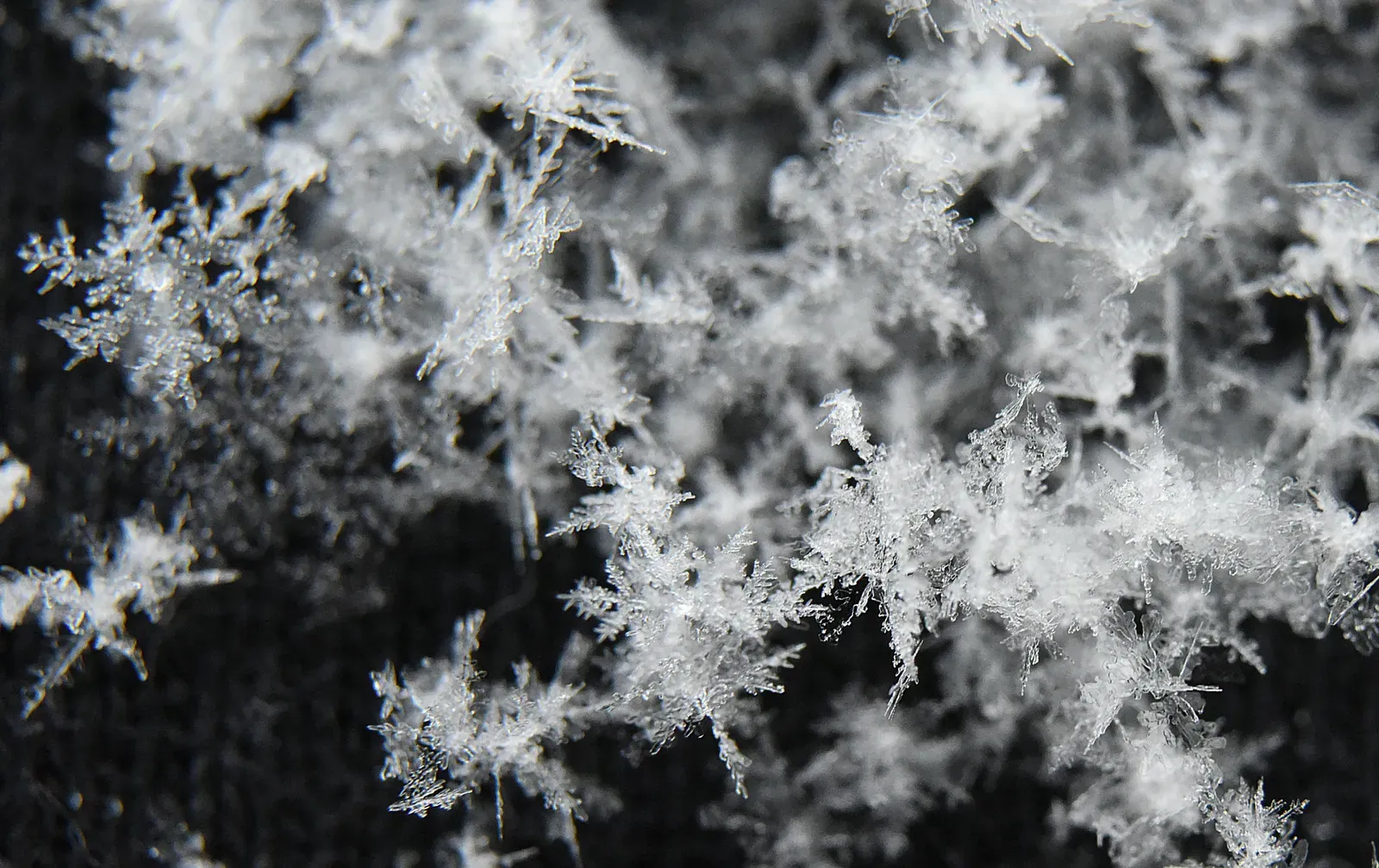
The claim isn’t absolute, because it depends on what you count as identical. In 1988, researcher Nancy Knight at the National Center for Atmospheric Research reported two crystals that looked the same under a microscope. They were simple hollow column shapes, not branching stars.
Such simple forms are far easier to match. Down at the molecular level, no one can say the two were truly the same. For intricate dendrites, finding a matching pair is practically out of reach.
Bentley and the Camera
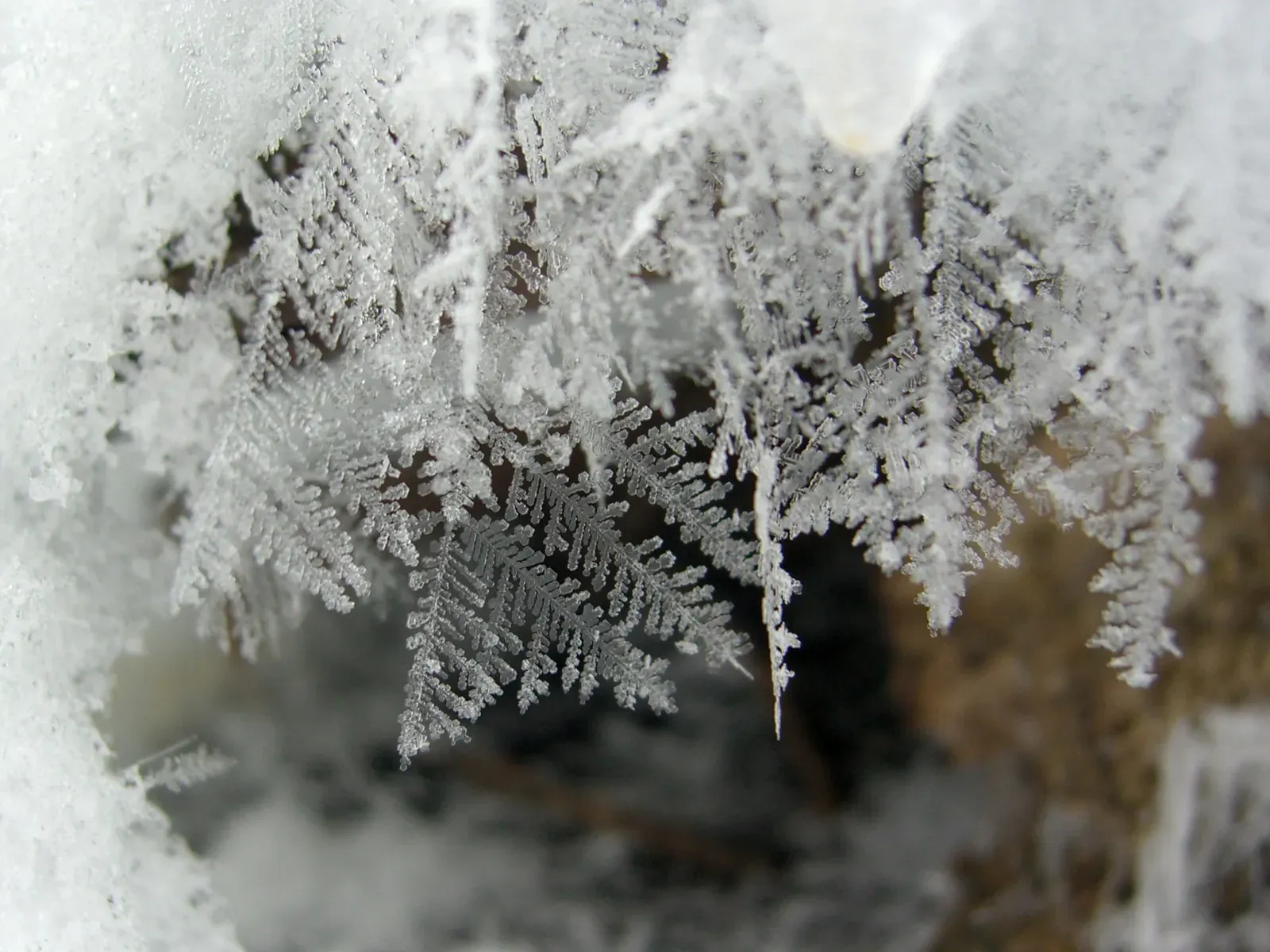
Much of what the public knows about snow crystals traces back to Wilson Bentley, a farmer in Jericho, Vermont. In 1885 he captured the first known photomicrograph of a snow crystal. Over his lifetime, he photographed thousands of them.
His 1931 book, Snow Crystals, collected more than two thousand images. It gave scientists and artists a catalog of forms to study. Today, high resolution imaging and controlled growth chambers continue that work, though the basic lesson he showed still holds.
From Crystal to Snowfall
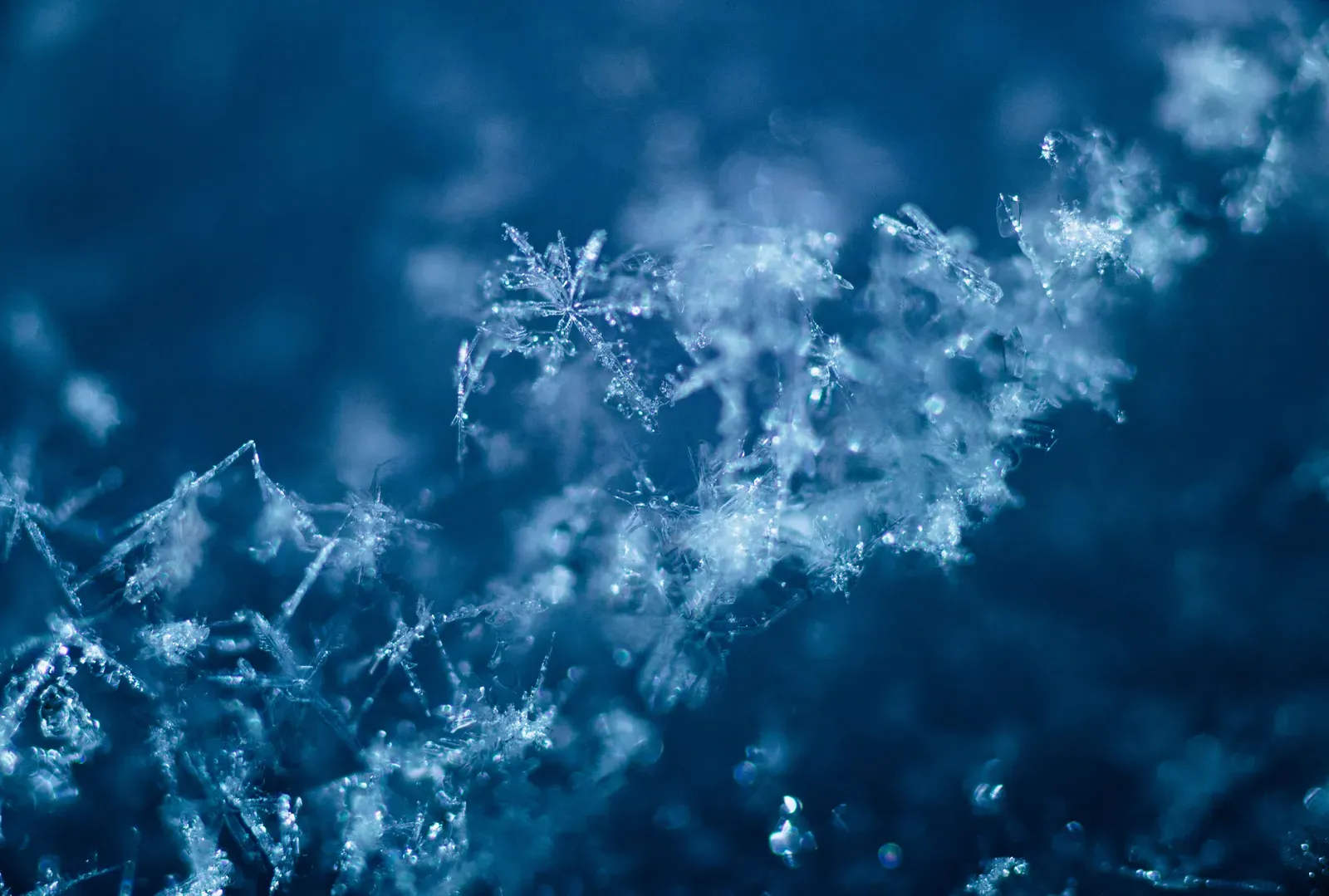
Most snow reaching the ground isn’t a lone crystal. Flakes collide and stick together on the way down, forming clumps that can be much larger than any single crystal. Snow falls in these clusters most often when temperatures are near freezing, because wetter surfaces stick more easily.
In very cold air, individual crystals are more likely to arrive intact. Wind and handling tend to break delicate arms before they land. So the neat symmetrical flake of a holiday card is something you see mostly on calm, cold days, and a hand lens helps.
